


Why Perfect Calorie Counts Are a Myth
The core of calorie tracking frustration lies in seeking perfect accuracy within an imperfect system. Let's be clear: calorie counts on labels, in apps, and even in restaurant menus are estimations. Here’s why your log can feel like a guessing game.
The Pizza Problem: Food Is Naturally Variable
Think about a slice of pepperoni pizza. Even from the same restaurant, one slice might have a thicker crust, a more generous handful of cheese, or extra pepperoni. These small variations can significantly alter the calorie count. This is even more true for homemade food. Your “tablespoon” of olive oil might actually be 1.5 tablespoons, instantly adding 60+ calories. This isn’t a mistake; it's the natural variability of food preparation.
The Database Dilemma: Your App Is an Estimation Tool
Food tracking apps like MyFitnessPal and Lose It! are powerful, but their databases are built on averages. When you search for an item, you're seeing generic USDA data, brand-provided information, or—most often—entries from other users. An entry for “homemade pizza” is based on someone else’s recipe. This is why one entry might say 280 calories while another says 450. They're just different data points for different foods.
The Human Factor: We're All Bad at Guessing
Research consistently shows that humans, even nutrition professionals, are poor at estimating portion sizes. That handful of almonds or splash of creamer is often more than we think. Without objective measurement, it's easy to unintentionally under-report your intake, which can stall weight loss progress.
The Real Goal of Tracking (Hint: It’s Not Perfection)
If you can't be 100% accurate, why bother? This is the biggest misconception about calorie counting. The true purpose isn't about hitting a perfect number; it's about learning and building habits.
Goal #1: Build Powerful Food Awareness
The single greatest benefit of calorie tracking is mindfulness. You quickly learn which foods are calorie-dense, which are rich in protein, and how that morning latte contributes to your daily total. This knowledge empowers you to make conscious, informed decisions rather than eating on autopilot.
Goal #2: Identify Actionable Patterns
Consistent tracking, even if imperfect, reveals powerful patterns. You might discover you tend to overeat on weekends or that you feel more satisfied on days with higher protein intake. This data is gold. It allows you to make strategic changes that lead to real, sustainable results.
Goal #3: Prioritize Consistency Over Accuracy
Here’s the secret for long-term weight loss: being consistent with your tracking method is far more important than being perfectly accurate. If you consistently log your favorite pizza slice as 350 calories, your weekly average will balance out. Your body responds to your average intake over time, not to a single meal. Create a stable baseline, and you can adjust from there.
4 Practical Strategies for Stress-Free Calorie Tracking
Ready to track without the anxiety? Embrace these smart strategies instead of chasing an impossible standard.
Strategy 1: Use a Food Scale for Key Staples
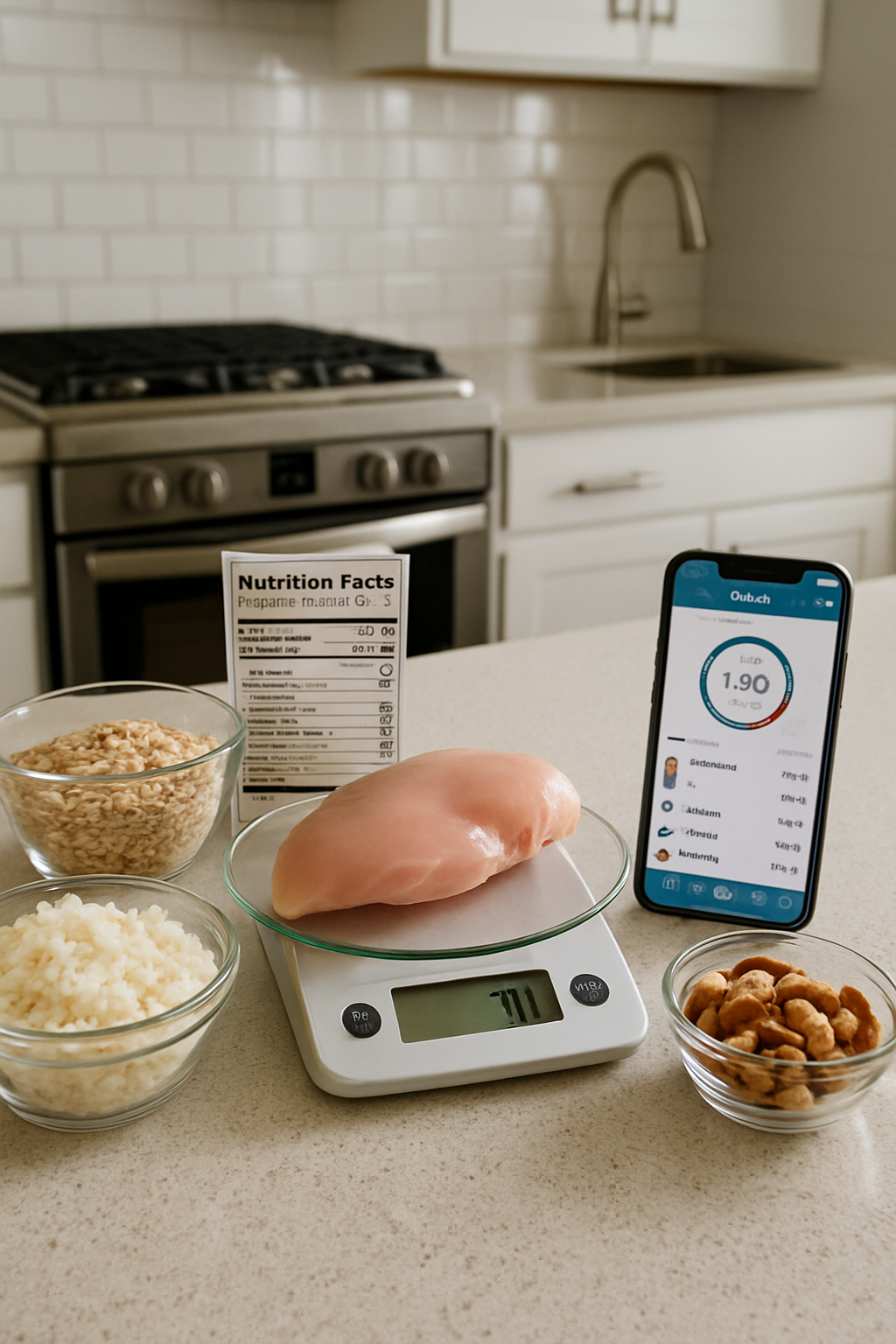
For foods you eat regularly at home (oats, chicken, rice, nuts), a food scale is your best friend. It’s the single most effective tool to remove guesswork from portion control. It takes just a few seconds and provides precise data where it matters most.
Strategy 2: Be Specific When Logging in Your App
Don't be lazy with your logging. When tracking, be as descriptive as possible. Instead of “chicken salad,” search for “grilled chicken salad with light vinaigrette.” For packaged goods, use the barcode scanner. The more specific you are, the closer your estimate will be to reality.
Strategy 3: Apply the 80/20 Rule for Sustainability
Focus on being precise with the 80% of foods you eat most often—your daily staples. For the other 20%—the office donut, the dinner party meal, the slice of pizza with friends—make your best educated guess and move on. Don’t let one untrackable meal derail your progress. This balanced approach is key to making calorie tracking a sustainable habit.
Strategy 4: Master Tracking When Eating Out
Tracking restaurant meals can be daunting, but it's not impossible. Here’s a simple method:
- Plan Ahead: Look up the menu online. Many chains provide nutritional info.
- Deconstruct the Meal: If there's no info, break the meal down into its components in your app. Log "8 oz grilled salmon," "1 cup roasted asparagus," and "1 cup rice" separately.
- Estimate High: Add a general entry for "1 tbsp olive oil" or butter to account for hidden fats used in cooking. It's better to overestimate slightly than to underestimate significantly.
- Move On: Log it to the best of your ability, and then enjoy the meal without guilt.
Frequently Asked Questions (FAQ) About Calorie Tracking
Let's address some common concerns directly.
Q: Can you trust calorie tracking apps like MyFitnessPal?
A: Trust them as a tool for estimation and awareness, not as an infallible source of truth. User-generated entries can be inaccurate. Always choose verified entries (often marked with a green check) when possible and cross-reference with nutrition labels to improve accuracy.
Q: Is a food scale absolutely necessary for weight loss?
A: While not strictly necessary for everyone, a food scale is the fastest way to learn correct portion sizes and ensure your tracking is as accurate as possible. It's a short-term learning tool that provides long-term skills in visual portion estimation.
Q: How do I handle a day where I can't track everything?
A: Don't let perfection be the enemy of progress. If you have an untrackable meal, either make your best guess and log it or simply skip logging that meal and get back on track with the next one. One off-meal or off-day does not ruin your progress. Consistency over time is what matters.
Conclusion: Ditch the Anxiety, Embrace the Awareness
There are no magic AIs or shortcuts on a genuine health journey. But that doesn't mean it has to be a path of frustration. Calorie tracking is not a test you pass or fail; it is a compass that helps you understand your body and your habits. By focusing on consistency over perfection, using tools like a food scale wisely, and giving yourself grace, you can transform tracking from a source of stress into your greatest ally for weight loss. Remember, the goal isn't just to count calories—it's to make your calories count. And that awareness is the real magic.