


What is an AI Calorie Tracker and How Does Food Recognition Work?
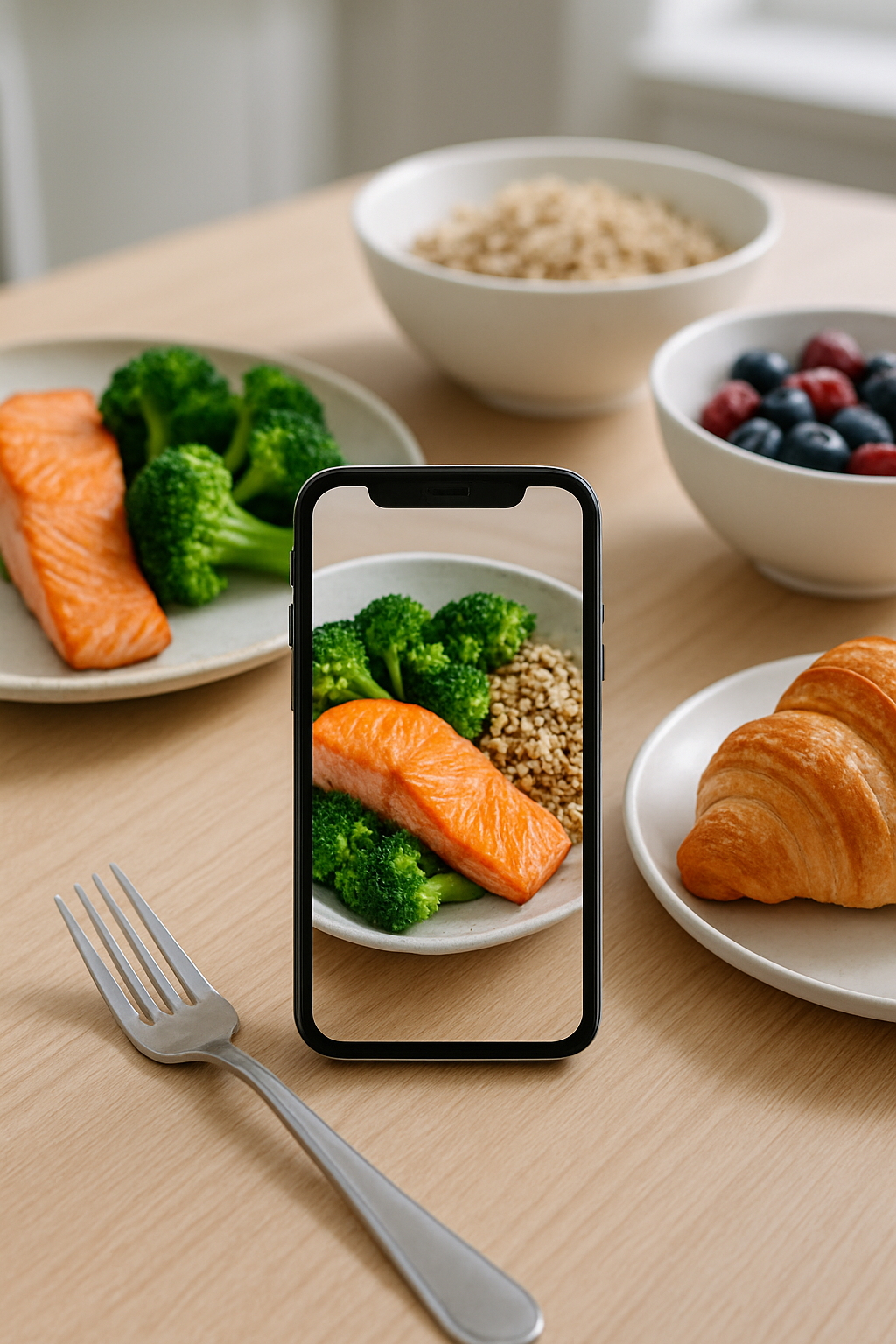
At its core, an AI calorie tracker like SnapEat AI is a sophisticated nutrition app that uses your phone's camera to do the heavy lifting. The process transforms a tedious chore into a simple, three-step action, powered by complex technology.
- The Snap: Capture Your Meal in a Photo. You simply take a picture of your plate. This step uses computer vision, a field of AI that trains computers to interpret and understand the visual world, just like a human eye.
- The AI: Analyze Food and Portions. This is where the magic happens. The app’s artificial intelligence analyzes the image, identifying each individual food item—distinguishing the salmon from the quinoa and the broccoli. Crucially, its deep learning models also estimate the portion size of each component with remarkable precision.
- The Track: Get Instant Nutritional Data. In seconds, the AI cross-references the identified foods and their volumes with a vast nutritional database. It instantly provides a complete breakdown: total calories, macronutrients (protein, carbs, fat), and even key micronutrients.
AI vs. Manual Logging: Why Smart Tracking is Superior
Is it really that much better than traditional methods? A quick comparison reveals the clear advantages of using an AI-powered food recognition app.
| Feature | Manual Calorie Counting | AI Calorie Tracker (e.g., SnapEat AI) |
|---|---|---|
| Time Spent | 5-15 minutes per meal | ~10 seconds per meal |
| Accuracy | Low; prone to guesstimation and under-reporting by up to 50% | High; objective portion estimation reduces human error |
| Data Recorded | Often just calories, maybe macros | Calories, full macronutrient breakdown, micronutrients, and more |
| Consistency | Leads to “tracking fatigue” and high drop-off rates | Effortless process encourages long-term daily use |
| Learning | Slow and tedious learning curve | Provides instant visual feedback, accelerating food education |
A Nutritionist’s Guide: How to Get 99% Accuracy from Your Photo Food Log
As a nutritionist, I've seen how technology can empower clients—but only when used correctly. While this weight loss technology is powerful, it's a tool. Follow these professional tips to maximize your results with a nutrition tracker by photo.
1. Take the Perfect Snap
Garbage in, garbage out. Give the AI the best possible data. Use good, even lighting (natural light is best) and avoid shadows. A top-down or 45-degree angle that clearly shows all items is ideal. Ensure the entire meal is in the frame.
2. Review and Refine in 5 Seconds
AI is incredibly accurate, but it’s not infallible. After the snap, take a moment to glance at the identified items. Does it look right? Most apps allow you to make quick adjustments. This human-in-the-loop check takes seconds and pushes accuracy toward perfection.
3. Connect the Data to Your Goals
Don't just obsess over calories. Use the macronutrient data to guide your choices. Are you getting enough protein to support muscle repair? Did that carb-heavy lunch fuel your workout effectively? Use the data as an insight tool, not a judgment tool.
4. Build the Habit: Consistency is Everything
The true power of smart calorie tracking comes from consistency. Make it a non-negotiable part of your meal routine: Snap your plate before you take your first bite. This habit builds a comprehensive picture of your eating patterns, revealing opportunities for improvement you never knew existed.
Frequently Asked Questions (FAQ) About AI Food Trackers
- Is AI calorie tracking accurate?
- Yes, it is remarkably accurate. Modern AI models can identify foods with high precision, and their portion estimation often exceeds human guesstimates. For best results, a quick 5-second human review makes it nearly perfect. It removes the common problem of people under-reporting their intake by 20-50%.
- What is the best AI calorie tracker app?
- The best app depends on your needs. Look for one with a large food database, a simple interface, and strong food recognition capabilities. SnapEat AI is a leading example in 2024, known for its speed and detailed nutritional analysis from a single photo.
- Can AI trackers handle complex, homemade meals?
- Absolutely. This is a major advantage over manual logging. Advanced AI can distinguish individual ingredients in a complex dish like a stir-fry or a casserole, something that is nearly impossible to log accurately by hand without deconstructing the meal.
- Is this technology better than MyFitnessPal?
- It addresses the biggest pain point of apps like MyFitnessPal: manual entry. Instead of searching and guessing, you just take a picture. This makes it significantly faster and more sustainable for many users, leading to better long-term adherence.
The Future of Nutrition: What's Next for Smart Health Tech?
The SnapEat AI trend is just the beginning. The future of this health tech is hyper-personalization. Imagine your calorie tracker app integrating with:
- Wearables: Syncing with your smartwatch to suggest post-workout meals based on actual calorie expenditure.
- Glucose Monitors: Showing you precisely how a specific meal impacts your blood sugar in real-time.
- DNA Kits: Providing dietary recommendations tailored to your genetic predispositions.
This evolution will transform nutrition from a set of general rules into a precise, personalized science for everyone.
Conclusion: Your Smartest Ally for 2024 Health Goals
The days of tedious food diaries and inaccurate guesswork are over. AI-powered tools are democratizing nutrition, making accurate, insightful tracking accessible to everyone. By removing the friction of manual logging and providing instant feedback, AI food recognition empowers you to build a healthier relationship with food and take confident control of your health journey.
In 2024, your smartphone is more than a communication device; it's your smartest nutritional ally. If you're ready to leave tracking fatigue behind and achieve your goals with clarity and ease, it's time to embrace the future. Download an AI calorie tracker today and see the difference for yourself.