


The Unseen Challenge in Patient Recovery: Hospital Malnutrition
Food is medicine. This age-old wisdom is nowhere more critical than within the walls of a hospital. Proper nutrition is the fuel for recovery, underpinning every aspect of a patient's journey from healing tissues after surgery to fighting off infections. Yet, a silent epidemic compromises this fundamental pillar of health: hospital malnutrition. Studies show that up to 40% of patients become malnourished during their hospital stay, leading to longer recovery times, increased complications, and higher healthcare costs.
The core of the problem has been a lack of accurate, timely, and efficient tools to monitor what patients are actually eating. But what if we could change that? What if a simple photograph could provide a complete nutritional analysis, alerting clinicians to a problem before it escalates? This is no longer science fiction. Welcome to the hospital nutrition revolution, powered by SnapEat AI.
Why Traditional Hospital Nutrition Tracking Fails Patients
For decades, dietitians and nurses have relied on methods that are fundamentally flawed for the fast-paced hospital environment. These traditional approaches create significant barriers to effective clinical nutrition management.
- Inaccuracy of Manual Tracking: Relying on patient recall ("What did you eat for lunch?") or plate-waste estimation by busy staff is notoriously subjective. A half-eaten sandwich could mean a patient is feeling unwell or simply disliked the food. Without precise data, interventions are based on guesswork.
- Heavy Workload on Clinical Staff: Manually recording food intake for dozens of patients is a time-consuming and labor-intensive task. This valuable time could be better spent on direct patient care, counseling, and developing personalized nutrition plans.
- Delayed Data for Actionable Insights: By the time manual logs are collected, compiled, and analyzed by a dietitian, the patient's condition or intake may have already changed. This data lag means that crucial opportunities for intervention are often missed.
SnapEat AI: The Revolution in Clinical Nutrition Tracking
SnapEat AI is a groundbreaking platform designed to replace antiquated tracking methods with seamless, data-driven precision. It leverages the power of AI in healthcare to provide real-time insights into patient food intake.
The Simple 3-Step Process: Snap, Upload, Analyze
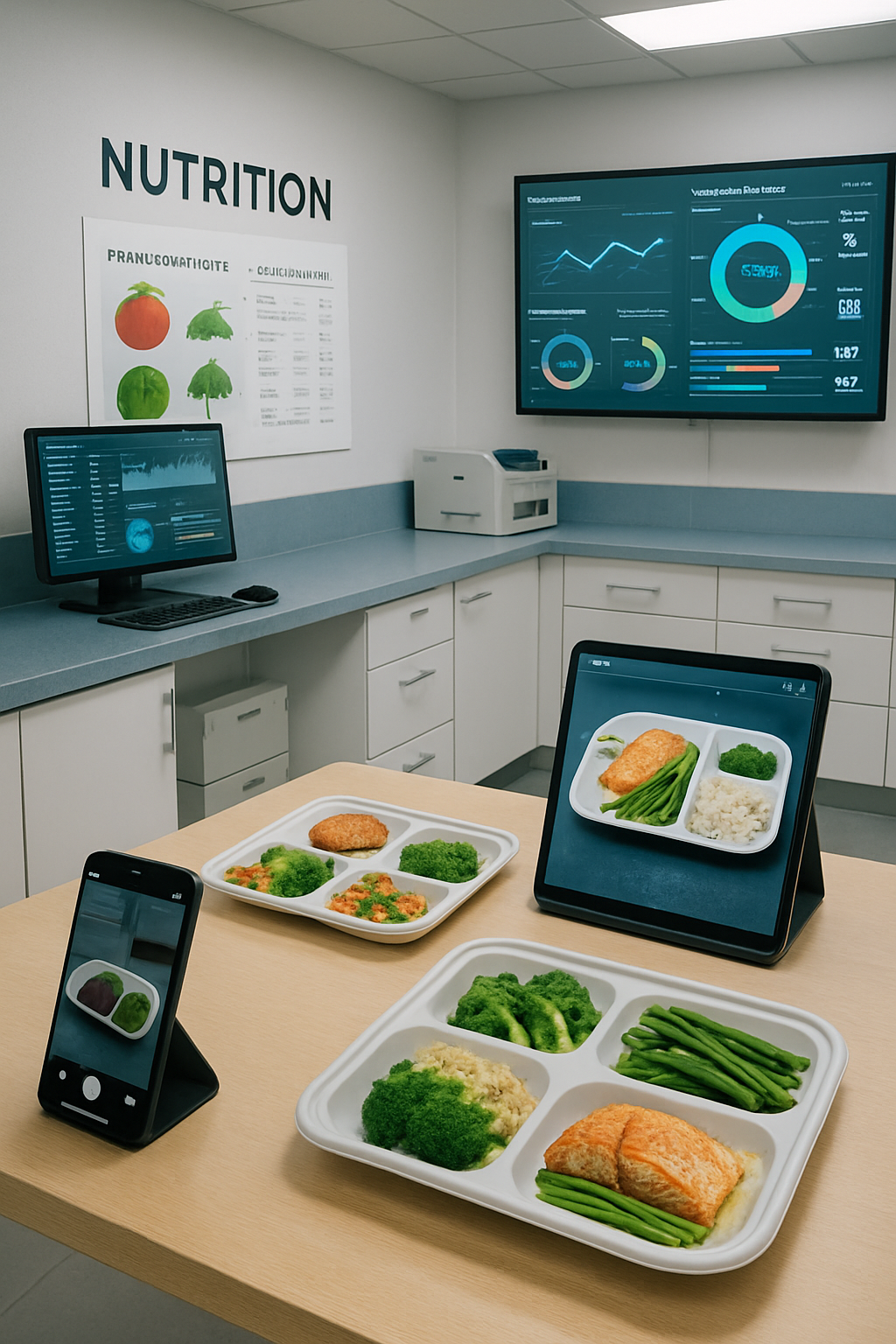
The process is elegantly simple for any hospital staff member using a standard smartphone or tablet:
- Snap: Capture an image of the food tray before it's served to the patient.
- Upload: After the meal, capture a second image of the leftovers.
- Analyze: SnapEat AI's powerful algorithms instantly get to work.
Behind the scenes, the AI engine performs a complex analysis. It uses advanced image recognition to identify each food item, estimates initial and leftover portion sizes with remarkable accuracy, and cross-references this with a comprehensive nutrient database. Within seconds, it calculates the exact amount of calories, protein, fats, carbohydrates, and key micronutrients consumed.
Key Benefits of Implementing SnapEat AI in a Clinical Setting
The shift from manual estimation to automated analysis is a complete transformation of care with tangible benefits for patients, clinicians, and hospitals.
For Patients: Enhanced Recovery and Personalized Care
With precise data on their actual intake, clinical teams can deliver truly personalized nutrition. If a post-surgery patient consistently fails to meet protein targets, the system flags it immediately. This allows for timely intervention—such as introducing a high-protein supplement—which directly leads to improved clinical outcomes, faster recovery, and a reduced length of hospital stay.
For Clinicians: Data-Driven Decision Making
SnapEat AI empowers dietitians with a real-time dashboard. They can see at-a-glance which patients are meeting their nutritional goals and which are at risk. This allows them to prioritize their time, focusing on patients who need them most. Instead of spending hours collecting data, dietitians can spend time using it to make critical clinical decisions and provide expert counseling.
For Hospitals: Increased Operational Efficiency and Cost Reduction
Automating the food intake monitoring process frees up hundreds of hours of staff time, reducing labor costs and allowing nurses to focus on other critical duties. Furthermore, by analyzing which food items are consistently uneaten, hospitals can optimize menus, reduce food waste, and significantly lower associated costs, contributing to a more sustainable and efficient operation.
Case Study: Data-Driven Nutrition in Practice
Imagine Mr. Smith, 72, recovering from major abdominal surgery. His recovery depends on adequate calorie and protein intake. For the first two days, the nursing staff uses SnapEat AI to track his meals. The dashboard immediately alerts the dietitian that Mr. Smith is consuming less than 50% of his required protein.
Instead of discovering this days later, the dietitian intervenes that same afternoon. After a brief consultation, she learns Mr. Smith is nauseous and switches his solid meals to a high-calorie, high-protein liquid supplement. The next day, SnapEat AI confirms his intake has met the target. Mr. Smith's strength improves, his wound heals on schedule, and he is discharged two days earlier than projected. This is the power of real-time, data-driven hospital nutrition.
Frequently Asked Questions (FAQ)
Adopting new technology raises important questions. Here’s how SnapEat AI addresses common concerns:
- How does SnapEat AI ensure accuracy?
- Our AI is trained on millions of images of hospital food items and portion sizes. It combines image recognition with sophisticated algorithms to achieve over 95% accuracy in nutrient calculation, far surpassing manual methods.
- Is the system difficult for hospital staff to use?
- No. The system is designed for simplicity. If your staff can use a smartphone camera, they can use SnapEat AI. The entire process takes less than 30 seconds per meal.
- Can SnapEat AI integrate with our existing Electronic Health Record (EHR) system?
- Yes. SnapEat AI is built with interoperability in mind. We provide seamless integration with major EHR systems, allowing nutritional data to be automatically added to the patient's record for a holistic view of their health.
Conclusion: Embracing the Future of Clinical Nutrition
The problem of hospital malnutrition is complex, but the solution no longer needs to be. We can no longer afford to rely on guesswork when patient health is at stake. SnapEat AI offers a clear path forward, transforming a once-invisible problem into a manageable, data-rich opportunity to enhance care.
By replacing subjective and inefficient manual tracking with objective, automated analysis, we can empower clinicians, improve patient outcomes, and build more efficient healthcare systems. The hospital nutrition revolution is here, and it starts with a simple snap. Ready to transform your institution's approach to clinical nutrition? It's time to innovate.