


What is an AI Nutrition Tracker and How Does It Work?
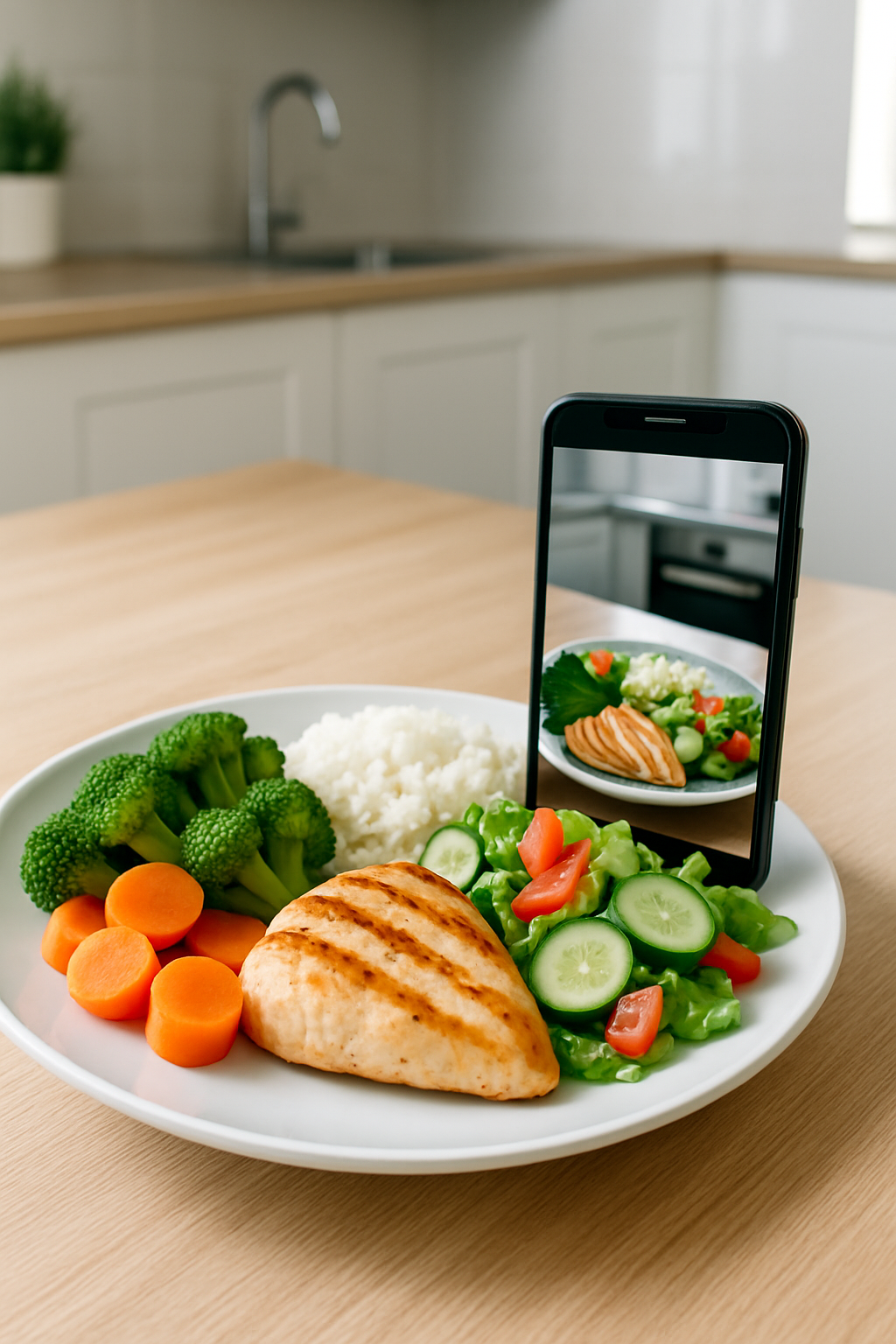
Before the showdown, let's break down the technology. An AI nutrition tracker uses your phone's camera and sophisticated artificial intelligence to simplify food logging. When you use nutrition tracking by photo, the app's AI analyzes the image, cross-referencing what it sees with a vast visual database to identify items like "chicken breast," "broccoli," and "quinoa." It then estimates portion sizes and pulls the corresponding data from its nutritional database into your food diary.
The primary benefit is a massive reduction in friction. The 5-10 minutes it takes to manually search for and log a complex meal shrinks to under 60 seconds. This convenience is crucial because consistency is the true secret to achieving any fitness or weight loss goal. A good AI calorie counter app makes consistency easier than ever.
Team 1: “The Nets” – Established Calorie Counter Apps
Think of “The Nets” as the legacy champions in the calorie counter app world. These are household names like MyFitnessPal and Lose It! that have been around for years. They didn't start with AI, but they’ve wisely integrated AI photo features to stay competitive.
Strengths (The Proven Playbook):
- Massive Databases: Their biggest advantage is depth. These apps boast colossal, user-vetted nutritional databases and barcode libraries. If a food has a barcode, it's in their system.
- Complete Ecosystem: They offer robust barcode scanners, recipe builders, extensive exercise logging, and large, supportive communities.
Weaknesses (The Scrimmage):
- “Bolt-On” AI: Because AI wasn't their foundation, the photo-logging can feel less integrated. The AI might be a step behind newer apps in accuracy, often requiring manual confirmation and adjustment.
- Cluttered Interface: The user experience can sometimes feel dated or less intuitive compared to the slick, minimalist design of their rivals.
Best for: The user who wants a single, all-encompassing health app. If you value a huge database, reliable barcode scanning, and community features, and you don’t mind making a few manual tweaks, The Nets are a solid choice.
Team 2: “The Mavericks” – AI-First Food Tracking Apps
“The Mavericks” are the exciting upstarts. These apps were born in the age of AI and built their entire experience around the “snap and track” concept from the ground up. Their goal is the fastest possible food logging experience.
Strengths (The Fast Break):
- Superior AI: Image recognition is their superstar. The AI is often more accurate and nuanced, and the entire workflow is optimized to get you from photo to log in the fewest taps.
- Seamless User Experience: The interface is typically incredibly smooth, clean, and intuitive. For anyone frustrated with the time it takes to log food, The Mavericks are a revelation.
Weaknesses (The Rookie Mistakes):
- Smaller Databases: As newer players, their nutritional databases are often smaller. You might struggle to find obscure brands or specific restaurant dishes.
- Fewer Features: Their laser focus on AI means supplementary features like recipe builders or community forums might be absent. Many also operate on a subscription-only model.
Best for: The tech-savvy user who prioritizes speed and convenience. If your primary goal is to log your meals as quickly as possible and you’ll trade a sprawling database for a superior core AI, a Maverick app is your MVP.
How Accurate Are AI Calorie Counters? A Nutritionist's Verdict
This is the most common question I get from clients. From a professional standpoint, AI calorie counters are powerful estimation tools, not lab-grade scientific instruments. Their accuracy is influenced by several factors:
- Mixed Dishes: A photo of a casserole or stew is much harder for an AI to deconstruct than a simple plate of steak and asparagus.
- Hidden Ingredients: The AI can't see the oil, butter, or sugar used to prepare a dish, which can significantly impact calorie counts.
- Portion Estimation: This remains the biggest challenge. AI is getting better, but it can still struggle to differentiate between 4oz and 6oz of chicken from a photo alone.
The verdict: For the vast majority of people aiming for weight loss or healthier eating, the accuracy is good enough. The small daily discrepancies are far less important than the act of tracking consistently. The awareness you gain from using a food tracking app, even an imperfect one, is what drives results. Aim for consistency, not perfection.
Choosing Your Champion: Nets vs. Mavericks Decision Guide
So, how do you choose? It comes down to your personal priorities. Use this quick guide to find your match.
Draft “The Nets” if you:
- ✅ Want the largest possible food and barcode database.
- ✅ Value community features and an all-in-one system.
- ✅ Eat a lot of packaged foods that can be scanned.
- ✅ Don't mind doing some manual correction for top-tier data.
Draft “The Mavericks” if you:
- ✅ Absolutely despise manual logging and want the fastest experience.
- ✅ Eat out often, where taking a photo is easiest.
- ✅ Love a slick, modern user interface.
- ✅ Are an early adopter who loves cutting-edge health tech.
You can also employ a “Hybrid Strategy”—using a Maverick app for its quick photo logging and referencing a Net's database when you need to look up something obscure.
FAQ: Your AI Nutrition Tracker Questions Answered
1. What is the most accurate AI food tracker?
Accuracy is a moving target. Generally, 'Maverick' apps built specifically for photo recognition tend to have a slight edge in identifying foods from an image. However, 'Net' apps often have more accurate nutritional data for a wider variety of packaged foods in their database. The 'best' is often a trade-off between recognition AI and database depth.
2. Can AI really tell portion sizes from a photo?
It's an estimation. Modern AI uses reference objects like the plate size or your hand to guess portion sizes, but it's not perfect. As a nutritionist, I recommend users do a quick mental check of the AI's estimate and adjust it (e.g., from '1 cup' to '1.5 cups') if it seems off. It's better than not tracking at all.
3. Are free AI calorie counter apps any good?
Many 'Net' apps offer their AI photo scanning as a premium, paid feature. Some 'Maverick' apps may offer a limited number of free scans per day. Generally, the most powerful and convenient AI tracking features require a subscription. We recommend using free trials to determine if the value is worth the cost for you.
Conclusion: The Best Food Tracking App is the One You Use
The rise of AI has marked a pivotal moment in smart nutrition tracking, transforming the most tedious part of managing your diet into something fast and almost effortless. Whether you choose the reliable, deep bench of “The Nets” or the fast-paced, innovative offense of “The Mavericks,” the final score is up to you.
The best food tracking app on the market is, and always will be, the one you use consistently. My advice is to download a leading app from each category—most offer free trials—and use them side-by-side. See which one fits more seamlessly into your life.
Ultimately, these tools empower you with the data and awareness needed to take control of your nutrition, build healthier habits, and finally achieve your goals. Now, go find your MVP.