


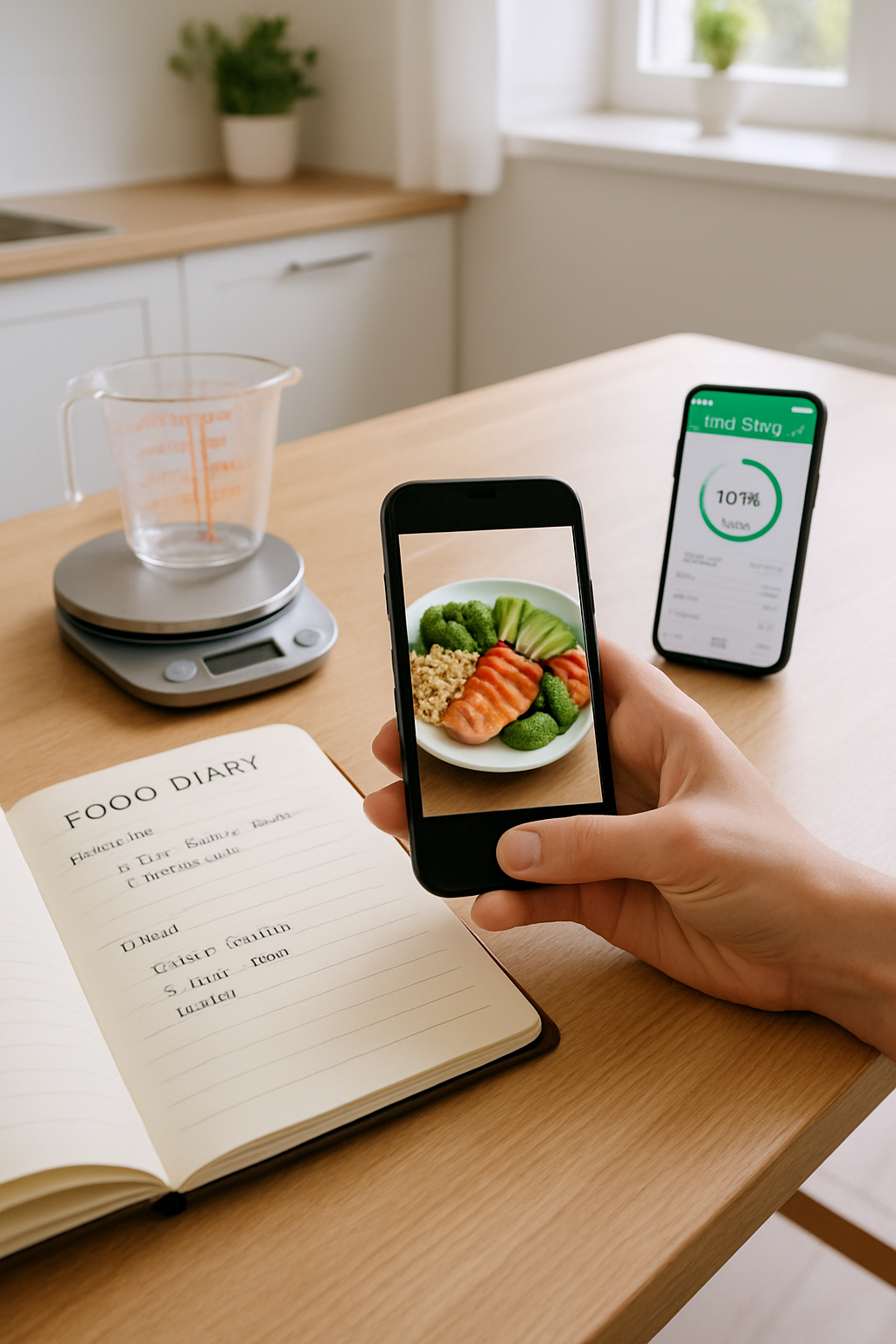
The Core Dilemma: Why Most Food Tracking Fails
We’ve all been there. You start a new health journey, determined to track every calorie. You open a traditional food tracking app, search for 'grilled chicken breast,' scroll through hundreds of entries, estimate the weight, and log it. By day four, the effort becomes a chore, and by the end of the week, the app lies forgotten. This is the reality of nutrition tracking for millions: a great idea defeated by tedious execution.
But what if tracking your meals was as simple as taking a picture? This is the promise of new tools like SnapEat AI. This leap has sparked a crucial debate in nutrition science: a clash between the perceived accuracy of traditional nutrition tracking and the effortless consistency of an AI nutrition tracker. So, which method actually leads to smarter nutrition and better results? Let's break down the data to find the answer that’s right for you.
Traditional Tracking: A Deep Dive into the Manual Method
For years, the gold standard for tracking has been manual entry in apps like MyFitnessPal. This involves searching for each food item, specifying the serving size, and letting the app calculate the nutritional data.
Pro: Unmatched Granular Detail
You get an incredibly detailed breakdown of macronutrients, micronutrients, vitamins, and minerals. For athletes or individuals with specific medical needs requiring precise data, this level of detail is a major advantage.
Pro: Massive Food Databases
These apps leverage huge user-generated databases, containing millions of food items, including specific brands and restaurant meals. If you can eat it, you can probably find it.
Con: Extremely Time-Consuming and Prone to Burnout
Herein lies the biggest problem. The process of searching, weighing, and logging can take 15-20 minutes per day. This significant time investment wears on motivation, leading to what experts call 'tracking fatigue.' A perfect plan you abandon is far less effective than a good plan you stick with.
Con: Hidden Inaccuracies from Portion Estimation
Manual tracking's accuracy is often an illusion. Are you really having one tablespoon of peanut butter, or is it closer to two? Research shows people consistently underestimate their calorie intake due to biased portion control, often by 20-30%. Your 'accurate' data may be flawed from the start.
The AI Revolution: Introducing the SnapEat AI Tracker
Enter the challenger: SnapEat AI. This type of AI nutrition tracker works on a simple, powerful premise: you snap a photo of your meal, and artificial intelligence analyzes the image to identify the foods, estimate their quantities, and log the nutritional value in seconds.
Pro: Unmatched Speed and Convenience
Logging an entire meal takes seconds, not minutes. This drastically lowers the barrier to entry, making the process of creating a food diary feel effortless rather than like a chore.
Pro: Boosts Consistency and Diet Adherence
By removing the most tedious part of tracking, you are far more likely to do it consistently. In nutrition, consistency is the undisputed king of results. This is the easiest way to make nutrition tracking easier and build a lasting habit.
Con: How Accurate is Photo Food Logging?
This is the most common question. While the image recognition technology is constantly improving, it can struggle with hidden ingredients (like oils and sugars) or highly complex dishes. However, it provides an objective estimate, removing the user's own bias when it comes to portion sizes.
Accuracy vs. Adherence: What Does the Science Say?
The core of the academic debate centers on a fundamental question: What matters more for achieving health goals—perfect accuracy or unwavering adherence?
The science of behavior change overwhelmingly favors the path of least resistance. Diet adherence is the single greatest predictor of success. A study from the Journal of Personalized Medicine found that automated, low-friction tracking methods significantly improve long-term adherence compared to high-effort manual logging. If a user can track their intake 90% of the time with 85% accuracy using AI, their net result will be far better than tracking 30% of the time with 95% 'perceived' accuracy before giving up.
A Practical Guide: Which Nutrition Tracker is Right for You?
There is no single 'best' method. The 'smarter' choice depends entirely on your personality, goals, and lifestyle.
Who Should Use a Traditional Tracker?
- You are a competitive athlete or bodybuilder with very specific macronutrient targets.
- You are managing a medical condition (like diabetes or kidney disease) that requires precise nutrient monitoring under a doctor's supervision.
- You genuinely enjoy the process of data collection and find it motivating.
Who Should Embrace an AI Nutrition Tracker?
- You are new to nutrition tracking and want an easy, unintimidating starting point.
- You are a busy professional or parent who values time and convenience above all else.
- You have tried and failed with manual tracking apps in the past due to burnout.
- Your goal is general wellness, weight loss, or building better overall eating habits.
The Hybrid Strategy: The Best of Both Worlds
For many, the optimal solution lies in the middle. Use an AI calorie counter app like SnapEat AI for most of your meals to ensure daily consistency. Then, for a pre-packaged food with a clear nutrition label or a complex recipe you've made yourself, use the app's manual entry function to dial in the accuracy. This gives you the consistency of AI with the precision of manual logging when it matters most.
Frequently Asked Questions (FAQ) about AI Nutrition Tracking
1. Is an AI food tracker better than MyFitnessPal?
It depends on your goal. If your primary struggle is consistency, an AI tracker is superior because it's faster and easier to use. If you require the most granular data for athletic or medical reasons and have the discipline for manual entry, a traditional app like MyFitnessPal might be more suitable. Many users find a MyFitnessPal alternative like SnapEat AI to be a refreshing change that helps them stick to their goals.
2. How does an AI nutrition tracker handle complex meals?
Advanced AIs are trained on millions of food images. They break down a meal into its components (e.g., 'salad' becomes lettuce, tomatoes, chicken, dressing). While not perfect, they provide a strong baseline. Most apps also allow you to quickly edit the AI's suggestions to improve accuracy, which further trains the model.
3. Can an AI tracker really help with weight loss?
Absolutely. Weight loss success is built on a consistent calorie deficit. By making calorie tracking incredibly simple, an AI tracker helps you stay aware of your intake consistently over time. This consistent awareness is the key to making informed food choices that lead to sustainable weight loss.
The Future of Nutrition is Personal and Consistent
The debate between SnapEat AI and traditional methods isn't about which technology is superior; it's about which tool best serves you. Traditional tracking offers detail at the cost of effort. An AI tracker offers revolutionary convenience that fosters consistency.
Ultimately, the science is clear: adherence is king. The smartest nutrition tracker is the one you will actually use day after day. Choose the path that removes friction from your life, empowers you to build lasting, healthy habits, and fits your personal goals. Your long-term success depends on it.