


Imagine the intense focus required for competitive shooting—the steady hand, the sharp eye, the calm mind. Now, imagine achieving victory in that demanding sport as an athlete with quadriplegia. It’s a testament to incredible determination and spirit. But behind such remarkable victories lies a crucial, often unseen, component: precise nutrition. For athletes of all abilities, fuel is fundamental. Yet, for individuals with limited mobility, the simple act of tracking that fuel can be a monumental challenge. This is where innovation like SnapEat AI steps in, revolutionizing the game by empowering everyone to take control of their health with a simple photo.
Why Nutrition is Critical for Individuals with Quadriplegia
As nutrition experts, we emphasize that a well-balanced diet is the cornerstone of health for every single person. It provides energy, supports recovery, and maintains bodily functions. For an individual with quadriplegia, however, meticulous nutrition management takes on even greater significance due to profound physiological changes following a spinal cord injury.
- Muscle Mass Preservation: Reduced physical activity can lead to muscle atrophy. A protein-rich diet is vital to help preserve lean body mass.
- Metabolic Rate Changes: The body's metabolism often slows down, making it easier to gain weight, which can add strain to the body and make mobility more difficult. Careful calorie tracking is essential.
- Bone Density: Lack of weight-bearing activity increases the risk of osteoporosis. Adequate intake of calcium and Vitamin D is critical.
- Skin Integrity: Constant pressure from sitting or lying down can lead to pressure sores. Nutrients like protein, Vitamin C, and zinc are crucial for skin health and wound healing.
Beyond the physical, taking charge of one's diet provides a powerful psychological boost. It's an area of life where one can exert control, make positive choices, and see tangible results, fostering a sense of autonomy and well-being.
The Barrier of Traditional Nutrition Tracking
So, if nutrition is so important, why is it so hard to manage? Consider the standard process for logging a meal with a traditional food diary app:
- Identify every ingredient in the meal.
- Weigh or estimate the portion size of each item.
- Manually type the food name into the app's search bar.
- Scroll through lists to find the correct entry.
- Adjust the serving size.
This process is tedious for anyone. For a person with limited or no hand function, it’s practically impossible. It creates a dependency on caregivers to perform this meticulous task, stripping away a layer of personal independence. This barrier often leads to inconsistent tracking or giving up altogether, leaving health management to guesswork. This is the exact problem that an AI nutrition tracker is designed to solve.
SnapEat AI: How Technology Creates Independence
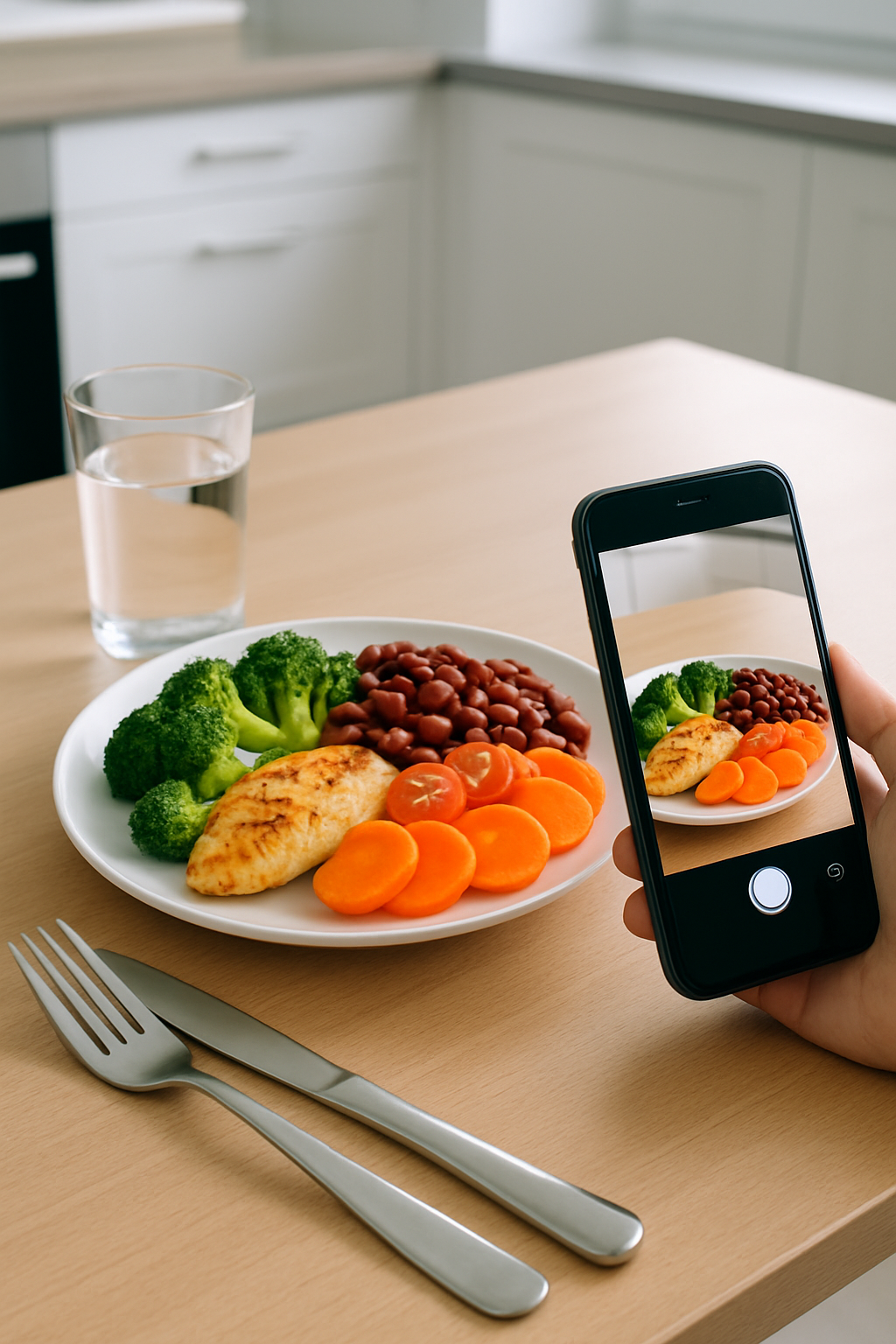
Enter SnapEat AI. The concept is revolutionary in its simplicity: you just snap a photo of your meal. This powerful assistive technology for nutrition transforms the entire process.
How It Works:
- AI-Powered Image Recognition: You take a picture of your plate, and the app's sophisticated artificial intelligence identifies the different foods present.
- Accurate Portion Estimation: The AI analyzes the food items against a reference object (like the plate or cutlery) to estimate portion sizes with remarkable accuracy.
- Instant Nutrient Breakdown: In seconds, SnapEat AI provides a detailed report of the meal's nutritional content, including calories, macronutrients (protein, carbs, fat), and key micronutrients.
For an individual with quadriplegia, this technology is nothing short of liberating. The physical barrier of typing, weighing, and navigating complex menus is completely removed. It transforms nutrition tracking for quadriplegia from an impossible chore into an effortless, two-second action. This fosters a profound sense of self-management and allows for a level of dietary precision that was previously out of reach, empowering athletes to fine-tune their intake for peak performance and health.
A Holistic Approach to Health: Beyond Just Calories
Effective health tracking for disabled individuals goes beyond a simple calorie count. When logging becomes this easy, it opens the door to a more holistic understanding of your health. By consistently using a tool like SnapEat AI, you can begin to connect the dots between your diet and your overall well-being. You can start asking and answering critical questions:
- "Did that high-protein lunch help my energy levels this afternoon?"
- "How does my hydration impact my focus and mood?"
- "Am I getting enough fiber to support my digestive health?"
This data-driven approach allows you and your healthcare team to make truly informed decisions. It’s not just about restricting foods; it’s about optimizing your intake to feel your best, recover faster, and achieve your personal health and performance goals. For anyone wondering how to track food with limited hand function, this is the definitive answer.
Frequently Asked Questions (FAQ)
How can someone with quadriplegia track calories?
Traditional calorie counting apps are difficult to use with limited hand function. The easiest method is using an AI-powered app like SnapEat AI, which allows users to track calories and macros simply by taking a photo of their meal, eliminating the need for manual typing or searching.
Is there an app that tracks food by picture?
Yes, SnapEat AI is a leading app that tracks food by picture. Its advanced image recognition technology identifies foods and estimates portion sizes from a single photo, providing an instant nutritional breakdown. This makes it an ideal food diary app for paralysis or anyone seeking a faster logging method.
What is the best assistive technology for nutrition?
The best assistive technology for nutrition is a tool that removes physical barriers to tracking. AI nutrition trackers like SnapEat AI are considered top-tier because they replace cumbersome manual entry with simple, one-tap photo logging, promoting independence and consistent health management.
Conclusion: A Victory for Health, a Triumph for Inclusivity
The story of an athlete with quadriplegia achieving shooting victories is inspiring on its own. But when you understand the role that accessible technology like SnapEat AI plays in managing the foundational pillar of health—nutrition—it becomes a triumph for inclusivity. It proves that with the right tools, barriers can be broken down. It showcases how inclusive design is not just a feature but a necessity, ensuring that everyone has the opportunity to manage their health with dignity and independence.
Whether you are an athlete, a caregiver, or simply someone looking to simplify your wellness journey, the message is clear. Technology is providing smarter, more accessible ways to take control of your health. It's time to explore these solutions and empower yourself on your path to well-being. Your health victory is just a snap away.