


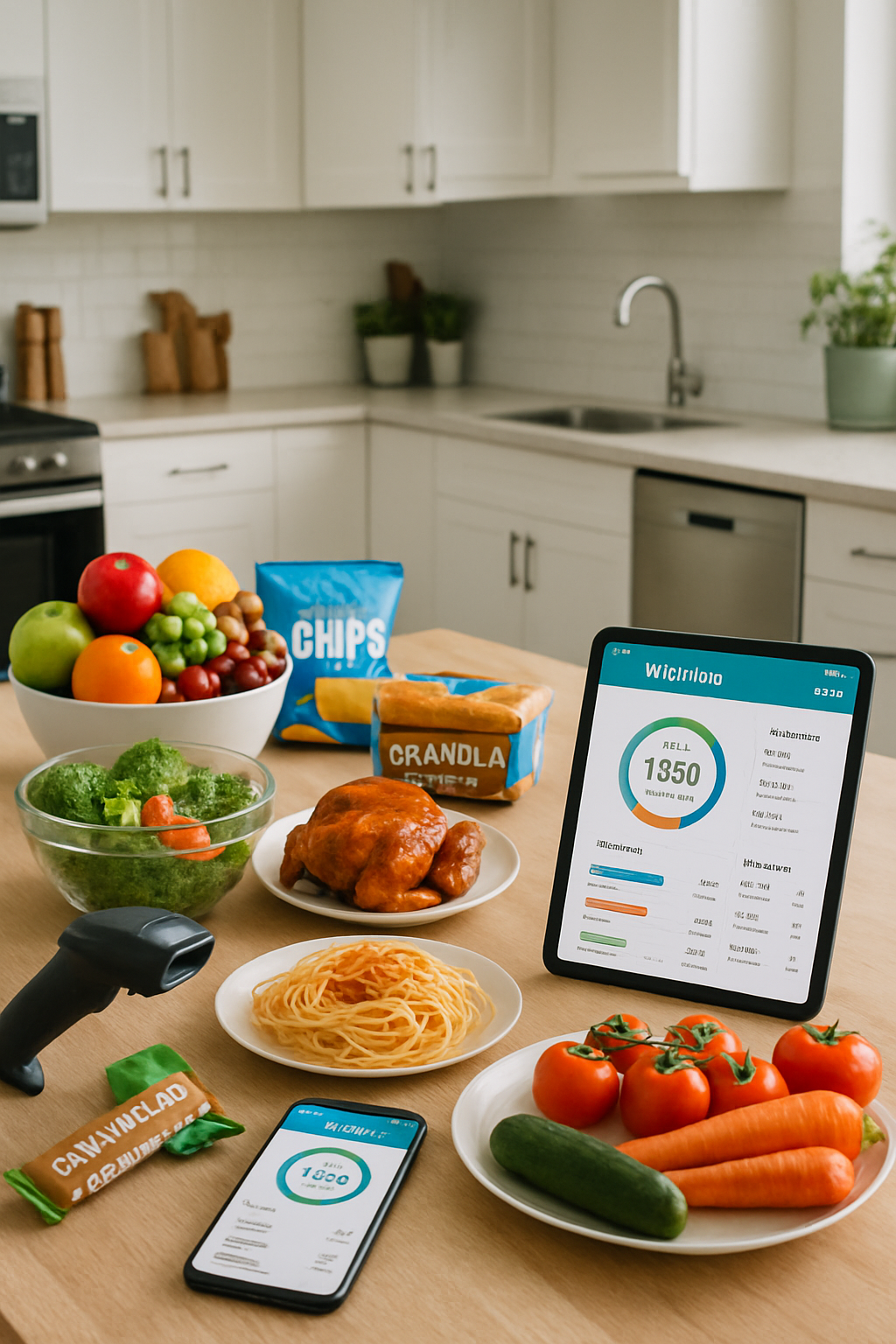
If you’ve ever tried to manage your health, you've faced the dreaded task of food logging. Manually searching for every ingredient and estimating portions feels like a part-time job. This tedious process is the #1 reason most people quit tracking their nutrition. But a revolution is underway. Artificial Intelligence is creating a future of smarter nutrition tracking, where logging a meal is as simple as taking a picture.
This new tech has sparked a showdown. On one side, the "Nationals"—established champions like MyFitnessPal. On the other, the "Pirates"—disruptive AI challengers leveraging the photo food log. Which is right for you? Let's settle the score.
Meet the "Nationals": The Established Champions
When you think of a "food tracking app," you’re thinking of a National. These are household names like MyFitnessPal, Cronometer, and Lose It!, which have dominated the market for years.
- Strengths: Their main advantage is a massive, verified food database built over decades. Their barcode scanner is best-in-class for packaged foods. For data lovers, apps like Cronometer offer exhaustive micronutrient analysis, crucial for spotting dietary deficiencies.
- Weaknesses: Their core function relies on manual entry. Logging a homemade meal means searching for each ingredient. This time commitment is a primary cause of food logging burnout and inconsistency.
Meet the "Pirates": The AI Challengers
Sailing onto the scene are the Pirates, a new breed of AI-first apps built on a magical promise: log your food by taking a picture. These apps use advanced image recognition to identify food, estimate portions, and calculate nutrition.
- Strengths: Their greatest weapon is unmatched speed and convenience. An AI-powered photo food log takes seconds, not minutes. This drastically lowers the barrier to building a consistent tracking habit and makes the process feel futuristic and frictionless.
- Weaknesses: The technology isn't perfect yet. AI nutrition tracking accuracy can be variable, especially with complex meals. While AI portion estimation is a powerful tool, it's still an estimate, and their databases, while growing, are smaller than the Nationals'.
The Head-to-Head Battle: A Feature-by-Feature Comparison
How do these two fleets stack up when they go head-to-head on the features that matter most?
Speed & Convenience
Winner: The Pirates. Nothing beats the speed of snapping a photo. For the busy professional or anyone who values time, the AI approach is a clear game-changer for building a sustainable habit.
Accuracy & Detail
Winner: The Nationals. For precise, granular data (especially micronutrients), their verified databases are still the gold standard. However, the key question is: is 85% accuracy from a consistently used AI app better than 100% accuracy from a manual app you quit after 3 days? For most people, the answer is yes.
Database & Variety
Winner: The Nationals. Their years of crowd-sourced and verified data are hard to beat. If you eat many specific branded products or obscure items, you’re more likely to find them here.
User Experience & Habit Formation
Winner: It Depends. The Pirates' simplicity is incredible for beginners who need to build a habit without feeling overwhelmed. The Nationals' robust community features and detailed history can be highly motivating for long-term, data-driven users.
Choosing Your Champion: Which App is Right for You?
The best food tracking app is the one you will actually use. Here’s how to pick your side.
For the "Data-Driven Analyst"
If you love spreadsheets and need to track every micronutrient for performance or health reasons, join the Nationals. An app like Cronometer will provide the precise, granular data you crave.
For the "Busy Professional"
Your time is your most valuable asset. You want to track your intake but can't spend 20 minutes a day on it. Hoist the flag and join the Pirates. The convenience of a photo food log will help you stay consistent.
For the "Nutrition Newcomer"
The idea of calorie counting is overwhelming. The Pirates offer the gentlest learning curve. Start with a simple AI nutrition tracking app to build the habit first.
Frequently Asked Questions about AI Nutrition Tracking
Is AI nutrition tracking accurate?
Accuracy is improving rapidly. While it may not be 100% perfect like a barcode scan, it's often over 85-90% accurate for common foods. The key benefit is that its high convenience leads to more consistent tracking, which provides a more accurate overview of your diet long-term than sporadic manual logging.
What is the best AI food tracker app?
The "best" app depends on your needs. Look for an app that prioritizes a large, verified food database to back up its AI, offers a clean user interface, and has features that match your specific goals (e.g., macronutrient focus, water tracking, etc.).
Can you really log food by taking a picture?
Yes. Modern AI calorie counter apps use sophisticated image recognition models trained on millions of food images. You snap a photo, the AI identifies the items on your plate, and presents you with a nutritional estimate that you can quickly confirm or adjust.
Conclusion: The Future is a Hybrid Fleet
This showdown doesn't have a single winner because the goal isn't finding the "best app," but the "best app for you." The lines are blurring: Nationals are adding AI, and Pirates are expanding their databases. The future is a hybrid with the speed of a Pirate and the data depth of a National.
Your Action Plan:
- Assess Your Goal: Do you need speed or hyper-accuracy?
- Know Your Personality: Are you motivated by data or simplicity?
- Test Both Fleets: Try a free version of a top National and a top Pirate app for one week each.
The journey to better health is a long voyage. Choose the ship you'll happily sail every single day.