


AI Food Tracking: The Smart Way to Unlock Your Wellness Goals
In the quest for better health, tracking what we eat is a powerful first step. But let's be honest: traditional food logging is a chore. Manually searching for ingredients, guessing portion sizes, and tallying everything up is tedious and often inaccurate. It's no wonder so many of us give up.
What if you could simply snap a photo of your meal for an instant, detailed nutritional breakdown? This isn't science fiction; it’s the new reality of AI food tracking. A smart, principles-based approach, powered by technology like SnapEat AI, revolutionizes how we understand our nutrition. It’s about moving beyond mere calorie counting to unlock true wellness by building awareness, embracing personalization, and fostering a genuinely healthy relationship with food.
Beyond Calorie Counting: 4 Core Principles of Smart Food Tracking
The problem with old-school tracking is its narrow focus. A truly smart food tracking methodology is built on a more holistic and sustainable foundation.
Principle 1: Focus on Nutrient Quality, Not Just Quantity
A 300-calorie donut and a 300-calorie plate of salmon with avocado have the same energy value, but their impact on your body is worlds apart. A smart nutrition app helps you see the full picture: protein for muscle repair, healthy fats for hormone function, and fiber for digestion. This shift in focus is fundamental to health.
Principle 2: Cultivate Mindfulness and Awareness
Do you snack when stressed? Feel sluggish after a carb-heavy lunch? Smart food tracking acts as a mirror, reflecting your habits back to you without judgment. By consistently logging meals, you identify patterns, connect food with feelings, and distinguish emotional cravings from true physical hunger, making you a more mindful eater.
Principle 3: Embrace Consistency Over Perfection
The “all-or-nothing” mindset is the enemy of progress. The 80/20 rule—making nutritious choices 80% of the time—is a sustainable model for success. An AI tracker helps you see the big picture, so one “off-plan” meal is just a single data point, not a failure.
Principle 4: Harness the Power of Personalization
Your body is unique, and your nutritional needs depend on your goals, activity level, and biology. A one-size-fits-all plan is destined to fail. The beauty of AI food tracking is its ability to learn your patterns and deliver personalized nutrition insights that are right for you.
How AI Food Tracking Works: The Technology Behind Effortless Logging
The magic of an app like SnapEat AI lies in its sophisticated yet simple-to-use technology that answers the question: how to track food with a photo?
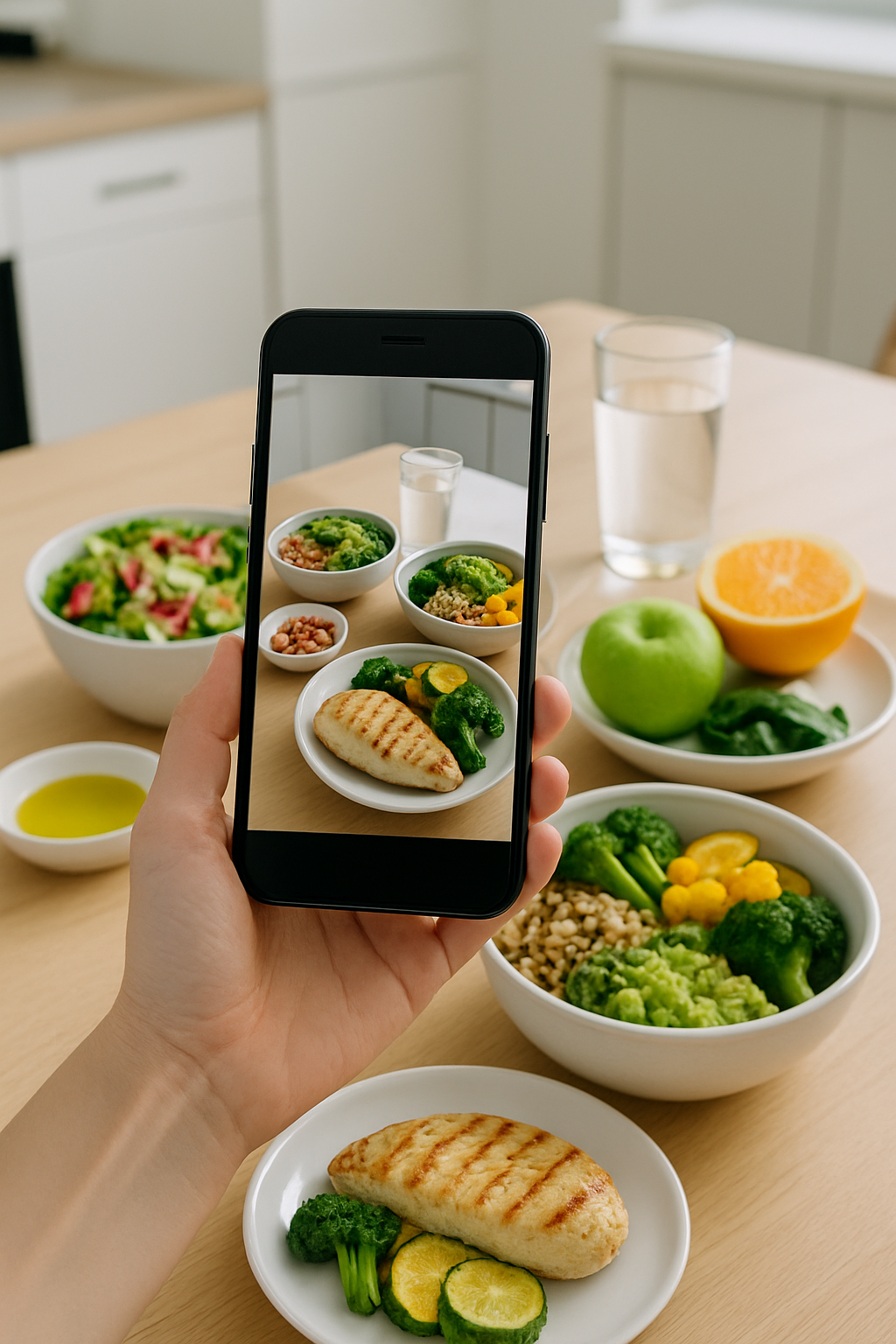
- Step 1: The Snap. Simply take a picture of your plate. Using advanced image recognition, the app instantly identifies every food item, from the chicken breast and broccoli to the sauce drizzled on top.
- Step 2: The Analysis. The AI cross-references the identified foods with a massive, verified nutritional database. It intelligently estimates portion sizes to provide a highly accurate nutrition analysis of your meal's calories, macros, and key micronutrients.
- Step 3: The Learning. The app’s machine learning algorithms analyze your data over time. They highlight trends (e.g., “You're low on protein on weekends”), offer helpful suggestions, and show you how your choices impact your wellness goals.
A Practical Guide: Using a Smart Wellness App to Reach Your Goals
Ready to get started? Using a wellness app for food tracking is a simple practice that can yield profound results.
Step 1: Set Your Intention
Before you log a single meal, define your 'why.' Are you aiming for weight management, building muscle, increasing energy, or improving digestion? Clear goals help the app personalize your targets and keep you motivated.
Step 2: The Daily Practice: Snap, Verify, Learn
Make it a simple habit. Before you eat, snap a photo. The app does the heavy lifting. Briefly glance at the results to verify them—the AI is smart, but a quick check ensures top accuracy. This entire process takes seconds, not minutes.
Step 3: Review Your Weekly Insights
Set aside five minutes each week to look at your reports. Where did you succeed? What were the challenges? Maybe you'll notice your afternoon slump corresponds with low-protein lunches. This insight empowers you to make a small, impactful change.
Step 4: From Tracking to Thriving
Over time, you'll internalize this knowledge. You’ll be able to eyeball portions, know which snacks keep you full, and build meals that make you feel fantastic. The app becomes less of a tracker and more of an educational guide on your path toward intuitive eating.
A Nutritionist's Perspective: The Psychology of Smart Tracking
As nutrition experts, we see many people with a fearful or anxious relationship with food. The right technology can be transformative. Instead of a rigid rulebook, a mindful eating app can be an empowering tool that demystifies nutrition.
It provides objective data, removing guesswork and guilt. Seeing that a treat fits into your day without derailing your progress can be liberating. The ultimate goal isn't to track forever. It's to use the app as a learning tool to build confidence, so you can eventually graduate and rely on your own well-informed intuition.
Frequently Asked Questions About AI Food Tracking
Is photo food tracking accurate?
Modern AI food trackers are surprisingly accurate. They use advanced image recognition and vast, verified databases to identify foods and estimate portions. While a quick user verification is recommended for perfect accuracy, the technology removes over 90% of the manual work.
Is food tracking healthy for your mindset?
When done with a smart, principles-based approach, yes. The goal is not obsession but education. A good app promotes mindfulness and awareness, empowering you with knowledge to build a better relationship with food, reducing anxiety rather than causing it.
What is better than just counting calories?
Focusing on nutrient quality is far more effective than just counting calories. Smart tracking helps you understand your intake of protein, healthy fats, fiber, and micronutrients—the building blocks of true health, energy, and satiety.
Conclusion: Your Wellness Journey, Supercharged
The future of nutrition is personal, intelligent, and effortless. Tools leveraging AI food tracking are removing the biggest barriers to understanding our diets: time, effort, and accuracy. By adopting a smart, principles-based approach, you can move beyond obsessive calorie counting and toward a deeper understanding of how food fuels your body and mind.
This is your opportunity to take control, gain clarity, and build sustainable, healthy eating habits that last a lifetime. Your wellness journey is unique, and with the right approach, you have the power to unlock your full potential.