


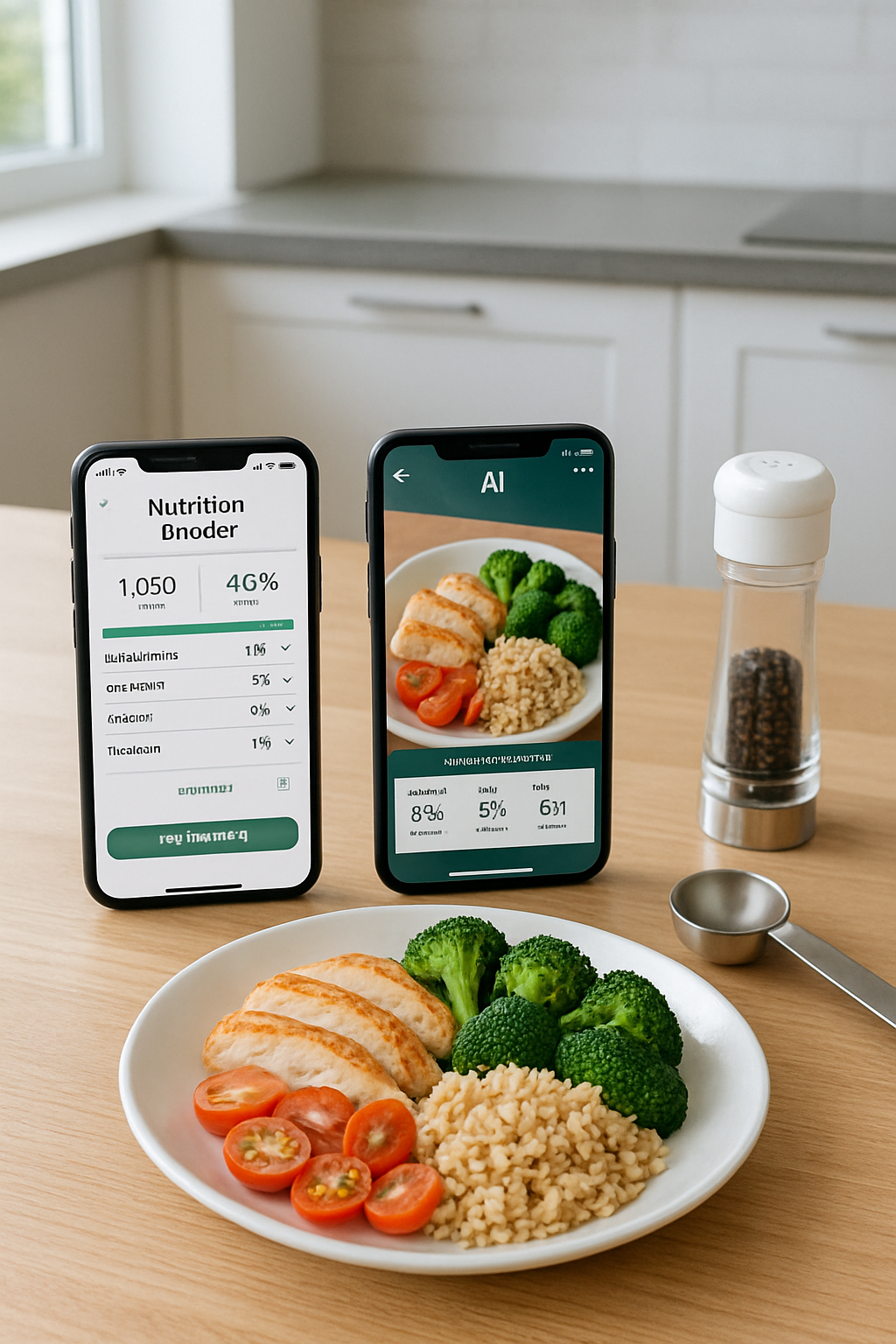
In the competitive arena of health, your diet is the playbook. How you track it can mean the difference between a championship season and an early exit. For years, nutrition tracking was dominated by one style: meticulous, manual entry. But a disruptive new force has entered the game, powered by artificial intelligence.
This is the ultimate showdown. In one corner, we have the traditional method of manual food logging—known for its precision and discipline. In the other, the game-changer: AI photo logging, exemplified by apps like SnapEat AI, which redefines the rules with speed and convenience. So, which method should you draft for your health journey? Let's break down the X's and O's.
Manual Food Logging: The Pros and Cons of Precision
Think of manual logging as the time-tested strategy. This is the world of apps like MyFitnessPal and Cronometer, where you are the head coach, making every call.
The Game Plan: How Manual Logging Works
You actively search a vast database for each food item, scan barcodes, and manually enter portion sizes. It’s a hands-on approach that puts you in complete control of your nutritional data.
Championship Strengths (The Pros)
- Unmatched Accuracy: When you measure and log 150 grams of chicken, you know the data is precise. This control is the gold standard for serious macro tracking or calorie counting.
- Deep Analytics: This method provides a detailed breakdown of not just macros (protein, carbs, fat), but also micronutrients, vitamins, and minerals. It’s a full scouting report on your food.
- Vast Databases: Established apps have enormous libraries of foods, including millions of user-generated entries and verified products.
The Regular Season Grind (The Cons)
- Time-Consuming: Searching for every ingredient in a homemade meal can be draining. This daily effort is the biggest hurdle for long-term adherence.
- Risk of Burnout: The tedious nature of manual entry is a primary reason people abandon their food tracking app. It requires immense discipline.
- Complexity Challenge: Logging a restaurant dish or a meal at a friend's house becomes a game of guesswork, undermining the method's core strength of accuracy.
AI Photo Food Logging: Speed, Convenience, and Accuracy
Enter the innovator. An AI nutrition tracker like SnapEat AI doesn't care about the old rules. Its goal is to get the job done faster and more efficiently than anyone thought possible.
The Game Plan: How SnapEat AI Works
You simply snap a photo of your meal. The AI analyzes the image, identifies food items, estimates portion sizes, and logs the nutritional information for you. It’s a fast break in a single tap.
The Fast Break Advantage (The Pros)
- Effortless Speed: This is the killer feature. Logging an entire meal takes seconds, not minutes. This convenience is a game-changer for building consistent habits.
- Low Barrier to Entry: For a nutrition tracking newcomer, photo logging is intuitive and motivating. It's the easiest nutrition tracking app approach available.
- Focus on Consistency: By removing friction, you’re far more likely to log every meal. Consistency, even with slightly less precise data, often yields better results than sporadic, perfect tracking.
Potential Technical Fouls (The Cons)
- Accuracy Variables: The big question: is photo food logging accurate? While impressive, AI can misjudge portion sizes or miss hidden ingredients like oils, butter, and sugars.
- Less Granular Data: Most AI trackers excel at providing calorie and macro estimates but may not offer the deep micronutrient dive that manual logs do.
- A Developing Technology: AI is constantly improving, but it’s not infallible. The quality of the log depends on the algorithm and image quality.
Head-to-Head: AI vs. Manual Logging Comparison Table
| Feature | Manual Food Logging | AI Photo Logging (SnapEat AI) |
|---|---|---|
| Accuracy | Very High (with user diligence) | Good to High (estimation-based) |
| Speed | Slow (1-5 minutes per item) | Extremely Fast (seconds per meal) |
| Convenience | Low | Very High |
| Best For | Data-driven athletes, medical tracking | Busy professionals, beginners, habit building |
Your Personalized Scouting Report: Which Method to Choose
The best way to track nutrition depends entirely on your goals and lifestyle. Here’s how to decide which team to draft.
Draft Picks for Team Manual Logging
- The Data-Driven Athlete: You need precise macro tracking to fuel performance and recovery. Every gram counts.
- The Medically-Minded Individual: You're managing a condition like diabetes and must track specific nutrients like sugar or sodium with clinical precision.
- The Nutrition Nerd: You genuinely love the data and enjoy understanding the exact composition of your meals.
Draft Picks for Team AI Photo Logging (like SnapEat AI)
- The Busy Professional: Your time is your most valuable asset. An AI nutrition tracker lets you stay on track without derailing your packed schedule.
- The Tracking Newcomer: You're starting your weight loss journey and need a simple, motivating tool to build the foundational habit of awareness.
- The Burnout Victim: You’ve tried manual calorie counting and gave up because it was too much work. An AI tracker offers a fresh start without the fatigue.
The Hybrid Strategy: Getting the Best of Both Worlds
You don't have to choose just one team. Many successful users employ a hybrid approach. Use manual logging for pre-planned, measured meals at home where accuracy is easy to achieve. Then, use an AI photo tracker like SnapEat AI for logging restaurant meals, snacks, or complex homemade dishes where convenience is key.
Frequently Asked Questions (FAQ)
Is AI photo food logging accurate?
AI photo logging is highly accurate for identifying foods but is an estimation when it comes to portion sizes and hidden ingredients like oils or sugars. It provides 'good enough' accuracy for general tracking and habit-building, which is often more effective than inconsistent, perfect tracking.
What is the easiest food tracking app?
For most users, photo-based AI nutrition trackers are the easiest. The ability to log a meal by taking a picture removes the biggest barrier to entry: the time and effort of manual searching and data entry.
Can I use both AI and manual logging?
Absolutely. Using a hybrid strategy is a powerful way to balance accuracy and convenience. Use manual logging when you need precision and AI logging when you need speed.
Conclusion: The Best Food Tracking App is the One You Use
In the AI vs manual food logging debate, there’s no single champion. The winner is determined by the player—you. The most effective food tracking app is the one that seamlessly integrates into your life and empowers you to make better choices consistently. The goal isn't just to log data; it's to build sustainable, healthy eating habits. Whether you choose the disciplined precision of manual logging or the revolutionary speed of an AI nutrition tracker, the most important step is to get in the game. Pick your team, start tracking, and play for the win. Your health is the only championship that truly matters.