


Round 1: The American Plate – A Deep Dive into the Standard American Diet (SAD)
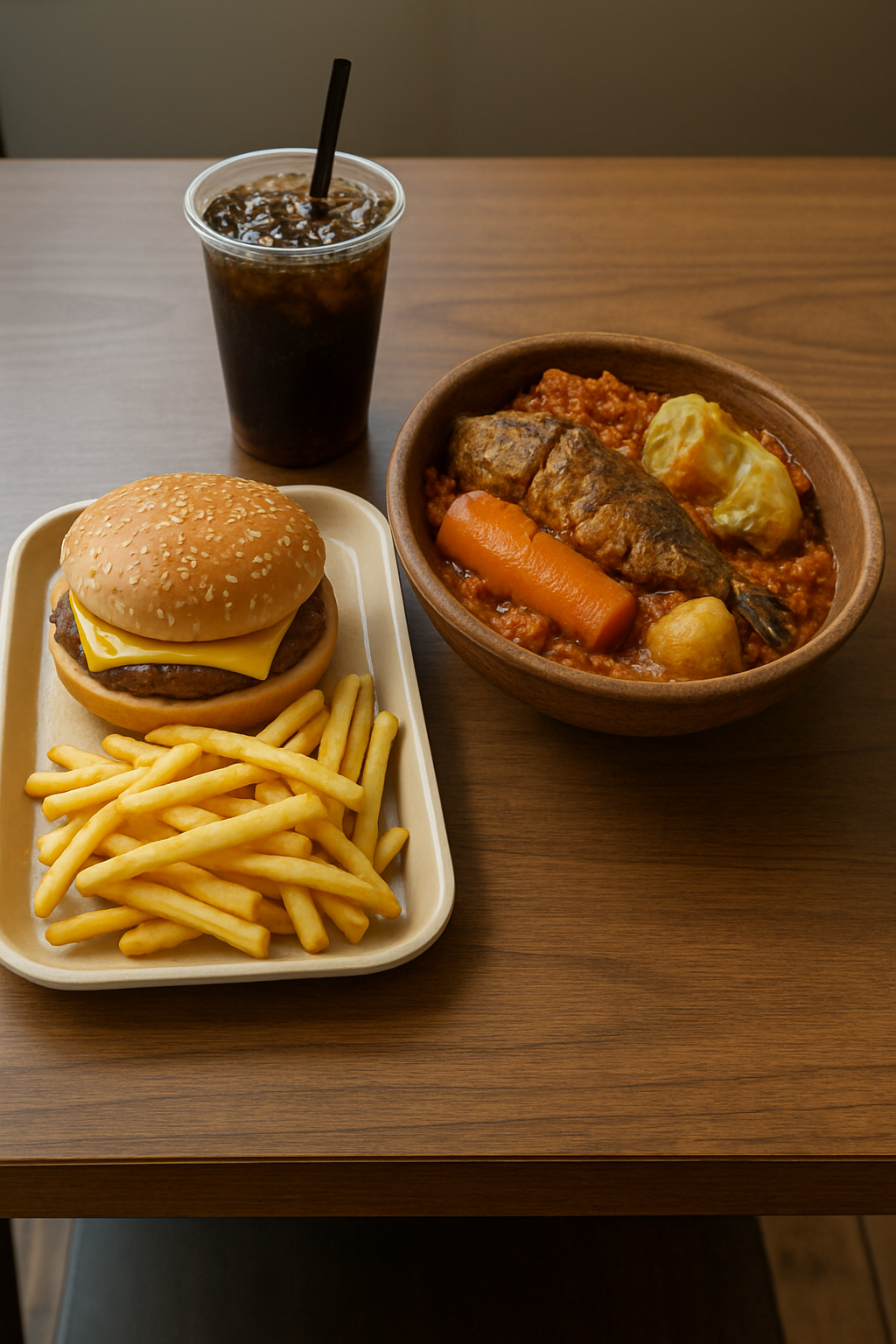
A quick scan of a classic American meal—a cheeseburger, fries, and a soda—sends our AI nutrition sensors into overdrive. This meal is a prime example of the Standard American Diet, often abbreviated as SAD. Here’s the nutritional breakdown.
The Strengths: Convenience and Fortification
- Protein Power: The American diet is rarely deficient in protein. With plentiful access to meat, dairy, and eggs, hitting protein goals is relatively easy, which is crucial for muscle maintenance and satiety.
- Fortification: Many processed foods in the US, from cereal to milk, are fortified with essential vitamins and minerals like Vitamin D and B vitamins. This strategy helps prevent certain deficiencies on a population-wide scale.
- Variety and Access: Supermarkets offer an incredible year-round variety of foods from across the globe. This accessibility is a major advantage for building a diverse diet—if you choose wisely.
The Weaknesses: Processed, Poor, and Problematically Portioned
- Processed Food Overload: The primary red flag is the high level of processing. The burger bun, processed cheese, sugary soda, and ketchup are loaded with refined carbohydrates, unhealthy fats, sodium, and added sugars, which contribute to inflammation and chronic disease.
- Critically Low Fiber: This typical meal is critically low in dietary fiber, which is essential for gut health, stable blood sugar, and feeling full. The white flour bun and skinless fried potatoes offer little of this crucial nutrient.
- High Caloric Density: The combination of large portion sizes and processed ingredients creates a meal that is extremely high in calories but low in micronutrients. This caloric density is a major driver behind health issues linked to the SAD.
Round 2: The Senegalese Bowl – Analyzing a Traditional West African Diet
Next, we analyze Thieboudienne, Senegal's national dish. It’s a flavorful combination of fish, rice, and a medley of vegetables like cassava, carrots, and cabbage, cooked in a savory tomato-based sauce. The difference is immediately clear.
The Strengths: Whole, Healthy, and Harmonious
- Whole-Food Foundation: The AI immediately praises the foundation of whole, unprocessed ingredients. The dish is built around lean protein (fish), carbohydrates, and a wide array of vegetables, which is the cornerstone of any healthy eating plan.
- Rich in Fiber and Phytonutrients: The abundance of vegetables and whole grains provides a wealth of dietary fiber and phytonutrients—powerful plant compounds that fight inflammation and protect cells from damage. Ingredients like onions, garlic, and dark leafy greens are nutritional powerhouses.
- Abundant Healthy Fats: Senegalese cuisine often features fish and peanuts (in dishes like Mafe), providing excellent sources of healthy monounsaturated fats and anti-inflammatory omega-3 fatty acids.
The Weaknesses: Modern Pitfalls
- High Sodium Potential: Traditional preparation can sometimes rely heavily on salt and processed bouillon cubes, which can drive the sodium content sky-high. This is a potential concern for blood pressure management.
- Shift to Refined Grains: While traditional grains like millet and fonio are incredibly nutritious, the increasing use of cheap, imported white rice in urban areas represents a move away from more nutrient-dense options.
- The 'Nutrition Transition': Like many nations, Senegal is seeing Western-style processed foods and sugary drinks become more common, threatening the benefits of their traditional diet.
The Verdict: It’s the Principle, Not the Place
After analyzing the data, the verdict is in. The winner isn't a country, but a concept.
The clear winner is the principle of the traditional Senegalese diet: an eating pattern centered on whole foods, high in fiber, rich in plants and lean protein, and cooked from scratch.
While the Standard American Diet offers convenience, its over-reliance on processed ingredients, sugar, and unhealthy fats makes it a losing strategy for long-term health. The traditional Senegalese diet provides a masterclass in nutrient density and synergy, where all components work together to nourish the body.
Your Winning Game Plan: How to ‘Senegalize’ Your Diet
You don’t need to move to Dakar to reap the benefits. The goal is to apply the principles of a whole-food diet using the variety available right where you are. Here are five actionable steps.
1. Build Your Plate Around Plants
Make vegetables the star of your meal, not a forgotten side dish. Fill at least half your plate with colorful veggies like leafy greens, broccoli, peppers, and carrots. They provide fiber, vitamins, and volume to keep you full.
2. Prioritize Lean Protein and Legumes
Incorporate more fish, lentils, and beans into your weekly routine. Try a "Meatless Monday" featuring a hearty lentil stew or a black bean burger on a whole-wheat bun to boost fiber and cut down on saturated fat.
3. Choose Whole Grains Over Refined
Swap white rice for brown rice, quinoa, farro, or even ancient grains like millet. These complex carbohydrates provide sustained energy, more fiber, and essential nutrients that are stripped from refined grains.
4. Cook More at Home to Control Ingredients
Cooking from scratch is the single best way to control the amount of salt, sugar, and unhealthy fats in your food. It empowers you to focus on the fresh, whole-food ingredients that form the basis of a healthy diet.
5. Get Smart About Healthy Fats
Use olive oil, avocados, nuts, and seeds as your primary fat sources. These provide monounsaturated and polyunsaturated fats that support heart and brain health, unlike the trans fats and refined vegetable oils common in processed foods.
Frequently Asked Questions (FAQ)
What's the single biggest flaw in the Standard American Diet?
The biggest flaw is its heavy reliance on ultra-processed foods. These foods are engineered to be hyper-palatable but are stripped of fiber and nutrients, while being loaded with added sugar, sodium, and unhealthy fats, directly contributing to chronic health issues.
Is all traditional African food healthy?
While the principles of many traditional African diets are exceptionally healthy (plant-forward, high-fiber, whole-food based), preparation methods matter. High use of salt, bouillon cubes, or frying can add unhealthy elements. The key is focusing on the core principles of fresh, whole ingredients.
How can I start cooking more at home without it taking too much time?
Start small with 'meal prepping.' Dedicate 1-2 hours on a weekend to wash and chop vegetables, cook a batch of whole grains (like quinoa or brown rice), and grill some chicken or bake some tofu. This makes assembling healthy meals during the week incredibly fast.
Conclusion: Your Personal Nutrition Victory
Ultimately, the most powerful nutritional tool isn't a fancy AI—it's your knowledge and choices. This nutrition showdown teaches us a vital lesson: prioritize whole, unprocessed foods, no matter where you live. By taking inspiration from the world's healthiest eating patterns, you can declare victory in your personal health game. Ready to see what’s really on your plate? Use a tool like SnapEat AI to get instant feedback and start building your winning meal plan, one delicious, whole-food meal at a time.