


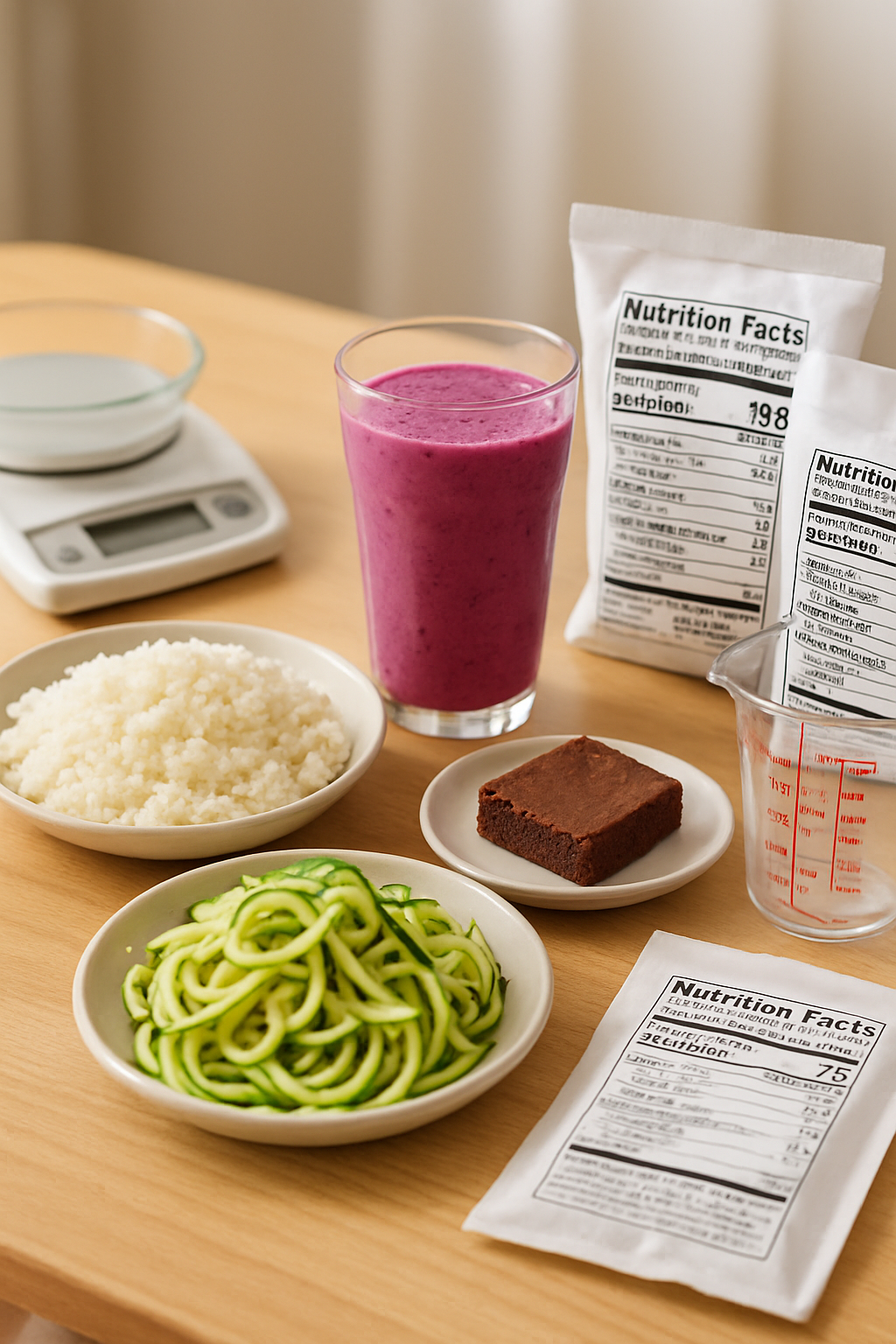
Introducing SnapEat AI: The Ultimate Food Detective?
What makes SnapEat AI so revolutionary? It’s not just another food recognition AI. Our system uses a complex blend of Quantum Calorie Analysis and Neural Tastebud Networks to analyze your meal from a single photo. We claim SnapEat AI can:
- Detect hidden oils and butter used in cooking, down to the last milliliter.
- Identify the exact sugar content in your "healthy" green juice.
- Differentiate between whole wheat pasta and zucchini noodles with 99.9% accuracy.
- Calculate the weight of your chicken breast to the gram, just by analyzing pixel density.
It’s the AI food tracker you’ve dreamed of—an infallible nutrition coach in your pocket. Or is it?
Take the #AprilFoolsFoodChallenge: Can You Stump Our AI?
We’re so confident in SnapEat AI that we’re daring you to trick it. Here’s how you can join the fun:
- Craft Your Deception: Prepare a meal that looks like one thing but is actually another. Think cauliflower pizza crust, black bean brownies, or a salad drenched in a high-calorie dressing.
- Snap a Picture: Take a clear, well-lit photo of your culinary trickery.
- Share and Tag: Post the photo on your favorite social media platform with the hashtag #AprilFoolsFoodChallenge and tag our official account. Our SnapEat AI will "analyze" your entry!
Can you create a dish that stumps the smartest nutrition coach on the planet? We can't wait to see your attempts!
The Real Lesson: Why Food Tracking Is So Tricky (For AI and Humans)
Okay, let's pause the fun for a moment. While our SnapEat AI is a bit of April Fools nutrition fun, it highlights a very real problem: the inherent challenges of food tracking. Even for a sophisticated human brain, guessing the nutritional content of a meal from a photo is nearly impossible. As nutrition experts, here's what we know gets in the way:
Why Are Hidden Calories the #1 Enemy of Accurate Tracking?
The biggest culprit in calorie miscalculation is what you can't easily see. That tablespoon of olive oil your vegetables were sautéed in adds around 120 calories. The creamy dressing on your "light" salad? Potentially another 150 calories. These are things a photo can't see, and we often forget to log. Learning how to identify hidden calories in food is a crucial skill for any health journey.
The Problem with Portion Distortion
Is that one cup of rice or one and a half? Is that a 4-ounce or 6-ounce serving of salmon? Our eyes are notoriously bad at portion control. Studies have shown people can underestimate their calorie intake by 20-50% due to portion distortion alone. This is where many people's calorie estimates go wrong.
The "Health Halo" Effect
A food might be labeled "organic," "gluten-free," or "low-sugar," but that doesn't automatically make it low-calorie. A seemingly healthy smoothie made with fruit, honey, and full-fat yogurt can easily exceed 500 calories, turning a snack into a full meal without you realizing it.
A Nutrition Coach’s Confession: Honesty is Your Best Tool
Alright, you caught us. Happy April Fools' Day!
While a perfect AI food tracker that does all the work for you is still the stuff of science fiction, the spirit behind our joke is real. The goal of using a calorie counter app isn’t to be perfect or to try and "trick" the system.
The most powerful tool you have on your health journey is honesty. When you log your food, you’re not reporting to a judge; you’re gathering data for yourself. Every entry, even the slice of cake or the extra handful of nuts, is a valuable piece of information. It helps you understand your patterns, identify challenges, and build sustainable, healthy habits. The only person you fool with inaccurate logging is yourself.
Beyond the Joke: Actionable Tips for Accurate Calorie Counting
We hope you had a laugh with our #AprilFoolsFoodChallenge. Now, let’s get back to what really works. Here are some accurate calorie counting tips to make your food logging truly effective and drive real results:
- Use a Food Scale: It's a game-changer. Especially when you’re starting, weighing your food (like pasta, rice, and nut butters) is the most accurate way to understand true portion sizes.
- Read the Labels: The nutrition panel is your best friend. Don’t rely on marketing claims. Pay close attention to the "serving size" and "servings per container."
- Account for the Extras: Be rigorously honest about oils, butter, sauces, dressings, and drinks. These "invisible" calories add up quickly!
- Log as You Go: Don’t wait until the end of the day to try and remember everything. Log your meals right after you eat them for the best accuracy.
Thank you for playing along with us today! While SnapEat AI might not be real, our commitment to helping you achieve your health goals with powerful, honest tools certainly is. Ready to stop guessing and start making real progress? Open your app, log your next meal with honesty, and let’s build healthier habits together.