


The Science of a Slam Dunk: Pro Nutrition for Basketball Performance
An athlete's body is a high-performance engine, and food is its premium fuel. For a physically demanding sport like basketball, a generic diet won’t cut it. To understand how to build a proper nutrition plan for basketball players, you need to master three core pillars of sports nutrition.
Fuel for Explosiveness: The Role of Carbohydrates
Those lightning-fast sprints and explosive jumps are powered by glycogen, your body's stored form of carbohydrates. A diet rich in quality complex carbs like oats, quinoa, sweet potatoes, and whole-wheat pasta ensures your energy stores are maxed out. This provides the instant fuel needed for high-intensity bursts, preventing you from hitting a wall in the crucial final minutes.
Strength and Recovery: The Power of Protein
Basketball is a contact sport. Every block, rebound, and drive to the basket creates microscopic tears in your muscles. Protein is the essential building block for repairing this damage, allowing muscles to rebuild stronger and more powerful. Adequate protein for athletes, from sources like lean chicken, fish, eggs, and legumes, is non-negotiable for improving strength and accelerating muscle recovery.
Focus and Endurance: Hydration & Micronutrients
Did you know that losing just 2% of your body weight in sweat can significantly impair performance, reducing speed and cognitive function? Proper hydration for athletes is critical. Balancing water intake with electrolytes like sodium and potassium maintains nerve function and mental sharpness. Furthermore, micronutrients like iron (for oxygen transport) and B-vitamins (for energy metabolism) play a hidden but vital role in sustaining endurance through all four quarters.
A Gameday Blueprint: What Pro Basketball Players Eat
So, what do basketball players eat before a game? Their gameday nutrition is a meticulously timed strategy. While personalized, the blueprint gives you an actionable framework for peak performance.
The Pre-Game Meal (3-4 hours before tip-off)
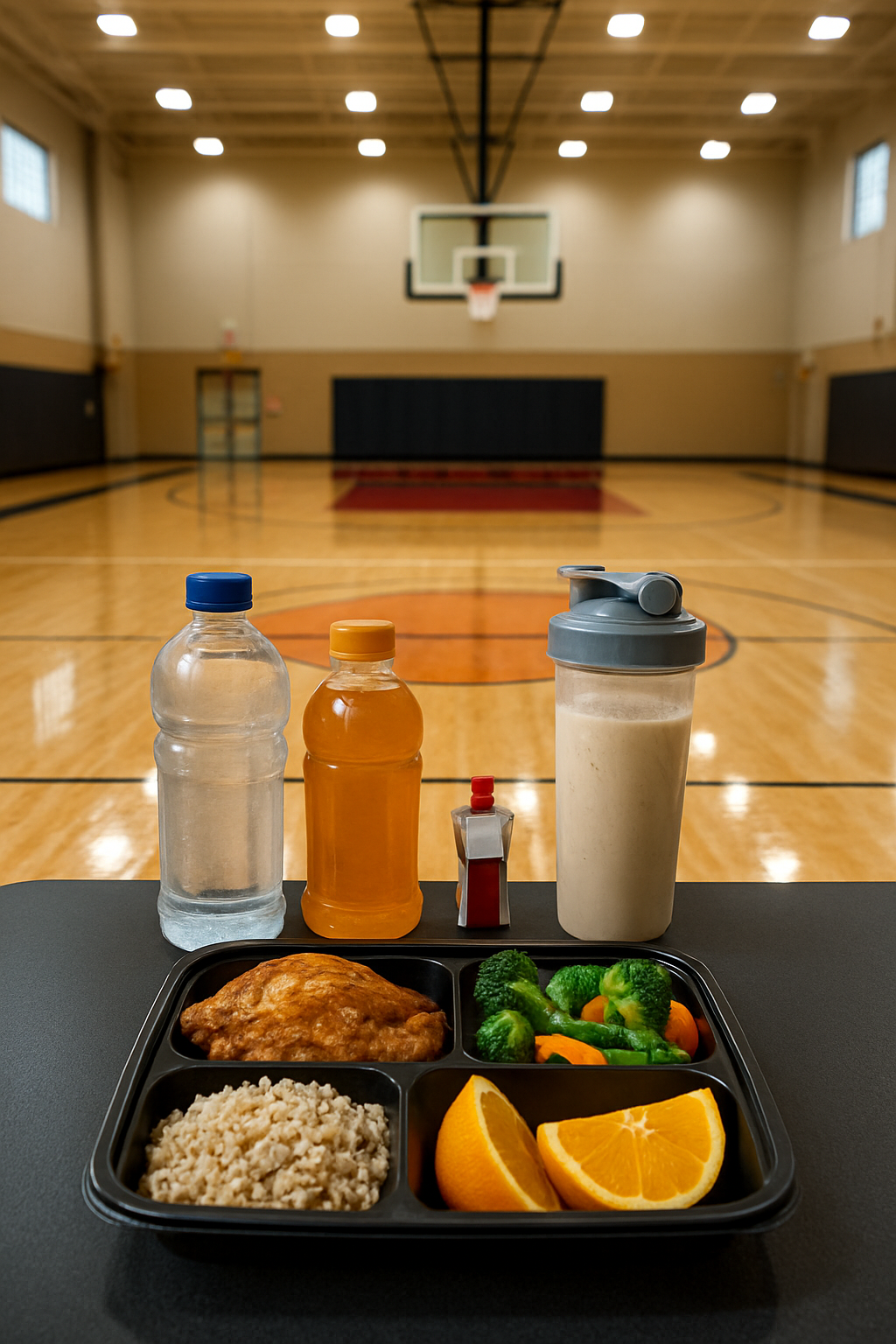
This meal tops off energy stores without causing digestive distress. It should be high in complex carbohydrates, moderate in lean protein, and low in fat and fiber. Example: Grilled chicken breast with a large side of quinoa and steamed green beans.
Half-Time Refueling (During the game)
The goal here is quick, easily digestible energy to fight off second-half fatigue. Sports drinks, energy gels, or fruits like bananas and oranges provide a rapid carbohydrate and electrolyte boost.
The Post-Game Recovery Window (Within 30-60 mins after)
This is the most critical window for repair. A shake or meal with a 3:1 ratio of carbohydrates to protein is ideal. This combination rapidly replenishes depleted glycogen stores and kick-starts the muscle repair process. Example: A whey protein shake with a banana, or a meal of chocolate milk and a turkey sandwich.
The Amateur Athlete's Dilemma: The Knowledge-Action Gap
Reading this, you might think, "This is great for a pro with a team of nutritionists, but how can I do it?" This is the challenge for millions of dedicated athletes. You have the drive, but you lack the resources. You know what to eat, but tracking portions, macros, and timing consistently feels like a second full-time job. This guesswork is the gap between your current performance and your true potential.
Enter SnapEat AI: Your Personal AI Nutrition Coach
This is where technology changes the game. The SnapEat AI app puts the power of a professional sports nutritionist right in your pocket, eliminating guesswork and providing the elite guidance you need to improve athletic performance with food.
- Snap, Don't Type: The process is brilliantly simple. Just snap a photo of your meal. Our advanced AI instantly analyzes your food, breaking it down by calories, macronutrients (carbs, protein, fat), and key micronutrients.
- Personalized for Your Peak Performance: SnapEat AI doesn't use generic templates. Based on your age, body composition, activity level, and goals, our AI nutrition coach app sets personalized daily and per-meal targets to optimize your specific performance.
- Real-Time Feedback for Real Results: Did your lunch have enough protein for recovery? Were your pre-game carbs sufficient? SnapEat AI provides immediate, actionable feedback, turning every meal into an opportunity to fuel smarter. It's the ultimate accountability partner for your athletic journey.
Frequently Asked Questions (FAQ) about Basketball Nutrition
Here are quick answers to common questions we see from athletes.
What should I eat 2 hours before a basketball game?
Focus on easily digestible carbohydrates with a small amount of protein. A banana with a tablespoon of peanut butter, a small bowl of oatmeal, or a sports bar are all excellent choices.
How can I recover faster after a tough game or practice?
Prioritize the 3 R's: Refuel with a carb/protein meal within 60 minutes. Rehydrate with water and electrolytes to replace fluids lost. Rest with adequate sleep, which is when your body does most of its repair work.
Is protein or carbs more important for basketball?
Both are crucial, but for different reasons. Carbohydrates are the primary fuel for in-game energy and endurance. Protein is the primary tool for muscle repair and strength building after the game. It's not about one or the other; it's about the right balance and timing.
Conclusion: Stop Guessing, Start Dominating
The incredible athleticism on display in every Pacers vs. Knicks game is a testament to skill powered by precision fueling. You no longer have to guess how to eat like a pro. With the right knowledge and the right tools, you can bridge the gap between potential and performance.
It’s time to fuel your body with the precision it deserves. Download SnapEat AI today, and transform every meal into a step towards your personal victory. Unlock your peak performance and feel the difference on and off the court.