


The Old Guard: Why Manual Calorie Tracking Falls Short
For years, the gold standard for diet management involved manual calorie counting apps (like MyFitnessPal) and human nutrition coaches. Think of them as the seasoned veterans—reliable, but often slow and demanding. This traditional approach, while foundational, comes with significant drawbacks that lead many people to quit.
The Grind of Manual Logging
- Tedious & Time-Consuming: Searching for every ingredient, estimating portion sizes, and manually entering data for each meal is a major reason for burnout. Consistency becomes a chore.
- Prone to Inaccuracy: Human error in estimating portion sizes (e.g., one vs. two tablespoons of oil) can significantly skew your data and hinder progress.
- Fosters Unhealthy Habits: Constant counting can turn meals into a math problem, leading to an obsessive relationship with food instead of mindful nourishment.
The Limits of Traditional Coaching
- High Cost: Personalized human coaching is a premium service, often costing hundreds of dollars per month, making it inaccessible for many.
- Limited Availability: A human coach isn't available 24/7. You can't get instant feedback on a meal or snack choice outside of business hours.
- Scalability Issues: A single coach can only effectively manage a limited number of clients, creating a bottleneck for expert advice.
The Challenger: How an AI Calorie Tracker Changes the Game
Enter SnapEat AI, the modern challenger built with speed, accuracy, and intelligence. Instead of improving the old system, it creates a new one. SnapEat AI combines two powerful roles—a smart calorie tracker and an AI nutritionist—into one seamless platform.
Effortless Tracking: Just Snap a Photo
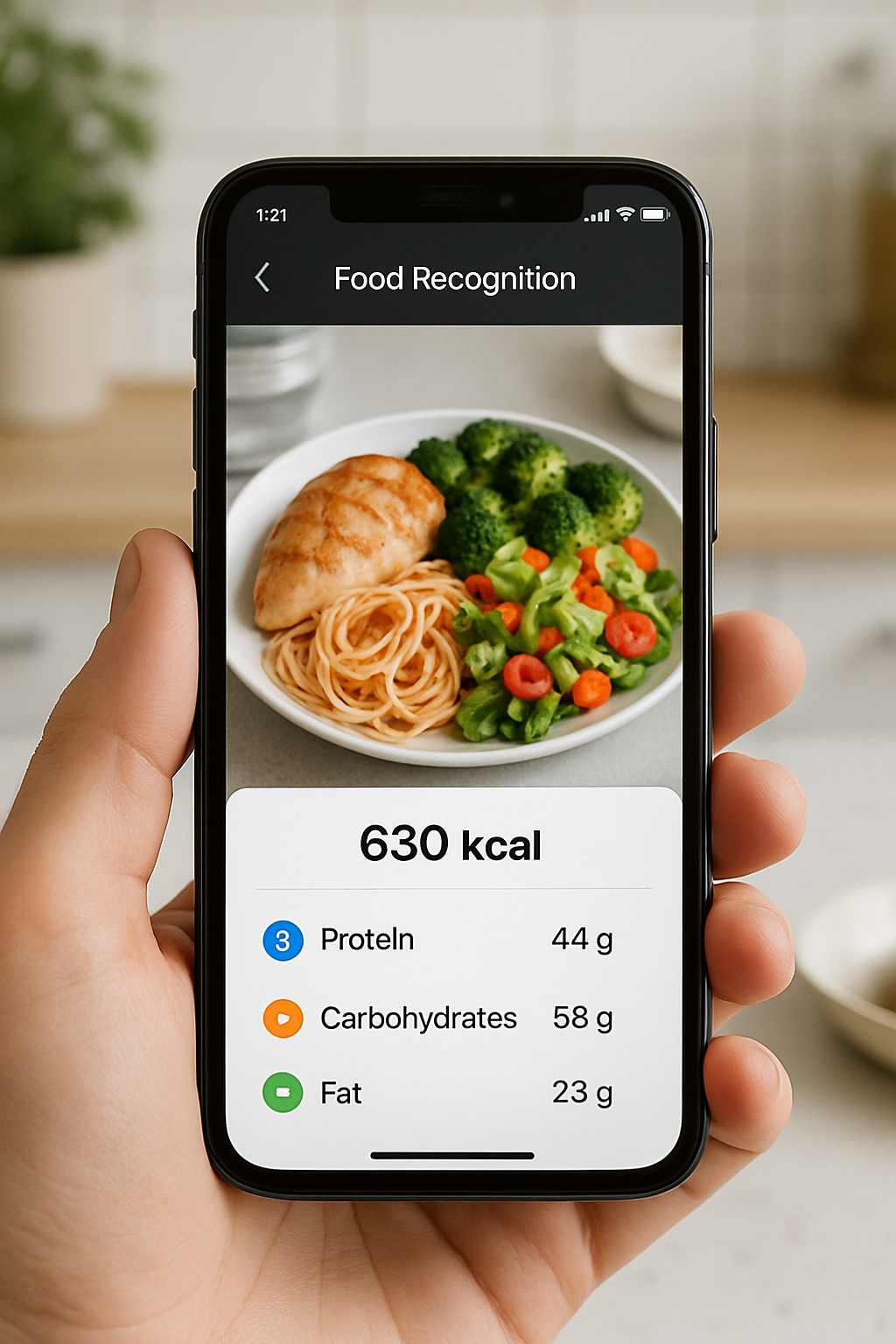
The core innovation is its simplicity. Forget manual searching. With SnapEat AI, you just take a picture of your meal. Our advanced computer vision technology instantly:
- Identifies every food item on your plate.
- Estimates portion sizes with objective accuracy.
- Logs a detailed breakdown of calories, protein, carbs, and fats.
This process takes seconds, not minutes, transforming calorie tracking from a dreaded task into a simple, sustainable habit.
24/7 Guidance: Your Personal AI Nutritionist
SnapEat AI is more than a calorie counter; it's a coach in your pocket. It analyzes your eating patterns and provides real-time, personalized feedback based on your goals.
- Instant Insights: Get immediate suggestions. If you're low on protein, the AI will recommend high-protein snacks. Ate a carb-heavy lunch? It will help you balance your dinner.
- Data-Driven Personalization: The coaching adapts to your actual habits and progress, offering guidance that's truly tailored to you.
- Affordable & Accessible: Gain the benefits of a personal nutritionist at a fraction of the cost, making expert health guidance available to everyone.
Head-to-Head: SnapEat AI vs. Traditional Methods
Let's compare the newcomer against the veteran across the categories that matter most for long-term success.
- Speed & Convenience: SnapEat AI's photo-logging is exponentially faster than manual entry. Winner: SnapEat AI
- Consistency & Sustainability: By removing the tedious work that causes burnout, SnapEat AI is fundamentally more sustainable for building a long-term habit. Winner: SnapEat AI
- Real-World Accuracy: While a meticulous manual logger can be accurate, most people aren't. SnapEat AI's objective AI analysis provides consistent accuracy day after day, removing human error and guesswork. Winner: SnapEat AI
- Cost-Effectiveness: AI nutrition coaching offers the core benefits of a human coach (guidance, planning) for a fraction of the price. Winner: SnapEat AI
- Personalization: A human coach offers deep empathy. However, SnapEat AI provides unparalleled 24/7 availability and personalization based on your real-time data, adapting instantly to your life. Winner: SnapEat AI for data-driven, instant feedback.
Is an AI Nutrition Coach Right for You?
While a human coach may be suitable for those with complex medical conditions requiring direct oversight, SnapEat AI is designed for the vast majority of people looking to build healthier habits. It's the ideal choice if you are:
- A Busy Professional: You don't have 20 minutes a day to manually log meals but want to stay on track.
- A Parent or Caregiver: Your schedule is hectic and unpredictable, and you need a tool that works as fast as you do.
- Someone Tired of Failing: You've tried traditional calorie counters before and quit due to the frustrating process.
- A Tech-Savvy Individual: You want a smart, data-driven solution that leverages technology to make your life easier.
Frequently Asked Questions (FAQ)
How accurate is an AI calorie tracker?
Our AI is trained on a massive dataset of food images to ensure high accuracy in food identification and portion size estimation. While no method is 100% perfect, SnapEat AI provides a more consistent and objective measure than the error-prone guesswork of manual logging for most users.
Can an AI nutritionist replace a human coach?
For goals like weight management, muscle gain, and building healthier eating habits, an AI nutritionist is a powerful and affordable alternative. It provides data-driven, 24/7 support. For complex clinical or medical conditions, we always recommend consulting a registered dietitian or doctor.
What if the AI misidentifies a food?
Easy! SnapEat AI allows you to quickly edit any entry in seconds. Our system also learns from corrections, constantly improving its accuracy over time.
Conclusion: Stop Counting, Start Living
The biggest barrier to achieving your health goals isn't a lack of effort—it's using the wrong tools. Manual calorie tracking is a fundamentally flawed system that sets most people up for failure. It's time to switch to a smarter strategy.
SnapEat AI empowers you by eliminating the most frustrating part of managing your nutrition. It saves you time, provides expert guidance, and builds the consistency you need for lasting results. Ready to trade in the old, tedious playbook for a modern, winning strategy? Download SnapEat AI and discover the future of nutrition today.