


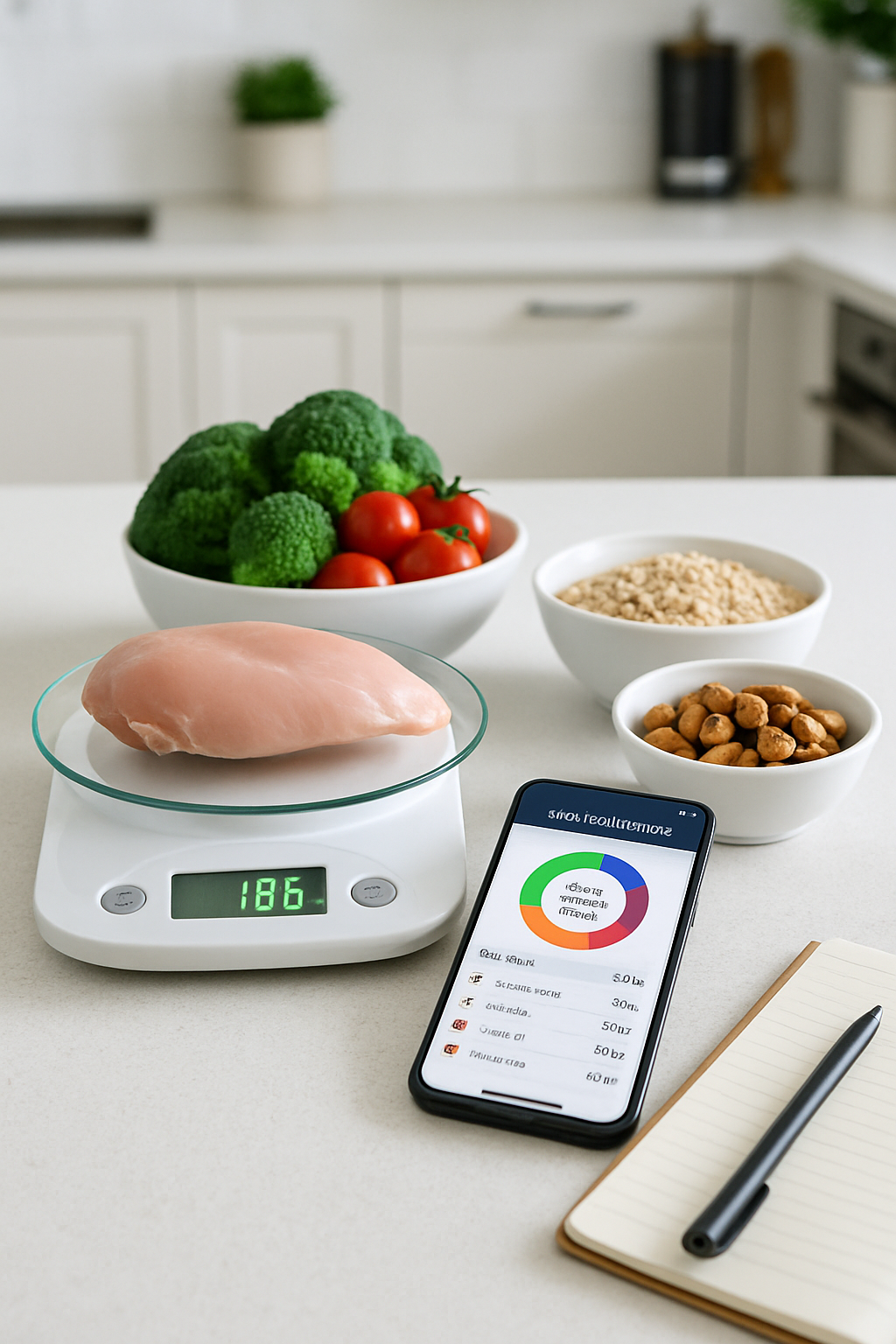
Why You Need to Track Your Meals: The Power of Data
In business and fitness, a core principle holds true: “What gets measured, gets managed.” Without tracking your food intake, you're navigating your nutrition journey blindfolded. Deciding to track your meals is the single most powerful step towards achieving your health goals. Here’s why:
- Uncover “Hidden” Calories: That splash of creamer in your morning coffee, the handful of almonds you snacked on, or the olive oil used to cook your dinner—it all adds up. A nutrition tracker reveals these hidden calories that can unknowingly stall your progress.
- Understand Your Macronutrient Intake: Are you getting enough protein to build muscle and stay full? Are you consuming too many processed carbs that lead to energy crashes? Tracking your macros (protein, carbs, and fats) provides a clear, data-driven picture of your diet's quality.
- Build Mindful Eating Habits: The act of logging your food creates a moment of pause, forcing you to be conscious of what you’re putting into your body. This awareness is the foundation of a healthier relationship with food, transforming mindless eating into conscious fueling.
The "Chainsaw Man" Method: A Simple, Unstoppable Approach
Let's channel that relentless energy. The method isn't complex, but it's brutally effective. Apply these principles to make meal tracking an unbreakable habit.
- Singular Focus: Denji had one simple dream. Likewise, you should pick ONE primary health goal to start. Is it fat loss? Is it muscle gain? Focus all your energy there. Don't try to lose 20 pounds, build 10 pounds of muscle, and run a marathon all at once.
- Brutal Consistency: The battle is logging your food. Every. Single. Day. Did you have a “bad” day and eat a whole pizza? Track it. Did you have a “perfect” day? Track it. Consistency provides the essential data needed for adjustments and builds an unstoppable habit.
- Embrace Simplicity: Don't get overwhelmed by tracking dozens of micronutrients on day one. Start simple. Your first mission is to consistently hit your daily calorie and protein targets. Once that becomes second nature, you can expand your focus.
- Fuel for the Fight: View food as fuel for your life's battles—be it a tough workout, a demanding workday, or parenting. Ask yourself: “Will this meal help me win today?” This shifts your mindset from “good vs. bad” food to “effective vs. ineffective” fuel.
Choosing Your Weapon: AI Meal Trackers & Top Alternatives
Manual food diaries are a relic of the past. Modern technology makes calorie counting easier than ever. The rise of AI-powered meal tracking apps, which tools like SnapEat AI helped pioneer, allows you to log food with a simple photo. While specific apps may come and go, the technology is here to stay. If you've been searching for SnapEat AI alternatives or are new to tracking, here’s what to look for in a quality meal tracking app:
- Massive Food Database: The app should easily find most branded products and whole foods.
- Barcode Scanner: A non-negotiable feature for quickly logging packaged items.
- Recipe Importer: Allows you to paste a recipe's URL to automatically calculate nutritional information per serving.
- Clear Macro Tracking: Provides a simple, visual breakdown of your protein, carb, and fat intake.
Popular and highly-rated alternatives include MyFitnessPal, Cronometer, and Lifesum. We recommend trying one or two to see which user interface you find most intuitive.
A Practical 4-Step Guide to Effective Meal Tracking
Ready to pull the cord? Here’s your four-step battle plan for starting today.
- Define Your Goal and Set Targets: Use an online BMR calculator or your chosen app to estimate your daily calorie needs for your goal (e.g., weight loss). For protein, a good starting point is 1.6–2.2 grams per kilogram of bodyweight (0.7–1.0g per pound).
- Be Honest and Accurate: This is where most people fail. You must be honest about what you eat and accurate with your portions. “Guesstimating” is a recipe for stalled progress.
Expert Tip: A $15 digital food scale is the single best investment you can make for your fitness journey. It eliminates guesswork and ensures your data is reliable.
- Plan and Pre-Log Your Meals: The ultimate pro-move is logging tomorrow's meals today. This five-minute habit removes decision fatigue and makes you far less likely to make impulsive, off-plan food choices.
- Review and Adjust: At the end of each week, review your data. Did you hit your calorie and protein targets? Is your weight trending in the right direction? This data empowers you to make small, informed adjustments instead of making drastic, panicked changes.
Frequently Asked Questions about Meal Tracking (FAQ)
Is meal tracking necessary for weight loss?
While not strictly necessary for everyone, it is the most reliable and efficient method for ensuring you are in a calorie deficit, which IS necessary for weight loss. It removes guesswork and provides clarity.
How long should I track my meals?
Track consistently until you achieve your initial goal. Afterward, many people find they can transition to more intuitive eating, having built a strong understanding of portion sizes and the nutritional content of their typical foods. It can also be a tool you return to periodically to recalibrate.
Can meal tracking become an unhealthy obsession?
Yes, for some individuals, it can. The goal is to use it as a tool for awareness, not a source of anxiety. If you find it's causing stress or a negative relationship with food, it's important to take a break or work with a nutrition professional. The focus should always be on sustainable health, not perfection.
Conclusion: Stop Dreaming, Start Tracking
Your health goals are your “toast with jam”—they are worth fighting for. Meal tracking isn't a punishment; it's the most powerful weapon in your arsenal for taking complete control of your body composition and well-being. The conversation around apps like SnapEat AI ending simply proves that the tool is less important than the habit itself. Awareness and consistency are your true superpowers.
So, here is your call to action. Download a nutrition tracker right now. Invest in a food scale. And track your very next meal. It doesn’t have to be perfect. It just has to be done. Unleash that unstoppable focus and finally achieve the health goals you deserve.