


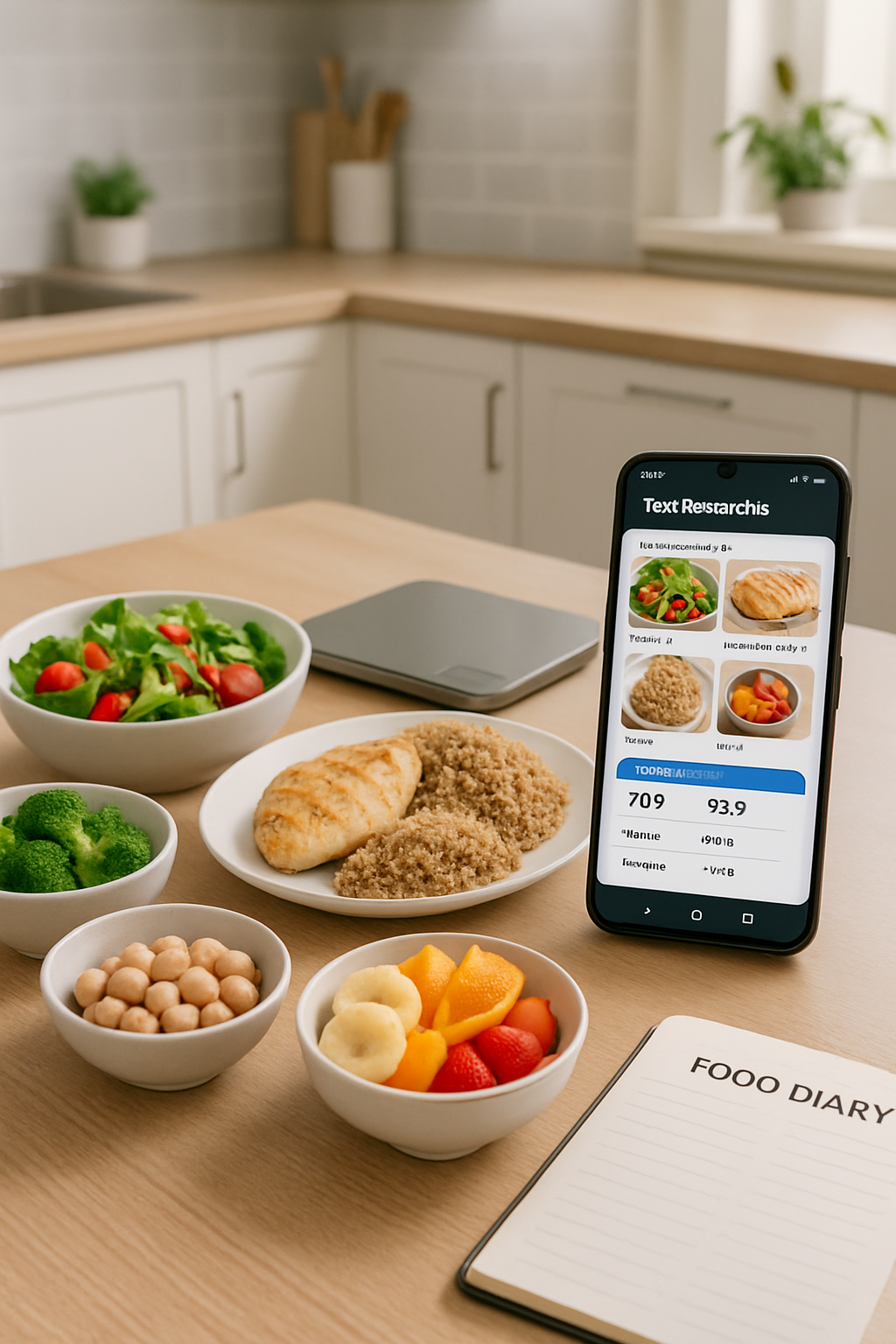
The Evolution of Food Logging: From Notebooks to AI Food Recognition
For decades, understanding your diet meant carrying a pen-and-paper food diary. Then came the first wave of digital apps with vast food databases and barcode scanners. While a major leap, they still demanded significant manual effort—searching for ingredients, estimating portion sizes, and piecing together recipes. Many users found this process too tedious to maintain.
Now, we are in a new era powered by artificial intelligence. Instead of telling your app what you ate, you can show it. This is where tools built on AI food recognition are changing the game, offering a more seamless, intuitive, and consistent way to track nutrition and finally achieve your health goals.
How an AI Nutrition Tracker Works: Track, Recognize, Achieve
The magic of an AI nutrition tracker lies in its simple yet powerful three-step framework. Understanding this process is key to leveraging its full potential for your health transformation.
- Track with a Snap: The core feature is simplicity. Instead of typing, you just take a picture of your meal. This single action captures your food in its real-world context, removing the friction that causes so many to abandon tracking. It's a fast, easy habit that can be done in seconds.
- Recognize with Intelligence: This is where the AI shines. The food recognition app uses advanced machine learning to analyze the image. It identifies different food items—from the chicken breast and broccoli to the serving of quinoa. More impressively, it estimates portion sizes and cross-references this with a massive nutritional database to provide an instant breakdown of calories, protein, carbs, fats, and even key micronutrients.
- Achieve with Data: Tracking data is useless without insight. A smart AI health app doesn’t just show you numbers; it helps you understand them. It visualizes your progress toward daily targets, displays macronutrient ratios, and generates reports over time. By connecting your daily intake to your overarching nutrition goals—whether it's weight loss, muscle gain, or simply eating a more balanced diet—it turns raw data into a roadmap for success.
Beyond Calorie Counting: The True Power of AI for Health
While accurate calorie counting is a major benefit, the true health transformation comes from the deeper impact these tools have on our habits and mindset. This is where an AI nutrition tracker surpasses a simple food diary app.
- Enhances Mindful Eating and Awareness: The act of taking a photo of your food forces a moment of pause. This simple ritual encourages mindfulness. When you visually review your meals, you're not just looking at numbers; you're seeing your choices. This visual feedback is a powerful motivator for making better ones tomorrow.
- Uncovers Hidden Dietary Patterns: Are you consistently low on fiber? Is your sodium intake spiking on weekends? An AI nutrition tracker can analyze your long-term data to reveal patterns you’d never notice on your own. These personalized nutrition insights are invaluable for making targeted, effective changes to your diet.
- Provides Personalization at Scale: Generic advice like "eat more protein" is hard to implement. An AI tool can provide specific, data-driven feedback, such as, "You are averaging 60g of protein, but your goal is 100g. Consider adding a serving of Greek yogurt to your breakfast." This level of tailored advice makes achieving your nutrition goals far more manageable.
A Nutritionist's Guide: Maximize Your AI Tracker for Real Results
As nutrition experts, we see these apps as incredibly powerful tools. However, a tool is only as effective as the person using it. Here’s how to use an AI food recognition app to get real, lasting results.
- Set Clear and Specific Goals: Before you track, define your "why." Is it weight loss? Set a realistic calorie deficit. Is it building muscle? Set a protein target. A clear goal makes tracking purposeful and keeps you motivated.
- Trust but Verify: AI is smart, but not infallible. For a complex homemade soup or a restaurant dish with unknown sauces, the AI's estimate is a starting point. Take a moment to review and adjust the recognized items and portion sizes. The more you correct it, the smarter the tool often becomes.
- Focus on Trends, Not Daily Perfection: Don't get discouraged by one high-calorie day. Health is built on consistency over time. Use the app to monitor your weekly and monthly averages. Are they trending in the right direction? That’s what leads to a true health transformation.
- Pair Technology with Professional Advice: An AI health app is a brilliant assistant, but it’s not a replacement for a professional. If you have a medical condition like diabetes, severe allergies, or complex performance goals, use the data from your app as a detailed log to share with a registered dietitian, nutritionist, or doctor.
Frequently Asked Questions (FAQ)
How accurate is AI food recognition?
AI food recognition has become highly accurate for common, single-ingredient foods. Accuracy can vary for complex, multi-layered dishes or meals with hidden ingredients (like oils and sugars). That's why the "Trust but Verify" step is crucial for getting the most precise data.
Is an AI tracker better than a manual calorie counting app?
For many people, yes. The main advantage of an AI tracker is its speed and ease of use, which dramatically improves consistency. While manual apps can be very accurate if used diligently, many people abandon them due to the time commitment. An AI nutrition tracker lowers the barrier to entry for successful long-term food logging.
Can AI help me with specific diets like Keto or Vegan?
Absolutely. Most advanced AI nutrition trackers allow you to set specific macro targets (high fat/low carb for Keto) or dietary preferences (Vegan). The app will then track your intake against these specific goals, making it easier to stay on plan.
Conclusion: Your Ultimate Partner in Health Transformation
So, can an AI nutrition tracker help you transform your health? The answer is a resounding yes—it can be a powerful partner on that journey. By removing the biggest barriers to consistent food logging, it makes it easier than ever to build awareness and stay accountable. It provides the data and personalized insights you need to move from guessing to knowing.
However, the technology itself won't do the work for you. The transformation happens when you use the information it provides to make conscious, informed, and sustainable choices. Ready to stop guessing and start knowing? Embrace technology as your knowledgeable health companion and take the first step to finally achieving your nutrition goals.