


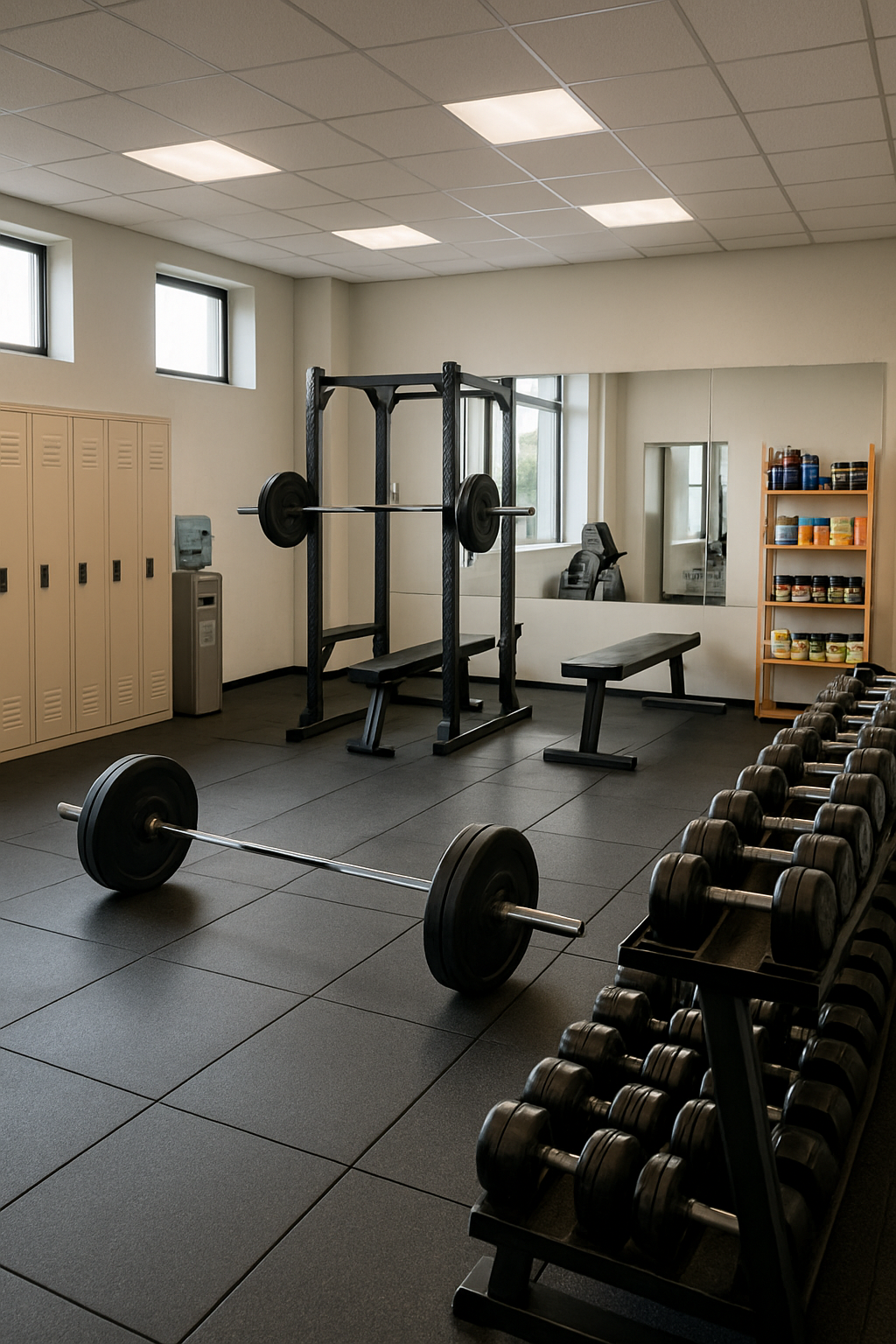
Pillar 1: Smart Strength Training to Build Your Foundation
You can't get stronger without challenging your muscles. But how you train separates those who make consistent progress from those who spin their wheels. Smart training isn't about spending hours in the gym; it's about applying proven principles effectively.
What is Progressive Overload and Why is it Essential?
If you remember only one concept, let it be this: to get stronger, you must consistently make your workouts more challenging over time. This is the progressive overload principle, the non-negotiable cornerstone of all strength gains. Your body is incredibly adaptive. If you do the same workout with the same weight for months, your body has no reason to get stronger. You must give it a new stimulus.
You can apply progressive overload in several simple ways:
- Increase Weight (Intensity): The most direct method. If you squatted 50 kg for 5 reps last week, aim for 52.5 kg this week.
- Increase Reps (Volume): Can't increase the weight? Do more reps. If you did 5 reps last week, aim for 6 this week.
- Increase Sets (Volume): Add an extra set to your main exercises to increase the total workload.
- Decrease Rest Time (Density): Reduce your rest period between sets from 90 seconds to 75 seconds to make the workout more intense.
Focus on Compound Exercises for Maximum Gains
For efficient and functional strength, focus on compound exercises for strength. These are multi-joint movements that recruit multiple large muscle groups at once. This allows you to lift heavier, stimulate more muscle growth, and improve real-world strength far more effectively than isolation exercises like bicep curls. They are the fastest way to build muscle and strength simultaneously.
Your workout plan should be built around the "Big 5" compound lifts:
- The Squat: The king of leg exercises, developing your quads, glutes, hamstrings, and core.
- The Deadlift: A total-body powerhouse that builds immense strength in your back, glutes, hamstrings, and grip.
- The Bench Press: The classic upper-body push exercise for chest, shoulders, and triceps.
- The Overhead Press (OHP): Builds powerful shoulders, a strong core, and upper-body stability.
- Rows (e.g., Barbell or Dumbbell Row): The perfect counter-movement to pressing, building a thick, strong back and improving posture.
Structuring Your Workout Plan for Strength
A common mistake in strength training for beginners is overcomplicating the routine. Simplicity and consistency are key. A full-body workout 2-4 times per week is a highly effective starting point. For pure strength goals, focus on a lower rep range with heavier weight. A proven protocol is 3-5 sets of 4-6 reps on your main compound lifts. Always prioritize perfect form over lifting heavier with bad technique to prevent injury and ensure you're working the right muscles.
Pillar 2: Strategic Nutrition to Fuel Your Gains
You can't build a strong house without bricks and mortar. Similarly, you can't build a strong body without the right fuel. Your nutrition for strength training is not a secondary thought—it's equally as important as your time in the gym.
Calories and Protein: The Building Blocks of Muscle
Muscle is metabolically active tissue; it requires energy (calories) to be built and maintained. To get stronger, you generally need to eat enough calories. Aim to eat at your maintenance level or in a slight caloric surplus (an extra 200-300 calories per day) to provide your body with the raw materials for muscle repair and growth.
Protein is the most critical macronutrient for this process. When you lift weights, you create micro-tears in your muscle fibers. Protein provides the amino acids to repair these tears, making the muscle bigger and stronger. Aim for 1.6 to 2.2 grams of protein per kilogram of body weight (or about 0.7 to 1.0 grams per pound). Excellent protein sources include lean meats, fish, eggs, Greek yogurt, cottage cheese, legumes, and protein powders.
Don't Fear Carbs and Fats
In the quest for strength, carbohydrates and fats are your allies. Carbs are your body's primary fuel source for high-intensity exercise like heavy lifting. Consuming enough complex carbs (oats, brown rice, sweet potatoes) ensures you have the energy to perform at your peak. Meanwhile, healthy fats (from avocados, nuts, seeds, and olive oil) are vital for hormone production, including testosterone, which plays a key role in muscle and strength development.
Pillar 3: Intelligent Recovery, Where Strength is Forged
Your muscles don't get stronger while you're lifting; they get stronger while you are resting. Neglecting recovery is the fastest way to hit a plateau, burn out, and risk injury. This is where the real muscle growth happens.
Sleep: The Ultimate Performance Enhancer
Sleep is the most powerful and underrated tool for muscle recovery. During deep sleep, your body releases human growth hormone (HGH), which is essential for repairing tissue and building muscle. Consistently getting 7-9 hours of quality sleep per night is non-negotiable if you are serious about getting stronger. One bad night can crush your performance and sabotage your gains.
The Importance of Rest Days and Deload Weeks
Rest days are when the magic happens. Your muscles need time to repair and adapt. As a rule of thumb, allow at least 48 hours of rest for a muscle group before training it intensely again. Furthermore, after 4-8 weeks of hard training, your body and central nervous system (CNS) accumulate fatigue. A "deload week"—a planned week of lighter training with reduced weight or volume—allows your body to fully recover, dissipate fatigue, and come back stronger, ready to break new personal records.
Frequently Asked Questions (FAQ) About Getting Stronger
- 1. How long does it take to see strength gains?
- Beginners often experience rapid neurological adaptations, feeling stronger within the first few weeks. Noticeable muscle growth typically takes 6-8 weeks of consistent training and proper nutrition.
- 2. Can I get stronger without gaining weight?
- Yes, especially for beginners. This is called body recomposition, where you build muscle and lose fat simultaneously. It requires eating at maintenance calories with high protein intake. Advanced lifters may find it more difficult.
- 3. What's the difference between training for strength vs. size (hypertrophy)?
- Strength training typically uses heavier weights for fewer reps (e.g., 1-6 reps). Hypertrophy training uses moderate weights for more reps (e.g., 8-12 reps) to maximize muscle volume. However, there is significant overlap, and getting stronger will almost always lead to bigger muscles.
- 4. Is cardio bad for strength gains?
- No, when done correctly. Excessive long-duration cardio can interfere with recovery, but 2-3 sessions of low-to-moderate intensity cardio per week can improve heart health and recovery without hurting your strength progress.
Your Action Plan to Get Stronger
Getting stronger is a rewarding journey that empowers every aspect of your life. It doesn't require magic pills or complex routines. It simply demands a commitment to the three pillars. Here is your checklist to start today:
- ✅ Embrace Progressive Overload: Go into each workout with a plan to do slightly more than last time.
- ✅ Master the Compound Lifts: Build your workouts around squats, deadlifts, presses, and rows.
- ✅ Fuel Your Body: Eat enough calories and prioritize hitting your daily protein target of 1.6-2.2g per kg of bodyweight.
- ✅ Prioritize Sleep: Make 7-9 hours of quality sleep a non-negotiable part of your training.
- ✅ Be Consistent: Showing up consistently is more important than having a single "perfect" workout. Strength is a marathon, not a sprint.
The path to a stronger you is laid out. It's built on simple principles, executed with consistency. Start with one small change today—your future self will thank you.