


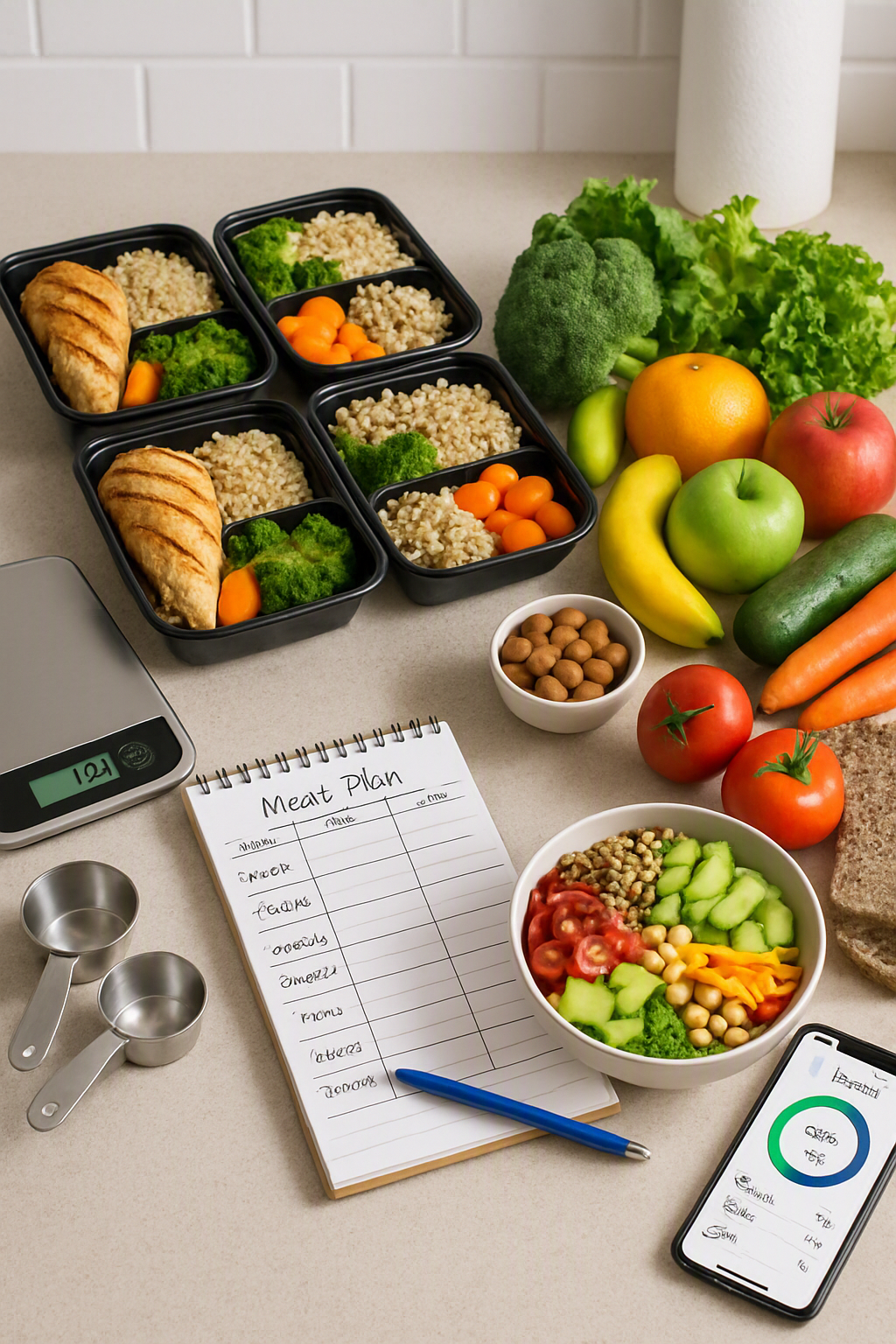
The Structured Approach: The Power of Meal Planning & Consistency
This approach is all about structure, routine, and preparation, much like a well-drilled sports team. It's the school of meal prepping, macro tracking, and consistent eating schedules. This data-driven strategy is designed for precision and control in your healthy eating journey.
Pros of Meal Planning
- Reduces Decision Fatigue: You always know what you’re eating. This removes guesswork and the risk of making poor choices when hunger strikes.
- Time and Cost Efficient: A few hours of meal prep on a Sunday can save you significant time, money, and mental energy throughout a busy week.
- Highly Goal-Oriented: It’s incredibly effective for specific targets, such as creating a calorie deficit for sustainable weight loss or ensuring adequate protein intake for muscle gain.
Cons of Meal Planning
- Potential Rigidity: Life is unpredictable. A last-minute dinner invitation or office pizza party can feel disruptive to a strict plan.
- Risk of Burnout: For some, the constant tracking and repetitive meals can feel restrictive, potentially leading to diet burnout.
- Social Challenges: Sticking to a rigid plan can be difficult when dining out or enjoying holidays with family and friends.
Who it's for: This approach is a home run for busy professionals, athletes with specific performance goals, and anyone who thrives on structure and feels empowered by data-driven results.
The Flexible Method: The Art of Intuitive & Mindful Eating
This strategy champions flexibility, variety, and a more relaxed relationship with food. It's the home of intuitive eating, the 80/20 rule, and mindful enjoyment. The philosophy is about listening to your body’s hunger and fullness cues, fostering food freedom and a positive, long-term healthy lifestyle.
Pros of Intuitive Eating
- Long-Term Sustainability: Because it’s not restrictive, this approach is often easier to maintain for a lifetime. There's no "on" or "off" a diet.
- Better Food Relationship: It helps you move away from labeling foods as "good" or "bad," reducing food-related guilt and anxiety.
- Adaptability: This strategy shines in social situations. You can navigate any menu or event by making mindful choices without stress.
Cons of Intuitive Eating
- Requires Self-Awareness: Truly listening to your body takes practice. It can be easy to confuse cravings with genuine hunger, especially at the beginning.
- Less Precision: For those with specific, time-sensitive goals (like a fitness competition), this less-structured approach may not be precise enough.
- Potential for Over-Indulgence: Without the guardrails of a plan, the "20%" of indulgence can sometimes creep up if you aren't practicing genuine mindful eating.
Who it's for: A great fit for individuals tired of restrictive diets, those looking to heal their relationship with food, and anyone seeking a balanced, lifelong approach to wellness.
The AI Coach Analysis: Meal Planning vs. Intuitive Eating
After analyzing millions of data points from food logs, user-reported happiness, and long-term adherence rates, the SnapEat AI nutrition coach has made the call. Here’s the objective breakdown:
- Metric 1: Nutrient Density.
Verdict: A Tie. Meal planning achieves high nutrient density through meticulous design. Intuitive eating achieves it through variety and a focus on whole foods over time. Both paths lead to excellent nutrition. - Metric 2: Caloric Management.
Verdict: Different Methods, Same Potential. Meal planning offers direct control via tracking. Intuitive eating offers indirect control by promoting satiety with nutrient-dense foods, which naturally helps manage portions. Both are effective for weight management. - Metric 3: Long-Term Sustainability.
Verdict: Flexibility Has a Slight Edge. Our data shows that while structured plans can yield faster short-term results, flexible strategies have a higher rate of long-term adherence. The biggest factor in sustainable weight loss isn't the perfect plan; it's your ability to stick with it.
How to Build Your Hybrid 'All-Star' Eating Strategy
The best approach isn't choosing a side; it's building a hybrid 'All-Star' team that you draft yourself. Combine the strengths of both methods to create a personalized, powerful, and sustainable plan.
Step 1: Use Structure for Your Routine (The Planner)
Apply the principles of meal planning where they help most: during your busy work week. Plan and prep your lunches and breakfasts to ensure you have healthy, energizing options ready to go. This removes week-day stress and keeps you on track.
Step 2: Embrace Flexibility for Spontaneity (The Intuitive Eater)
When the weekend arrives or a social event pops up, switch to your intuitive mindset. Listen to your body, make mindful choices from the options available, and enjoy special meals without guilt. This prevents burnout and makes your lifestyle adaptable.
Step 3: Leverage Technology for Insight (The AI Coach)
Use a tool like SnapEat to get the best of both worlds. Track your meals when you want precision, but lean on the AI's insights to understand your patterns without obsessive counting. This helps you learn your body's needs and adjust your strategy over time.
Frequently Asked Questions (FAQ)
Can you combine meal planning and intuitive eating?
Absolutely. This hybrid approach is often the most sustainable. Use meal planning for structure during predictable times (like workdays) and intuitive eating for flexibility during social events or weekends.
Is the 80/20 rule effective for weight loss?
Yes, the 80/20 rule (eating nutritious foods 80% of the time and allowing for treats 20% of the time) can be very effective for sustainable weight loss because it prevents feelings of deprivation and is easier to stick to long-term.
How do I start listening to my body's hunger cues?
Start by pausing before you eat and rating your hunger on a scale of 1-10. Eat when you are physically hungry (not just bored or stressed) and stop when you feel comfortably full, not stuffed. This practice is called mindful eating.
Conclusion: You Are the MVP of Your Health
The showdown between rigid planning and mindful flexibility isn't about picking a winner. It's about understanding the strengths of each strategy and using them as tools in your nutritional toolbox. The true path to a healthy lifestyle is one that is effective, enjoyable, and uniquely yours.
Ready to find your perfect balance? Let SnapEat's AI coach help you build a personalized eating strategy that adapts to your life. Start building your All-Star plan today and become the MVP of your own health journey.