


The Real Secret Behind Paddy Pimblett's Transformation
We’ve all seen the incredible body transformations of UFC star Paddy 'The Baddy' Pimblett. He goes from enjoying his off-season to stepping on the scales shredded and ready for war. While his extreme weight changes are for a professional athlete's job, they reveal a powerful truth: nutrition is the single most dominant force in changing your body.
Paddy’s secret isn't a magic pill; it’s math and consistency. His 'fight camp' is a masterclass in energy balance—a strict calorie deficit to shed fat while preserving muscle. The good news? You don't need to be an elite fighter to use this principle. You just need the right strategy and tool.
Important Disclaimer
Paddy Pimblett's extreme weight-cutting cycles are managed by a team of professionals for peak athletic performance and are not recommended for the general public. This article uses his discipline as inspiration for sustainable, healthy goal achievement.
Why 'Eating Healthy' Isn't a Strategy: The Power of Data
Thinking you’re “eating healthy” is a guess, not a plan. To truly change your body, you must replace guesswork with data. Tracking your meals with a food diary or calorie counter app provides the unfiltered awareness you need to succeed.
Benefits of a Consistent Food Journal:
- Unfiltered Awareness: Finally see where hidden calories from drinks, sauces, and snacks are coming from.
- Guaranteed Accountability: Logging every bite keeps you honest and aligned with your fitness goals.
- Data-Driven Adjustments: Not losing weight? Your food log holds the answer. You can troubleshoot your diet like a pro.
- Builds Sustainable Habits: Make small, manageable changes based on your real eating habits instead of attempting a drastic, short-lived diet.
Manual Tracking vs. AI: Why Old Methods Fail
Let's be honest: the biggest reason people quit tracking food is that it's a chore. Manually searching for ingredients, weighing portions, and typing everything into an app is tedious. This friction is the enemy of consistency.
The Future is Here: Tracking Meals with a Photo
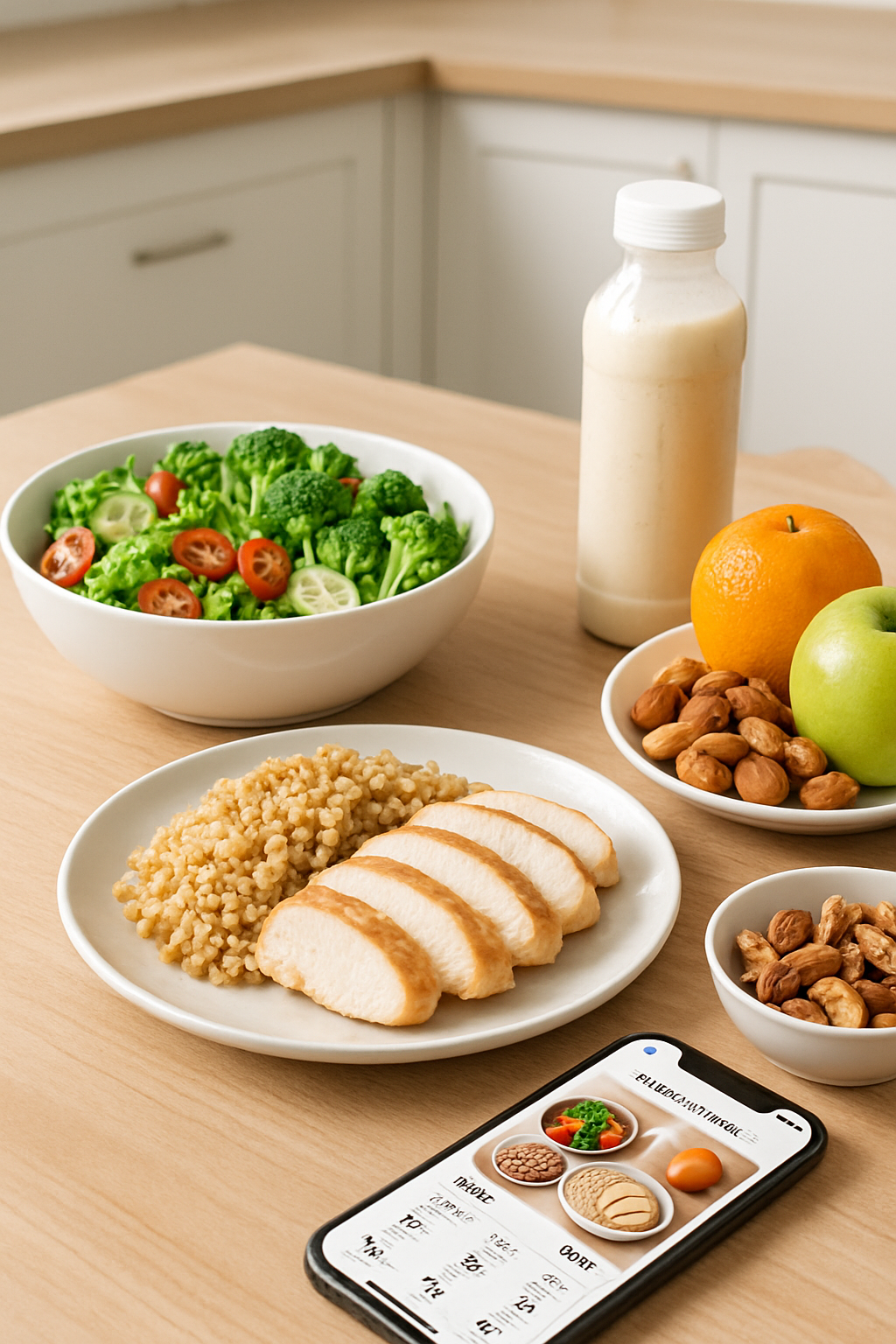
This is where a revolutionary meal tracking app like SnapEat AI changes the game. It's an AI food tracker built for one purpose: simplicity. Just snap a picture of your meal, and the AI does the rest. It identifies the food, estimates portions, and instantly provides a calorie and macro breakdown. It turns a tedious task into a two-second habit.
Your 5-Step Fight Camp: A Guide to Crushing Your Goals with SnapEat AI
Ready to start your own transformation? Here’s how to use an AI nutrition tracker to fuel your body and achieve your personal 'championship' goal.
- Step 1: Define Your 'Weight Class' (Set a Clear Goal). Be specific. Not just 'lose weight,' but 'lose 8 pounds in 10 weeks.' A clear goal gives you a target.
- Step 2: Establish Your Calorie and Macro Targets. Use an online TDEE (Total Daily Energy Expenditure) calculator to estimate your daily needs. Subtract 300-500 calories for fat loss or add 200-300 for muscle gain. SnapEat AI can help set these goals in the app.
- Step 3: Track Everything with a Snap (Consistency is Key). This is your non-negotiable rule. Before you eat anything with calories—breakfast, lunch, dinner, snacks—snap a picture.
- Step 4: Analyze the Tape (Review and Adjust). At the end of each week, review your reports. Are you hitting your calorie target? Are you getting enough protein? Use this data to make strategic adjustments for the week ahead.
- Step 5: Fuel for Performance. Nutrition isn’t just about weight. Use your data to ensure you’re eating enough carbohydrates for energy before a workout and protein for recovery after.
Frequently Asked Questions (FAQ)
Is AI food tracking accurate?
AI food trackers like SnapEat AI are highly accurate for most common foods and are constantly improving. For the best results, you can quickly review and tweak the AI's estimation if necessary. The combination of speed and high accuracy makes it far more effective than tedious manual tracking.
Is Paddy Pimblett's extreme diet healthy?
No, his extreme weight cycles are not healthy or sustainable for an average person and are done under professional supervision. The inspiration we should take is from his discipline and the principle of controlled nutrition, not the extreme method itself.
How many calories do I need to lose weight?
To lose weight, you must be in a consistent calorie deficit. A safe and effective deficit is typically 300-500 calories less than your Total Daily Energy Expenditure (TDEE). A quality nutrition tracker app can calculate this for you.
Start Your Transformation Today
The journey to your fitness goals is no longer a mystery. The lesson from Paddy Pimblett is clear: with focused nutrition and unwavering consistency, incredible transformations are possible. You have the strategy and the ultimate tool in SnapEat AI to make tracking effortless.
Stop guessing and start building. Download SnapEat AI, start snapping your meals, and become the undisputed champion of your own health.