


Why Iftar Can Make You Feel Sluggish: Common Pitfalls to Avoid
After a long day of fasting, your body is in a sensitive state. Your digestive system has been resting, and your blood sugar is low. The way you reintroduce food is critical for your energy and well-being. Unfortunately, many common Iftar habits work against our bodies and can counteract the metabolic benefits of fasting.
- The Sugar Rush: Breaking your fast with sugary juices, processed desserts, or refined snacks causes a rapid spike in blood glucose. Your body releases a large amount of insulin to handle this, leading to a subsequent "crash" that leaves you feeling exhausted and craving more sugar.
- The Fried Food Feast: While delicious, traditional fried foods like samosas or pakoras are high in unhealthy fats and are difficult for a resting digestive system to process. This can lead to indigestion, heartburn, bloating, and pronounced lethargy.
- Eating Too Much, Too Fast: It's natural to feel ravenous, but consuming a large meal quickly overwhelms your digestive system. This bypasses your body's natural satiety signals (the "I'm full" message), often leading to overeating, discomfort, and potential weight gain over the month.
These habits not only hinder your energy for evening prayers (Taraweeh) but also prevent you from feeling your best for the day ahead.
The 3-Step Strategy for a Smart, Energizing Iftar
Transforming your Iftar experience is simpler than you think. By adopting a strategic, three-step framework, you can properly refuel your body, support your health goals, and feel vibrant throughout Ramadan. This is the core of having a "smart Iftar".
Step 1: Rehydrate and Replenish Gently
Before you even think about the main course, focus on hydration. Your body is craving water and electrolytes. Following the traditional method is scientifically sound.
- What to do: Start with one to two large glasses of water and 2-3 dates.
- The Science: Water provides immediate, essential rehydration. Dates are a powerhouse of natural sugars (glucose and fructose) that provide a quick source of energy to gently raise your blood sugar without a drastic spike. They are also rich in fiber, which aids digestion, and potassium, an important electrolyte lost during fasting. A warm, light broth or lentil soup is another excellent choice to soothe the stomach and replenish fluids.
Step 2: Build a Balanced Iftar Plate
After waiting about 15-20 minutes to allow your body to adjust, it's time for your main meal. The goal is a balanced plate that covers all your macronutrient needs for recovery and sustained energy.
- Complex Carbohydrates (40% of your plate): These are your body's primary fuel source, providing slow-releasing energy that lasts for hours. Choose high-fiber options like quinoa, brown rice, whole-wheat bread, sweet potatoes, or bulgur.
- Lean Protein (30% of your plate): Protein is crucial for muscle repair after a day of fasting and promotes satiety, keeping you full and satisfied. Opt for grilled chicken, baked fish, lean beef, lentils, chickpeas, or beans.
- Healthy Fats & Vegetables (30% of your plate): Fill the rest of your plate with a colorful salad and steamed vegetables for essential vitamins and minerals. Include a source of healthy fat like avocado, a sprinkle of nuts, seeds, or an olive oil-based dressing to support hormone function and nutrient absorption.
Step 3: Practice Mindful Eating
How you eat is just as important as what you eat. Rushing your meal is a recipe for digestive distress. Instead, embrace mindful eating.
- Put your fork down between bites.
- Chew your food thoroughly to kickstart the digestive process.
- Savor each flavor and texture.
This simple practice gives your brain the 20 minutes it needs to register fullness, helping you prevent overeating and truly enjoy your meal.
Leveraging Technology: How SnapEat AI Becomes Your Iftar Companion
Following a plan is great, but how do you know if you're truly hitting your nutritional targets? Guesswork can be misleading. This is where a food tracker app like SnapEat AI transforms your approach to Ramadan nutrition.
- Track with a Snap: Forget tedious manual logging. Simply take a picture of your Iftar meal. SnapEat AI’s advanced image recognition technology identifies the foods and does the heavy lifting for you.
- Recognize for Clarity: The app instantly provides a detailed nutritional breakdown, showing you the estimated calories, protein, carbs, and fats. Wondering if you got enough protein to recover from your fast? Now you'll know for sure, removing all the guesswork.
- Optimize for Progress: By tracking your Iftar and Suhoor meals daily, you can easily view your nutritional patterns. The app’s insights might reveal you’re consistently low on fiber or that those seemingly small snacks are adding more fat than you realized. This data empowers you to make small, effective adjustments for a healthier Ramadan.
Example of a Smart Iftar, Analyzed by SnapEat AI
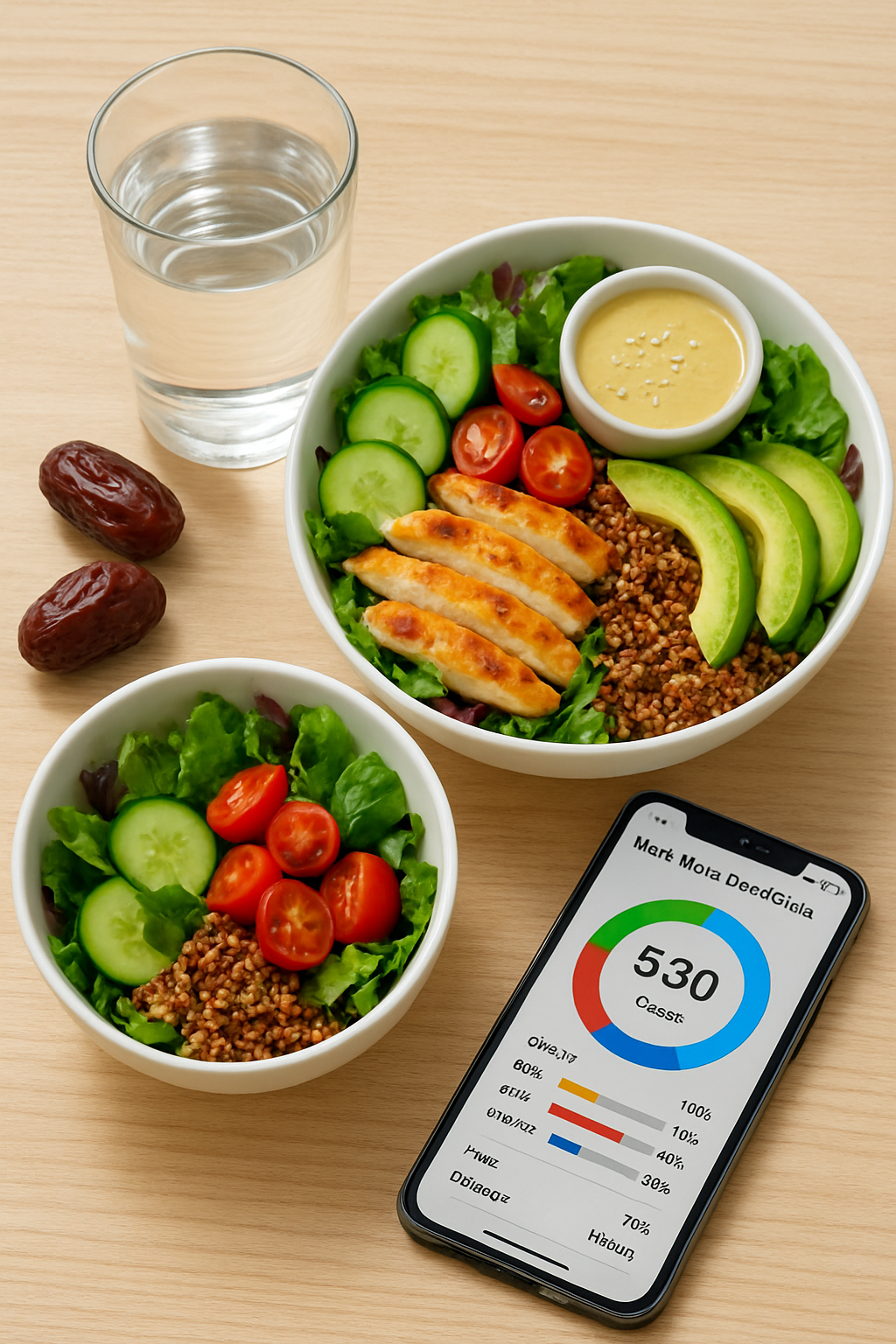
Let's visualize what a perfect smart Iftar looks like and how SnapEat AI would analyze it.
Your Plate:
- Starter: 2 Medjool dates and a large glass of water.
- Main Meal: A nourishing bowl containing 150g of grilled chicken breast strips, 1/2 cup of cooked quinoa, 1 cup of mixed greens with cucumber and cherry tomatoes, 1/4 avocado, and a light lemon-tahini dressing.
You snap a picture of this bowl with SnapEat AI. Within seconds, the app confirms your excellent choice, showing an analysis of approximately 450 calories, with a fantastic balance of ~35g of protein, ~30g of complex carbs, and ~20g of healthy fats. You have instant validation that you've refueled with a high-protein, nutrient-dense meal that will sustain you for hours.
Frequently Asked Questions about Healthy Iftar
- Why do I feel so tired after Iftar?
- This is often due to a rapid spike and subsequent crash in blood sugar from eating sugary or refined foods, or from the digestive system being overwhelmed by large, heavy, or fatty meals.
- What is the best food to break the fast with?
- The best way to break your fast is with water and dates. Water rehydrates you, and dates provide a quick, natural source of energy and fiber without causing a sharp blood sugar spike.
- How can I avoid gaining weight during Ramadan?
- Avoid fried and sugary foods, practice portion control by building a balanced plate, stay hydrated, and practice mindful eating. Tracking your intake with an app like SnapEat AI can also help you stay accountable.
Conclusion: Embrace a Healthier, More Energized Ramadan
Ramadan offers a unique opportunity to cultivate discipline and improve your health. By choosing to break your Iftar fast smartly, you honor your body, enhance your spiritual practice, and ensure you have the energy for what truly matters.
Remember the simple strategy: rehydrate first, build a balanced plate, and eat mindfully.
To stay consistent and truly understand your intake, leveraging a powerful tool is key. Ready to transform your Ramadan? Download SnapEat AI today and take the guesswork out of your Iftar meals. Make this the year you feel your absolute best.
Ramadan Mubarak!