


Why Traditional Food Logging Fails (And What to Do About It)
Traditional nutrition tracking is broken. It focuses entirely on what you eat, ignoring the critical question of why. This approach leads to common frustrations:
- It's Tedious and Time-Consuming: Manually searching for ingredients and estimating portions is the #1 reason people give up. Consistency becomes nearly impossible when tracking feels like a chore.
- It Can Foster Food Obsession: When food is reduced to a math problem of calories and macros, it can create an unhealthy, anxious relationship with eating. It strips away the joy and nourishment food is meant to provide.
- It Lacks Actionable Insight: Your food log might show you ate a pint of ice cream at 10 PM, but it won’t tell you it was triggered by a stressful workday. Without understanding the root cause, you can't create lasting change, and the cycle of emotional eating continues.
Enter SnapEat AI: Nutrition Tracking in a Snap
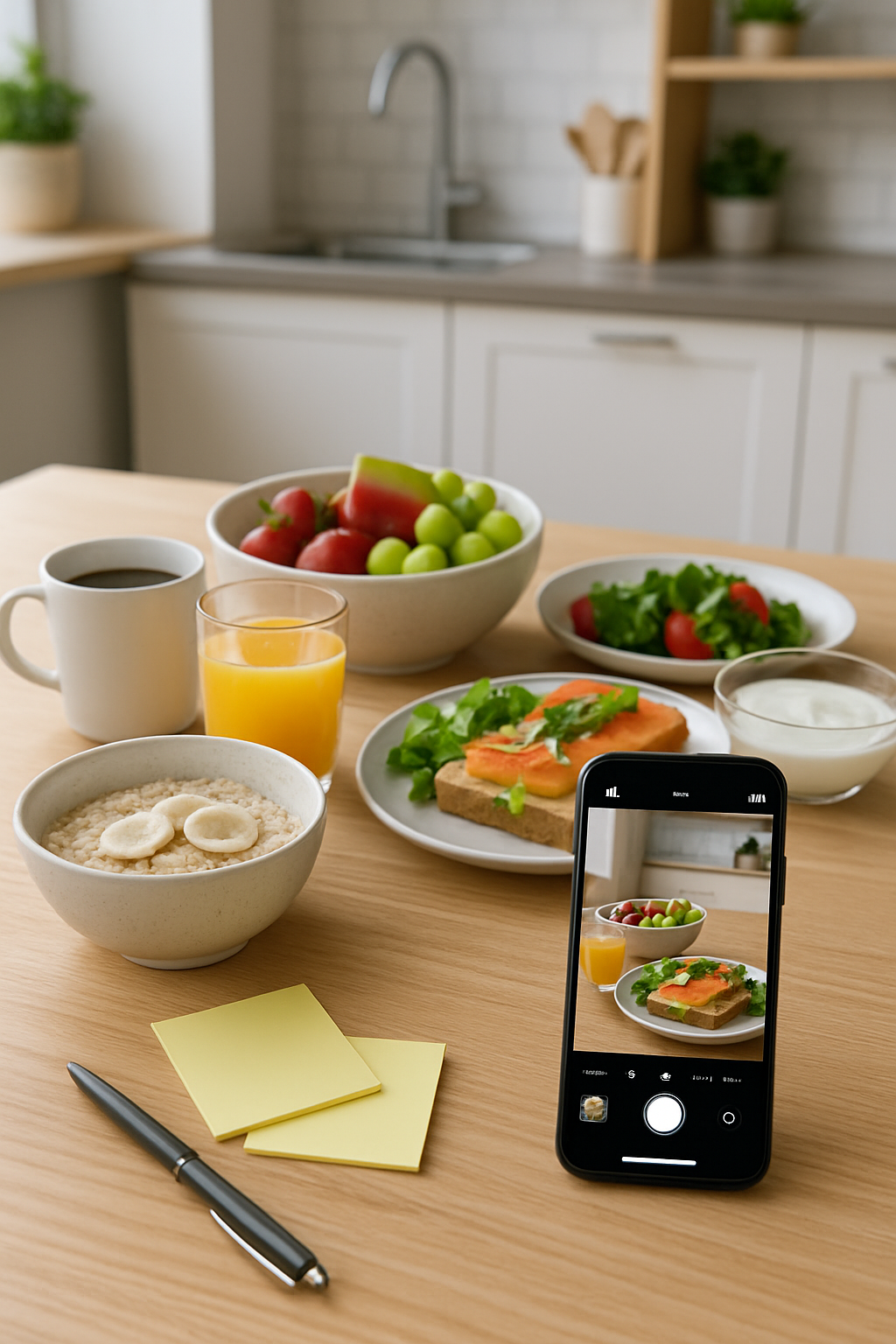
What if you could log your entire meal with the same ease as posting on social media? That's the power of an AI nutrition tracker. Apps in the "SnapEat" category use advanced computer vision to analyze your meal from a single photo, instantly logging the ingredients, portions, and nutritional data.
This technology is a game-changer for anyone looking to understand their eating habits:
- Unmatched Convenience: A five-minute data entry task becomes a five-second snap. This radical simplicity makes consistent tracking finally achievable.
- Improved Accuracy: The AI provides an objective analysis, removing the guesswork and personal bias that often comes with estimating portion sizes yourself.
- Removes All Friction: By eliminating manual entry, a track food by photo app solves the biggest barrier to successful, long-term food journaling.
This technology brilliantly solves the "what," giving you effortless, objective data. But data alone isn't transformation. For that, we need to uncover the "why."
Beyond Data: A Wellness Philosophy for Mindful Eating
Important Disclaimer: This philosophy is inspired by the principles of deep introspection and pattern interruption. It does not involve or advocate for the use of any psychoactive substances. Instead, it adapts these powerful concepts to revolutionize our relationship with food.
This wellness philosophy transforms your AI-gathered data into wisdom. It’s built on three pillars of mindful eating:
- Pattern Interruption: This is the practice of breaking the cycle of mindless eating. It’s the conscious pause you take before reaching for a snack to ask, "Am I truly hungry, or am I eating out of habit, boredom, or stress?" This simple question breaks the autopilot response.
- Mindful Introspection: Become a detective of your own behavior. Use your food log to uncover the roots of your choices. Are you eating because you're sad, procrastinating, or celebrating? Identifying these triggers is the key to managing emotional eating and learning how to stop mindless eating for good.
- Holistic Reset: This pillar helps you see how nutrition interconnects with your sleep, stress, and energy. Food is no longer an enemy to be controlled, but a powerful tool to optimize your entire state of being. This is the foundation of holistic nutrition.
The Synergy: How AI Data + Mindful Insight Creates Real Change
This is where the magic happens. Combining the effortless data from your AI food tracking app with the deep context of mindful eating creates a powerful feedback loop for genuine transformation.
Consider this scenario:
- The Old Way: You log "1 bag of chips" at 11 PM. Your app shows 500 calories. You feel guilty and resolve to "do better" tomorrow. The pattern repeats.
- The New Way: You snap a photo of the chips. The SnapEat AI logs it instantly. Applying the wellness philosophy, you add a note: "Feeling anxious about tomorrow's presentation. Wasn't hungry."
Later, when you review your week, you don’t just see calories. You see a clear connection: Anxiety → Late-Night Snacking. The AI provided the objective fact; your mindful insight revealed the actionable cause. Now, you can create a strategy: "When I feel work anxiety at night, I will do a 5-minute breathing exercise instead of heading to the pantry." You’ve moved from guilt to strategy.
Your 4-Step Guide to Smarter Nutrition Tracking
Ready to build a healthier relationship with food? This HowTo guide will get you started on the path to sustainable habit formation.
- Embrace the Tech: Download a track food by photo app and commit to snapping a picture of everything you eat for one week. Don't judge, just gather the data effortlessly.
- Add the "Why": In the notes section for each meal, add a quick tag about your mood or context. Use simple phrases like "Stressed," "Bored," "Social meal," "Truly hungry," or "Rushed." This connects the food to your feelings.
- Connect the Dots: At the end of the week, review your log. Look for patterns. Do you eat more sugar on days with poor sleep? Do you skip lunch on busy days, leading to overeating at dinner? This is how you truly understand your eating habits.
- Practice the Interrupt: Identify one negative pattern. Just one. Create a simple "if-then" plan to break the cycle. For example: "If I feel bored and want a snack, then I will drink a full glass of water and walk around for two minutes first."
Frequently Asked Questions (FAQ)
- Is AI food tracking accurate?
- AI nutrition trackers are constantly improving and are often more objective than human estimation for portion sizes. While not perfect, their accuracy and convenience far outweigh manual logging for building consistent habits.
- How can I stop emotional eating?
- The first step is awareness. Use the 4-step guide above to identify your triggers (like stress or boredom). Once you know the 'why,' you can create a plan to address the emotion directly instead of using food to cope.
- What's the difference between food journaling and AI tracking?
- Traditional food journaling is manual and time-consuming. AI tracking automates the 'what' (the food data) so you can focus your energy on the 'why' (your eating psychology), making the entire process more efficient and insightful.
Conclusion: Understand, Don't Just Track
The future of personal health isn’t about more willpower or stricter rules. It’s about leveraging smarter technology and deeper self-awareness. By pairing the seamless data collection of an AI nutrition tracker with a mindful eating philosophy, you can finally escape the frustrating cycle of traditional dieting.
Stop just counting calories. Start understanding your story. This is the essence of smarter nutrition tracking—a path that empowers you to build a healthy, sustainable, and truly positive relationship with food for life. Ready to begin? Explore how SnapEat AI can start your journey today.