


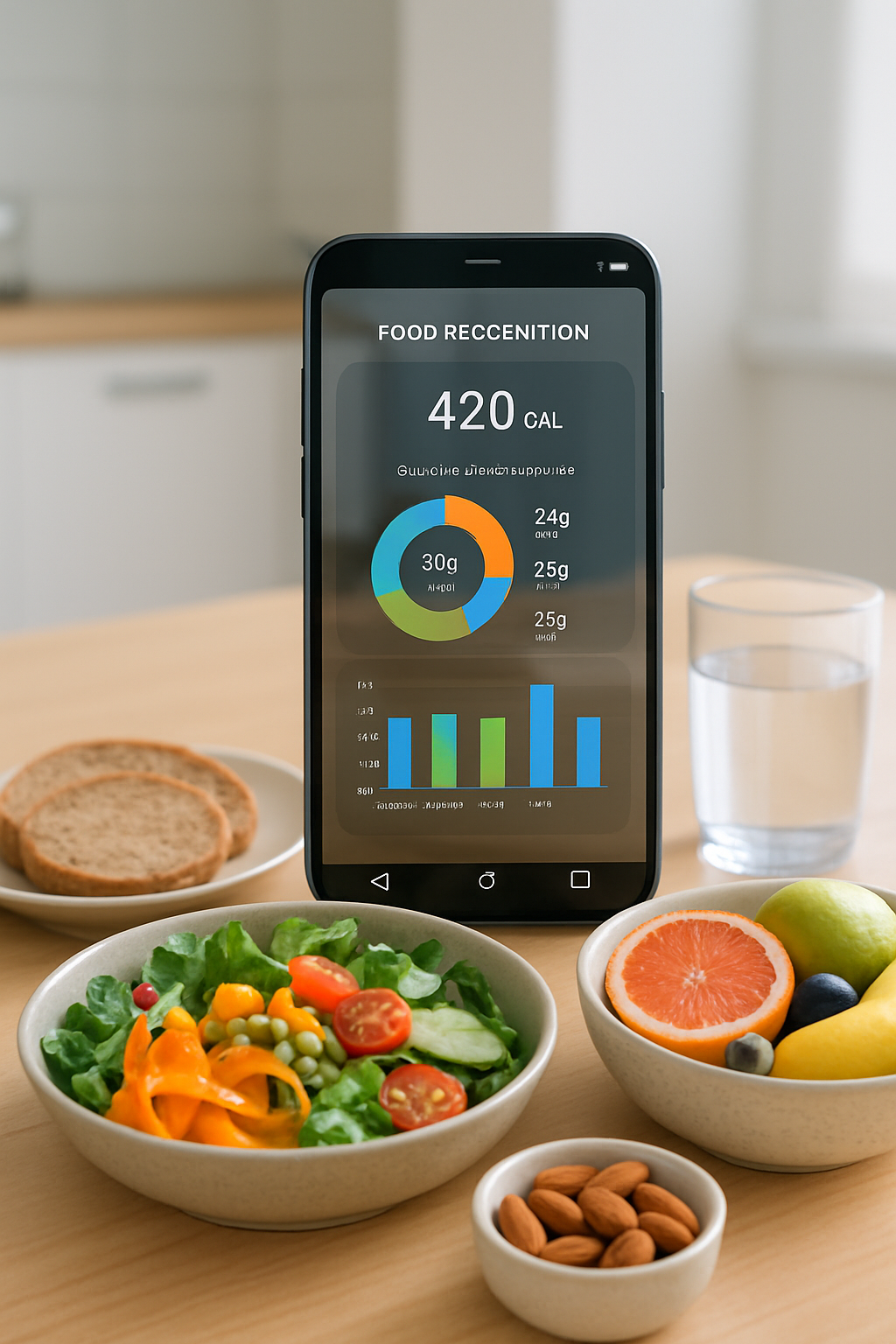
What is SnapEat AI and How Does it Work?
At its core, SnapEat AI is a health tracking app that leverages Artificial Intelligence to simplify meal logging. Instead of manually searching for foods in a database, you use its main feature: food photo logging. Here’s a breakdown of the process:
1. The “Snap” Feature: Instant Food Recognition
This is the app's headline feature. You simply take a photo of your meal, and the AI analyzes the image to identify the food items. It’s designed to recognize multiple foods on a single plate, from a slice of avocado toast to a complex salad bowl. This single feature aims to cut down logging time from minutes to mere seconds, tackling the biggest barrier to consistent tracking.
2. Detailed Nutritional Analysis
Once the food is identified, SnapEat AI provides a detailed breakdown of its nutritional content. This isn't just a basic calorie counter. The app provides robust macro tracking (protein, carbs, fats) and estimates micronutrients (vitamins and minerals). This level of detail is crucial for users with specific fitness goals, such as building muscle, or health objectives, like managing blood sugar.
3. Personalized AI Coaching and Feedback
This is what elevates it from a simple tracker to a “Smart Food Coach.” You can set specific nutrition goals within the app—whether it's weight loss, a calorie target, or a macro split. The app then provides real-time feedback on your progress, showing you how your meals align with your targets and learning your habits over time to offer more tailored insights.
A Nutritionist's Review: The Pros and Cons of an AI Food Coach
As exciting as this technology is, it's crucial to have a balanced view. In my experience with clients, no tool is a perfect solution. Here’s my professional breakdown of SnapEat AI's benefits and limitations.
The Pros: Why SnapEat AI Shines
- Unmatched Convenience & Consistency: The sheer ease of snapping a photo dramatically lowers the barrier to entry for food logging. When a habit is easier, you're more likely to stick with it, leading to more consistent and valuable data for your health journey.
- Data-Driven Awareness: Seeing a visual and numerical breakdown of your meals can be an eye-opener. Many of my clients are shocked to discover hidden calories or a lack of protein in their so-called “healthy” meals. This awareness is the first step toward meaningful change.
- Powerful Motivation: The app's interface often includes streaks, goal achievement badges, and progress reports. This gamified approach can be a powerful motivator for many individuals, keeping them engaged long-term.
The Potential Pitfalls: What to Watch Out For
- Accuracy Variables: AI is impressive, but not infallible. The app’s accuracy depends on photo quality, meal complexity, and its database size. More importantly, portion size estimation can be a challenge, often requiring manual adjustment. Users should treat the numbers as a very strong estimate, not an absolute fact.
- Risk of Data Obsession: For some personalities, constant tracking can lead to an unhealthy obsession with numbers, fostering food anxiety. It's vital to use the app as a tool for awareness, not as a rigid rulebook that dictates your self-worth.
- The Missing Human Element: An AI can provide data, but it can't understand your life's context. It doesn’t know you had a stressful day, are celebrating a birthday, or have a complex medical history. It lacks the empathy and holistic guidance a human nutrition coach provides.
SnapEat AI vs. Traditional Trackers (like MyFitnessPal)
How does a food photo logging app stack up against established players like MyFitnessPal or Lose It!?
| Feature | SnapEat AI | Traditional Trackers |
|---|---|---|
| Logging Method | Primarily AI photo recognition | Manual search and barcode scanning |
| Speed | Very fast for whole meals | Fast for single-ingredient or packaged foods, slower for complex meals |
| Accuracy | Good estimate, but relies on AI interpretation and user correction for portions | Highly accurate when using barcode scanner; user-generated entries can be inconsistent |
| Best For | Users who value speed and convenience and want to track whole-food meals quickly | Users who want precise control, eat many packaged foods, or enjoy the manual process |
How to Maximize SnapEat AI for Your Health Goals
To get the most out of a smart food coach, you need to use it intelligently. Think of it as your data assistant, not your boss.
- Set SMART Goals: When you set up the app, define goals that are Specific, Measurable, Achievable, Relevant, and Time-bound. Instead of a vague “eat healthier,” try “Consume 25-30 grams of protein with every meal for the next 4 weeks to support my fitness routine.”
- Become a Health Detective: Don't just focus on the daily calorie count. Use the data to ask bigger questions. Are you consistently low on fiber on workdays? Does your energy slump at 3 PM correlate with a carb-heavy lunch? Use the app to uncover patterns in your dietary habits.
- Combine AI with a Human Touch: The ideal strategy is to use SnapEat AI as your daily data-gathering tool and periodically review that data with a qualified nutritionist or dietitian. The app provides the “what,” and a professional helps you understand the “why” and create a truly personalized “how-to-change” plan.
Conclusion: Is SnapEat AI the Right Coach for You?
Tools like SnapEat AI represent a significant leap forward in making personal health management more accessible and less intimidating. For the self-motivated individual who wants to build awareness and requires a low-friction method for tracking, this smart food coach can be an incredibly powerful ally.
It excels at streamlining meal logging and providing the data you need to start making informed decisions. However, remember that it's a tool, not a magic wand. The real work still lies in building sustainable habits, listening to your body, and cultivating a healthy relationship with food.
If you’re looking to take the first step in understanding your diet, a food photo logging app like SnapEat AI is an excellent place to start. Use it to gather knowledge, and then use that knowledge to empower a healthier, stronger you. Ready to explore professional guidance? Contact our team of nutritionists today!
Frequently Asked Questions (FAQ)
1. How accurate is SnapEat AI's food recognition?
Its accuracy is generally good for common food items and clear photos but can vary. Complex, mixed dishes (like casseroles) are harder to identify than distinct items on a plate. Portion size estimation is the biggest variable and often requires manual tweaking for best results.
2. Can SnapEat AI track macros and micros?
Yes. One of its strengths is detailed macro tracking (protein, carbohydrates, fat). It also provides estimates for many common micronutrients (vitamins and minerals), which is a feature not always present in basic calorie counters.
3. Is SnapEat AI better than MyFitnessPal?
It's not about better, but different. SnapEat AI is superior for speed and convenience, especially for homemade meals. MyFitnessPal is often more precise, particularly with its barcode scanner for packaged foods. The best choice depends on your personal preference for speed versus precision.
4. Is an AI food coach enough to manage my health?
For building initial awareness and general tracking, it can be a fantastic tool. However, for individuals with medical conditions (like diabetes or PCOS), eating disorders, or complex performance goals, an AI coach should supplement, not replace, the guidance of a registered dietitian or medical professional.