


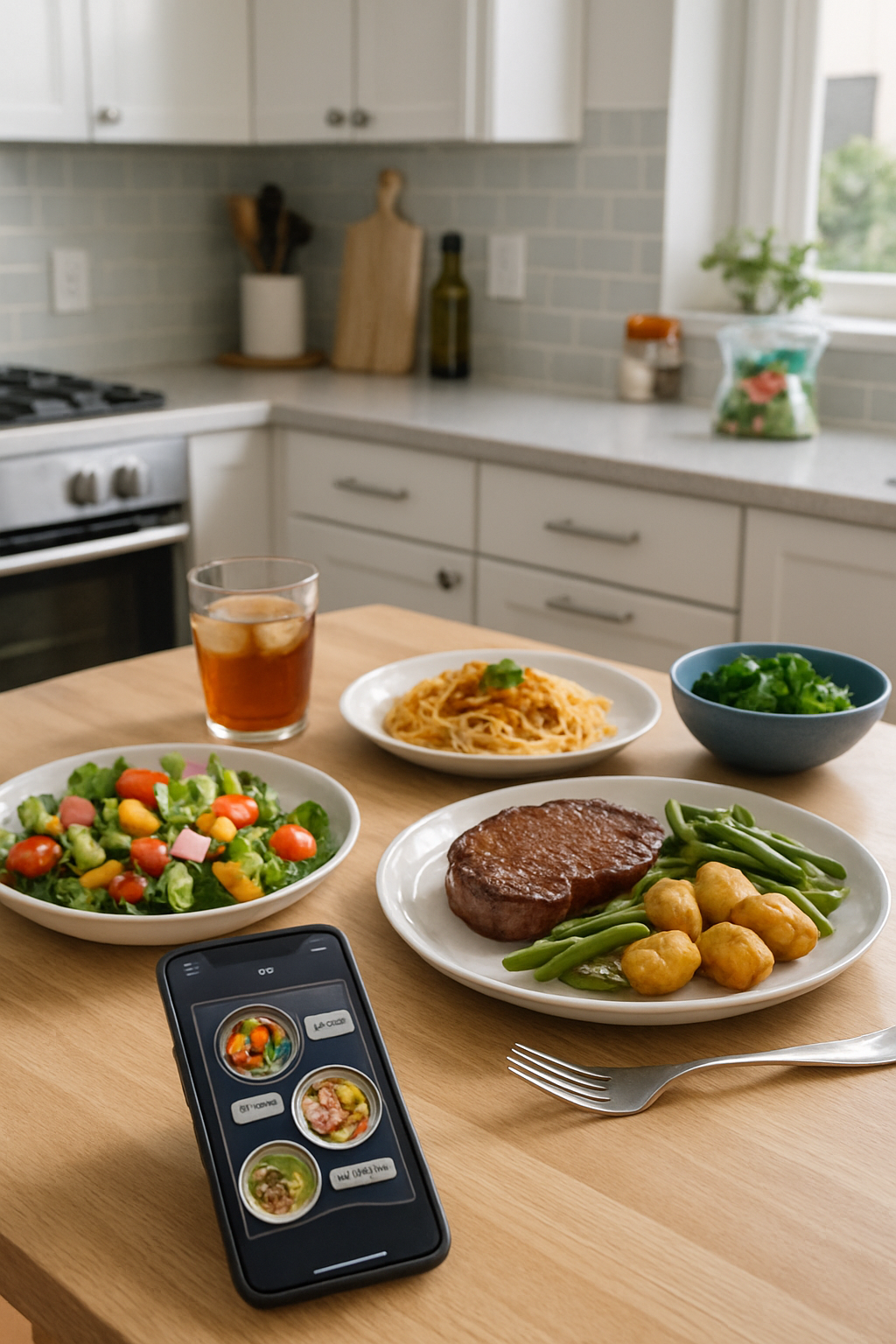
Why AI Food Tracking is a Potential Game-Changer
The number one reason people abandon their diet plans is the hassle of tracking food. AI-powered apps like SnapEat AI directly address this pain point, offering several revolutionary advantages that could reshape our approach to nutrition.
1. Frictionless Data Entry with Photo Logging
The core innovation of any photo food logging app is removing friction. Instead of tediously searching a database for every ingredient, you simply take a picture. This transforms a 5-minute task into a 5-second one. For busy professionals, parents, or anyone feeling overwhelmed, this speed is a monumental difference and a key selling point.
2. Promotes Unprecedented Consistency
Because the process is so effortless, users are far more likely to track their meals consistently. In nutrition, consistency is the most critical factor for success. A partial food diary offers limited insight, but a complete record, even if not 100% precise, provides invaluable data over time. AI dramatically lowers the barrier to entry, helping users build a sustainable, long-term habit.
3. Creates a Powerful Visual Food Diary
Traditional food logs are just text and numbers. An AI-powered visual diary offers a completely new perspective. Scrolling through photos of your meals provides immediate, intuitive feedback. You might instantly recognize a lack of vegetables, notice portion sizes creeping up on weekends, or identify patterns of stress-eating. This visual insight is often more impactful and easier to understand than a simple calorie number.
4. Delivers AI-Powered Nutritional Insights
Advanced Nutrition AI platforms go beyond basic calorie counting. They analyze your meal photos to assess macronutrient balance (protein, carbs, fats), identify nutritional gaps, and even suggest healthier alternatives. Imagine an app providing real-time coaching: "I notice your lunch was low on protein. Consider adding grilled chicken or lentils to your dinner." This shifts the paradigm from passive tracking to proactive, personalized guidance.
The Skeptic's View: Limitations of AI Food Scanners
Before hailing SnapEat AI as the perfect solution, it's crucial for us as nutrition experts to address its significant limitations. A healthy dose of skepticism is necessary when evaluating any new weight loss technology.
1. The Accuracy Dilemma: Portion Sizes and Hidden Ingredients
This is the Achilles' heel of current AI food tracking technology. The most common user question is, "Is SnapEat AI accurate?" The answer is complex.
- Portion Estimation: Is that a 4-ounce or an 8-ounce steak? The AI makes an educated guess, but this guess can be off by hundreds of calories, significantly skewing your daily totals.
- Hidden Oils & Sugars: The AI sees a salad; it can't see the two tablespoons of high-calorie dressing, the oil used to roast the vegetables, or the sugar in the sauce. These hidden ingredients are often what derail weight loss efforts.
- Complex & Homemade Dishes: An AI excels at identifying a simple apple. For a homemade lasagna, a complex restaurant curry, or a multi-ingredient smoothie, it's essentially gambling, as it cannot know your specific recipe.
2. The "Black Box" Problem and Trust
AI can sometimes feel like a "black box." It provides a calorie and macro count, but without a clear explanation of how it reached that conclusion. If a calculation seems wrong, the lack of transparency makes it difficult to audit or correct, which can quickly erode a user's trust in the system.
3. The Risk of Losing Nutritional Literacy
While convenient, outsourcing the entire tracking process can prevent users from developing crucial nutritional knowledge. Manually logging food forces you to learn about portion control, read labels, and understand the composition of what you eat. Over-reliance on AI can turn the app into a crutch rather than a learning tool, hindering the development of lifelong healthy habits.
A Nutritionist's Verdict: A Powerful Tool, Not a Magic Bullet
So, is SnapEat AI a revolution or a fad? The professional verdict is that it's a revolutionary tool, but not a complete solution. Its value depends entirely on who is using it and for what purpose.
Who is SnapEat AI For?
- Beginners: For those starting their health journey, the ease of an AI tracker can be the catalyst that builds a consistent habit. An 80% accurate log is infinitely better than no log at all.
- The Time-Poor: For busy individuals, if the choice is between AI tracking or no tracking, AI is the clear winner.
- Visual Learners: Users who respond better to images than to data sheets will find a visual food log more engaging and insightful.
Who Should Be Cautious?
- Competitive Athletes: Bodybuilders or athletes requiring surgical precision in their macro counts will find current AI accuracy insufficient. Manual logging with a food scale remains the gold standard.
- Individuals with Medical Conditions: Anyone managing diabetes, kidney disease, or severe allergies cannot afford the guesswork of an AI and requires precise, manual tracking.
- Those with a History of Eating Disorders: The intense focus on food imagery and data can be a trigger. Working with a registered dietitian is a much safer and more effective approach.
Frequently Asked Questions (FAQ) about AI Food Trackers
Is SnapEat AI accurate?
It's moderately accurate for simple, whole foods but struggles with portion sizes, hidden ingredients like oils and sugars, and complex, multi-ingredient dishes. It's best used as a starting point that you manually review and adjust.
What is the main advantage of SnapEat AI vs MyFitnessPal?
The primary advantage is speed and convenience. SnapEat AI's photo-logging feature drastically reduces the time and effort required for data entry compared to the manual search-and-select process of traditional apps like MyFitnessPal.
Can AI food trackers replace a nutritionist?
No. An AI tracker is a data collection tool. A registered nutritionist or dietitian provides personalized guidance, emotional support, and strategic planning based on your unique health profile, goals, and lifestyle. The app is an assistant; the nutritionist is the strategist.
Conclusion: You Are the CEO of Your Health
AI food trackers like SnapEat AI are not a passing trend; they are a significant evolution in health technology. They make nutrition tracking more accessible and less intimidating than ever before. However, they are not a magic wand. The most advanced AI is still just an intelligent assistant—a mirror reflecting your habits back to you.
Use these powerful tools to simplify your life and illuminate your patterns. But never forget that technology is the advisor, not the boss. The final, mindful decision about what goes on your plate belongs to you. You are, and always will be, the CEO of your own health journey.