


Why Traditional Food Tracking Fails (And Why It's Not Your Fault)
For years, apps like MyFitnessPal have dominated, but they come with a high cost: your time and sanity. If you've ever tried a traditional calorie counter, this probably sounds familiar:
- Endless Manual Entry: Spending more time searching for ingredients in a database than you spent eating the meal.
- The Constant Guessing Game: Was that a medium or large banana? How much olive oil was that, really? Inaccurate estimates can completely derail your progress.
- The Psychological Drain: Focusing only on numbers can lead to food anxiety and an unhealthy obsession, turning eating into a stressful math problem. It’s no wonder studies show over 80% of users quit these apps within months.
The core problem is simple: these tools prioritize clinical data over your human experience, making meal logging a chore you're destined to abandon.
The 'Letterboxd for Food' Philosophy: From Tracking to Tasting
If you've used Letterboxd for movies, you understand its magic. It’s not a spreadsheet of runtimes; it's a visual diary of your cinematic journey. You rate films, share reviews, and build a beautiful archive of your taste. Now, imagine applying that same philosophy to your meals. A visual food diary shifts the focus from 'How many calories?' to more meaningful questions:
- The Experience: 'How did this meal make me feel? Energized or sluggish?'
- Personal Taste: 'Would I eat this again? ★★★★☆'
- Mindful Moments: 'Perfect post-workout refuel,' or 'A bit too heavy for lunch.'
- Social Discovery: Exploring healthy and delicious meal ideas from friends.
This approach transforms your food journal from a sterile list of numbers into a rich, personal story about your health and palate.
SnapEat AI Explained: How to Track Food by Taking Pictures
This is where technology makes the dream a reality. A revolutionary AI food tracker like SnapEat AI blends powerful tech into a simple, elegant experience that works in three easy steps.
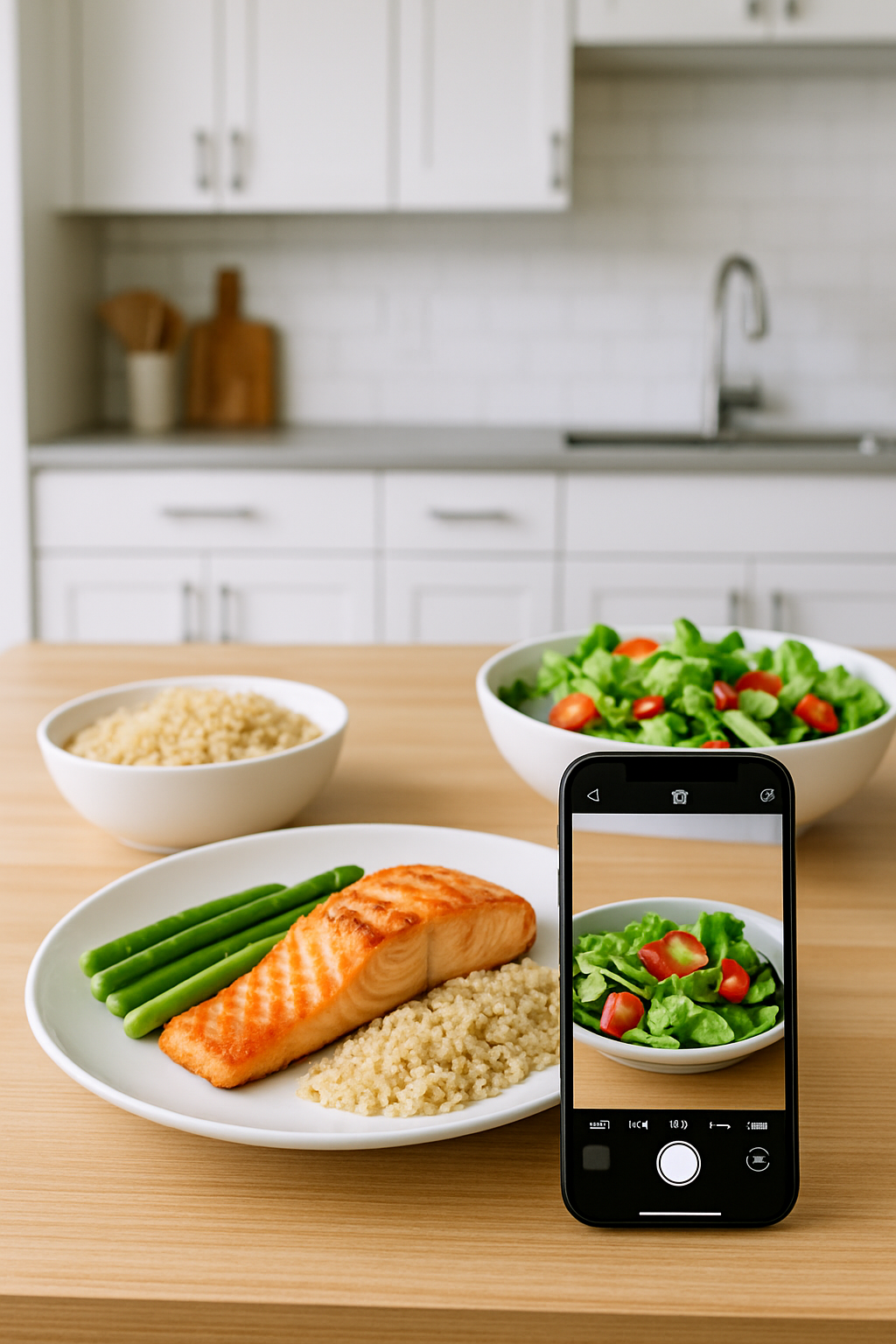
Step 1: The 'Snap'
Forget typing. Simply open the app and take a photo of your plate. Using advanced image recognition, SnapEat AI instantly identifies each item—the chicken, the quinoa, the broccoli—and accurately estimates their portion sizes.
Step 2: The 'AI' Analysis
In seconds, the AI calculates the complete nutritional profile: calories, protein, carbs, and fats. It learns your eating patterns over time, making future logging even faster. This is macro tracking made truly effortless.
Step 3: The 'Letterboxd' Log
Your meal appears in your daily feed as a vibrant photo. Here, you can give it a star rating, add notes ('Felt great after this!'), and use tags (#HighProtein, #Vegan). Your log becomes a beautiful, browsable gallery of your culinary journey.
The Benefits: Why This Is the Easiest Way to Track Food
Adopting a modern food tracking app like SnapEat AI is about more than just convenience; it’s about creating a system you can actually stick with. Here's how it compares to old methods:
| Feature | Traditional Tracker (e.g., MyFitnessPal) | SnapEat AI (Visual Food Tracker) |
|---|---|---|
| Logging Method | Tedious manual search & data entry | Instant photo capture & AI recognition |
| Focus | Numbers, calories, macros | Experience, feelings, taste, photos |
| Psychology | Can cause anxiety and obsession | Promotes mindful eating and enjoyment |
| Sustainability | High burnout and abandonment rate | Engaging and fun, built for long-term habits |
This is a game-changing alternative to MyFitnessPal for anyone who values their time and mental well-being.
Frequently Asked Questions (FAQ)
1. What is the easiest way to track food?
The easiest method is using an AI-powered app that lets you track food by taking pictures. This eliminates manual data entry, the most time-consuming part of food logging, and makes the process fast and enjoyable.
2. Can an app really identify food from a picture?
Yes. Modern AI and machine learning models are trained on vast datasets of food images, allowing them to identify multiple ingredients and estimate portion sizes with a high degree of accuracy that improves over time.
3. How does a visual food diary help with mindful eating?
By shifting your focus from just numbers to the meal itself—its appearance, your rating, and how it made you feel—a visual diary encourages you to be more present. This practice helps you better understand your body's hunger and fullness cues, forming the foundation of mindful eating.
Conclusion: Stop Counting, Start Experiencing
The era of tedious, guilt-ridden food tracking is over. We no longer need to choose between being informed about our nutrition and actually enjoying our food. By embracing an AI food tracker built on the 'Letterboxd for food' philosophy, we transform a chore into a delightful and insightful daily ritual.
This new paradigm, exemplified by a tool like SnapEat AI, empowers you to build a healthier, more intuitive relationship with what you eat. It moves beyond simple calorie counting to create a holistic picture of your wellness. Ready to level up your health journey? It's time to find a food tracking app that works for you, not against you. Your path to sustainable, healthy habits is just a snap away.