


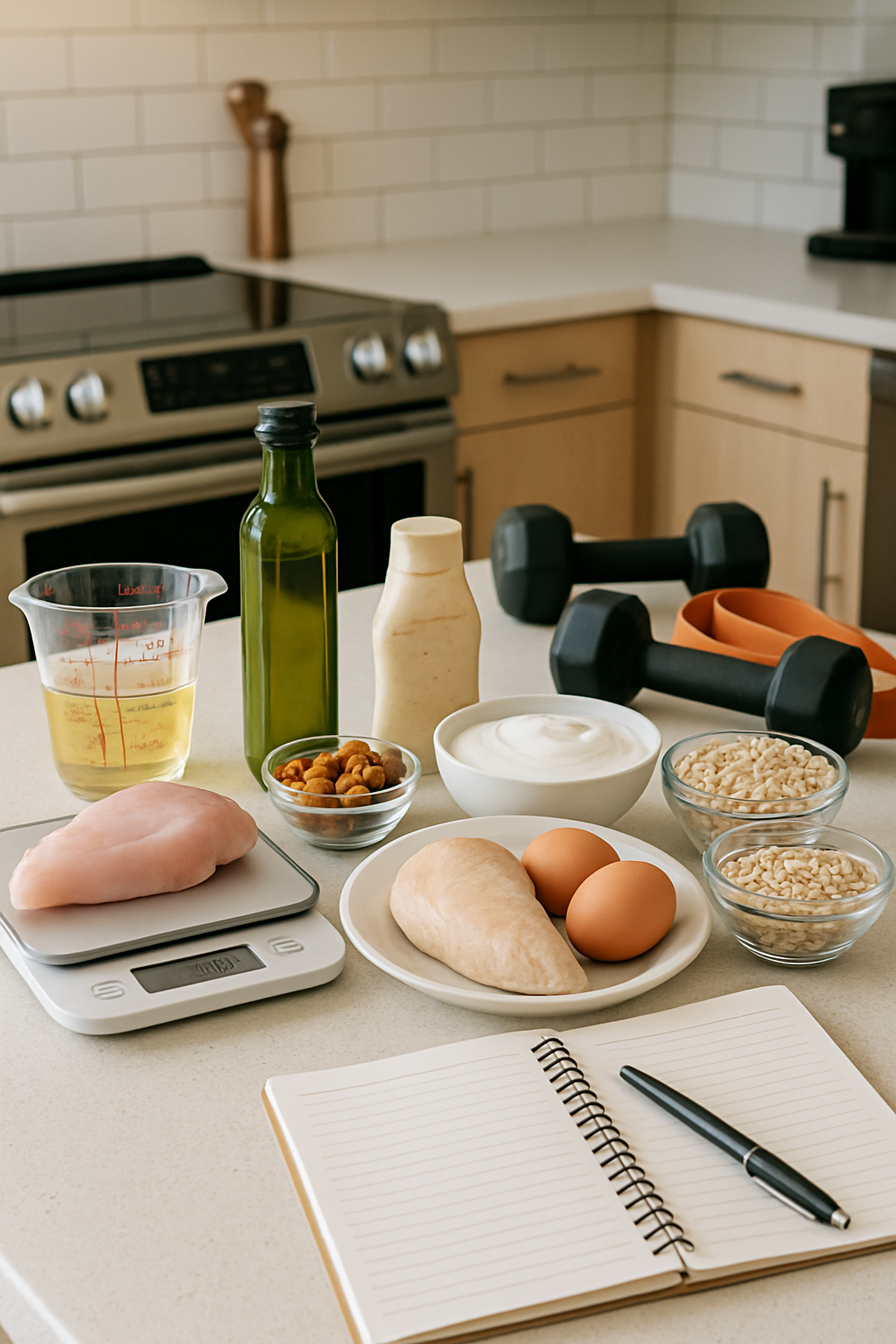
Mistake #1: Underestimating Your Calorie Intake (The Hidden Calories)
You’re confident you're in a calorie deficit, but the scale tells a different story. This is the most common reason for a weight loss plateau. The culprit is often “calorie creep”—the small, untracked additions that accumulate and sabotage your progress.
The Problem: The Sneaky Saboteurs
That splash of creamer in your coffee (30-50 calories), the "healthy" olive oil you generously pour on your salad (120 calories per tablespoon), a quick handful of almonds (180 calories), or the sauce on your chicken (50-100 calories) can easily add up. These can unknowingly add 300-500 calories to your day, completely erasing your intended deficit.
The Fix: Become a Data Detective for a Week
- Track Everything Accurately: For 3-7 days, use an app and a food scale to track everything you consume. This isn't for judgment; it's for data. Be honest about portion sizes, especially for calorie-dense items like oils, nuts, and cheeses.
- Measure, Don't Eyeball: Use measuring spoons for all liquids (oils, dressings, creamers) and measuring cups for grains and snacks. This practice builds awareness of what a true portion size looks like.
- Watch for Liquid Calories: Juices, sodas, specialty coffees, and alcohol are major sources of calories that offer little to no satiety. Switching to water, herbal tea, or black coffee can make a huge difference.
Mistake #2: Prioritizing Cardio Over Strength Training
Many people automatically think that fat loss means hours on the treadmill. While cardiovascular exercise is crucial for heart health, making it your only strategy is one of the biggest weight loss mistakes you can make for long-term success.
The Problem: Burning Muscle Instead of Fat
Excessive cardio, especially in a calorie deficit without strength training, can cause you to lose precious, metabolically active muscle mass along with fat. Over time, your body also becomes more efficient, burning fewer calories for the same amount of work. This is why you may find you have to run longer and longer just to maintain results.
The Fix: Build Your Metabolic Engine with Muscle
- Boost Your Resting Metabolism: Muscle is more metabolically active than fat. The more lean muscle you have, the more calories your body burns around the clock—even while you sleep.
- Incorporate Strength Training: Aim for 2-4 strength sessions per week. This can be bodyweight exercises (squats, push-ups, planks), resistance bands, or lifting weights. Focus on compound movements that work multiple muscle groups at once for maximum efficiency.
- Achieve a Toned Physique: Strength training is what creates the strong, lean, and toned physique that most people desire, preventing the “skinny fat” look that can result from a cardio-only approach.
Mistake #3: Not Eating Enough Protein
If you constantly feel hungry, battle cravings, or find your thoughts drifting to your next meal, there's a high probability you're not eating enough protein. The importance of protein for weight loss cannot be overstated—it is your best ally against hunger.
The Problem: Hunger, Cravings, and Muscle Loss
Diets low in protein leave you feeling unsatisfied, making it incredibly difficult to stick to a calorie deficit without feeling deprived. Your body may also break down existing muscle tissue for its amino acid needs, which actively lowers your metabolism and undermines your efforts.
The Fix: Make Protein the Star of Every Meal
- Maximize Satiety: Protein is the most satiating macronutrient. It slows digestion and helps you feel fuller for longer, significantly reducing the urge to snack between meals.
- Boost Calorie Burn: Your body uses more energy (calories) to digest protein compared to fats and carbs. This is known as the Thermic Effect of Food (TEF) and provides a small but meaningful metabolic advantage.
- Preserve Lean Muscle: Consuming adequate protein sends a signal to your body to preserve muscle mass during a calorie deficit, ensuring you lose primarily body fat.
- How Much Do You Need? A solid guideline is to aim for 1.2 to 1.6 grams of protein per kilogram of your target body weight. For a 150lb (68kg) person, this is about 82-109g per day. Prioritize sources like chicken breast, fish, eggs, Greek yogurt, cottage cheese, tofu, and legumes.
Mistake #4: The 'All-or-Nothing' Mindset
You're perfect from Monday to Friday. Then, one slice of pizza on Saturday leads to the thought, "Well, I've ruined it. Might as well give up until Monday." This perfectionist trap is a psychological barrier that derails more diets than any single food.
The Problem: A Vicious Cycle of Restriction and Bingeing
This black-and-white thinking creates a stressful and unsustainable cycle. Health and progress are not about being perfect; they are about consistency over time. One unplanned meal doesn't negate days of positive choices.
The Fix: Embrace Consistency Over Perfection
- Implement the 80/20 Rule: Focus on making nutrient-dense choices 80% of the time. Use the other 20% for foods you love, completely guilt-free. This flexibility is the key to long-term sustainability.
- Plan Your Indulgences: Instead of forbidding foods, plan for them. If you know you're going out for dinner, make mindful choices earlier in the day and then truly savor your meal without regret.
- Reframe Your Definition of Success: Did you stick to your plan 6 out of 7 days? That’s a massive win! If you're wondering how to fix my diet, start by fixing your mindset from perfection to consistency.
Mistake #5: Neglecting Sleep and Stress Management
You can have a flawless diet and exercise plan, but if you're chronically stressed and sleep-deprived, your body's hormones will actively work against your fat loss goals.
The Problem: Hormones Working Against You
- Poor Sleep: Getting less than 7 hours of sleep per night disrupts ghrelin (the hunger hormone) and leptin (the fullness hormone). This leads to a spike in hunger and intense cravings for high-calorie, high-sugar foods.
- High Stress: Chronic stress elevates cortisol, your body's primary stress hormone. Elevated cortisol can increase appetite, drive cravings for "comfort food," and signal your body to store fat, particularly stubborn belly fat.
The Fix: Make Rest and Recovery a Non-Negotiable
- Optimize Your Sleep Hygiene: Aim for 7-9 hours of quality sleep per night. Create a relaxing bedtime ritual, ensure your bedroom is completely dark and cool, and avoid screens for at least an hour before bed.
- Actively Manage Stress: Find healthy outlets that work for you. This could be a 15-minute walk, meditating with an app like Calm or Headspace, journaling, or listening to music. Even 3-5 minutes of deep box breathing can significantly lower cortisol.
Frequently Asked Questions (FAQ)
Q1: Can one 'cheat meal' really ruin my week of progress?
Absolutely not. The 'all-or-nothing' mindset is the real problem, not the single meal. As long as you are consistent most of the time (the 80/20 rule), a planned indulgence will have a negligible impact on your long-term results and can actually improve adherence.
Q2: How long does it take to break a weight loss plateau?
After identifying and correcting one of the mistakes above, you can often see movement on the scale within 1-2 weeks. The key is to be consistent with the new adjustment. For example, if you increase your protein and add strength training, your body composition will start to change even if the scale is slow to move at first.
Q3: I think I'm doing everything right and still not losing weight. What now?
First, do an honest 7-day audit using a food scale as described in Mistake #1—this is often the most eye-opening step. If you are truly confident in your tracking, sleep, and training, it may be time to consult a professional, such as a registered dietitian or a certified nutritionist, to look for underlying issues or get a personalized plan.
Your Path to Sustainable Success
If you’ve been asking, “Why is my diet not working?”, it’s not because you lack willpower. It's likely one of these five common 'bugs' is disrupting your system. But now you have the debugging manual.
Don't try to fix everything at once. Pick one area to focus on this week. Maybe it's simply measuring your cooking oil instead of eyeballing it. Maybe it's swapping one cardio day for a bodyweight strength workout. Or maybe it's setting a bedtime alarm.
Small, consistent changes are the key to fixing the code and building a healthy lifestyle that finally delivers the long-term results your hard work deserves.